Confusion Created by Excessive Symbolism and Unconvincing Narrative
Structural Limitations Behind Ambitious Experimentation

※ This article contains numerous spoilers for the film.
Black comedy films often sharply divide audiences. They provoke discomfort while delivering laughter, directly addressing the contradictions of society and the darker sides of human nature. For those who enjoy satire and wit, these films offer a powerful catharsis; for others, they appear unnecessarily brutal and cynical. When taboos or tragic events are turned into the subject of humor, the discomfort is amplified. Black comedy serves as a mirror reflecting society, while also provoking the desire to look away.
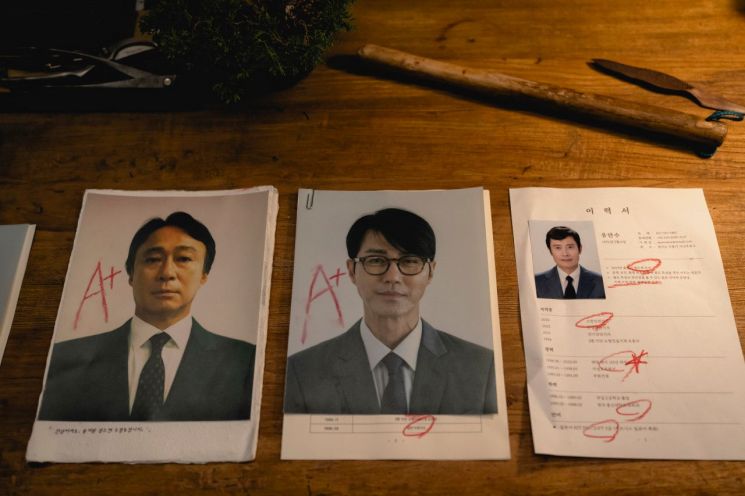
Director Park Chanwook's latest film, "No Other Choice," is no exception. The story follows Mansu (played by Lee Byunghun), who, after being laid off from a paper company where he worked for 25 years, murders his competitors in a desperate bid to get re-employed. The film transforms the pathos of unemployment into humor, using slapstick to elicit instinctive laughter. Even in scenes where Mansu attempts murder, the film showcases absurd facial expressions, slips, and unexpected accidents. The brutality of the crimes is softened, and the satirical tone is heightened, so viewers should not expect the tension typical of other genres. Instead, the distance from the characters allows for a direct confrontation with absurdity. Director Park commented, "Maybe because it's a story about a worker, I kept thinking of 'Modern Times' (1936). As I imagined the actors performing, I leaned more and more toward comedy." He added, "Portraying it with a gloomy tone doesn't necessarily make the tragedy stronger. In fact, the more comedic it is, the greater the sense of empathy, and that's where the tragedy emerges."
The Ambiguous Space Between Laughter and Gravity
This is why Director Park cast well-known actors such as Lee Byunghun, Son Yejin, Lee Sungmin, Yum Hyeran, Park Heesoon, and Cha Seungwon. When unfamiliar actors appear in social critique or realism films, viewers tend to equate the actor with the character, which can create a documentary-like sense of realism. In black comedies, however, the effect is different. Instead of laughter, feelings of anger or sympathy may be conveyed first, contrary to the director's intentions. On the other hand, familiar actors can amplify the sense of strangeness in the film, simultaneously stimulating both laughter and discomfort. This increases the likelihood that viewers will interpret the story as satire.
Lead actor Lee Byunghun carries the film with a subtle tone, persuading audiences with a relatable, realistic demeanor, then abruptly shifting to exaggerated gestures and intonation to emphasize the fictionality of the story. He transitions from languishing in unemployment to cracking awkward jokes at a Papyrus job interview, or performing slapstick reminiscent of Charlie Chaplin or Rowan Atkinson. This immediate, surface-level humor can actually dilute the social critique inherent in black comedy. For example, a scene featuring Cho Yongpil's "Dragonfly" provides intense laughter that temporarily relieves the audience's emotions, but interrupts serious reflection on the despair of workers. Once laughter relieves the tension, the subsequent social message is conveyed less powerfully. There is also the risk that the film's fundamental issues may be watered down, making it difficult to leave a lasting impression or opportunity for reflection with the audience.
Unconvincing Motives for Murder
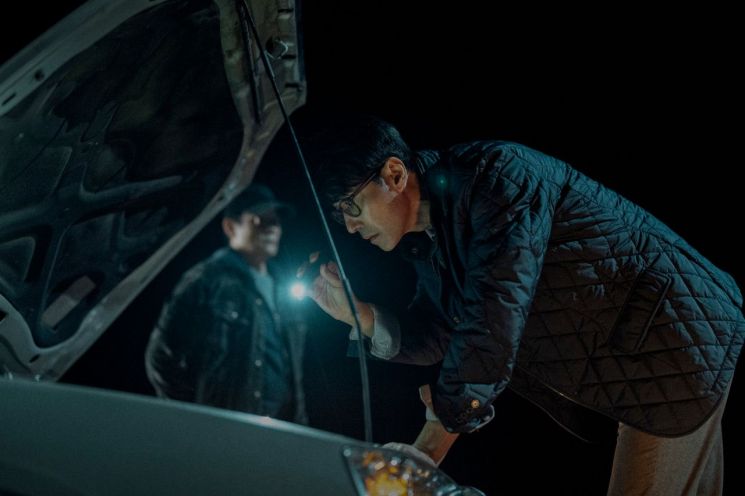
This problem is further highlighted by the film's central premise: "Four people, one job." In reality, solutions such as job creation, career changes, and retraining exist, but the film excludes these options and forces a zero-sum game. Mansu's motive for murder lacks logical plausibility, especially in the way his unfortunate life turns violent. Simply portraying him as a struggling breadwinner does not sufficiently justify his extreme choices. His actions after eliminating his competitors, Beommo (Lee Sungmin) and Sijo (Cha Seungwon), in his pursuit of a job at Papyrus, are particularly telling. When he fails to receive a job offer from Papyrus, he targets Seonchul (Park Heesoon), who works at Munjeje, fearing that Seonchul might apply for the Papyrus position he created. This extreme logic of preemptive murder to prevent something that hasn’t even happened yet goes beyond the absurdity of black comedy and devolves into narrative contrivance. Even if Beommo and Sijo represent Mansu's present and Seonchul his future, the reasoning remains unconvincing.
Excessive Symbolism and Emotional Distance
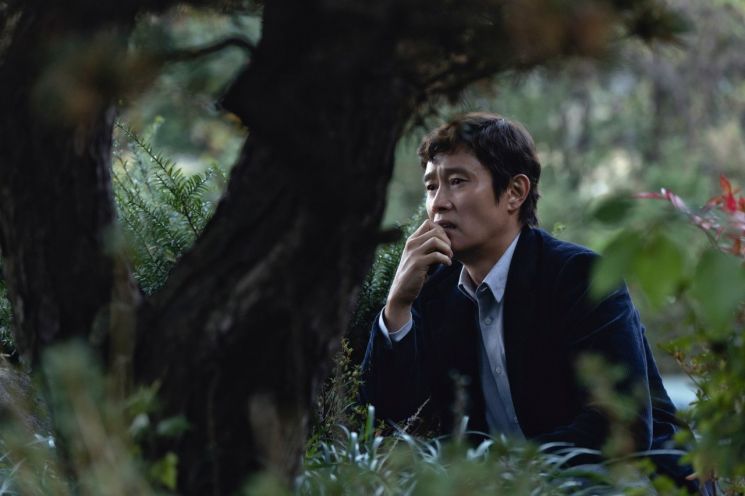
Mansu also offers little room for audience empathy. Although portrayed as middle class, he lives in a spacious house and provides his daughter with cello lessons. His wife holds a dental hygienist license, so the family is not on the brink of homelessness. This depiction is far removed from the reality of most workers. Director Park admitted, "If you see it that way, then I have failed," but also explained, "If it's a 50-year-old house next to a townhouse near Sejong City, it's not that expensive." He continued, "I wanted to convey how heartbreaking it would be for someone like Mansu, who graduated high school and worked hard his whole life, to lose everything he has achieved."
"No Other Choice" is overflowing with symbols and metaphors. The motifs of toothache and a pistol, borrowed from "Obaltan" (1961), are especially excessive. Director Yu Hyunmok used toothache to represent an unhealed reality and excruciating poverty, and the pistol to symbolize violence and social impotence. While these references are meaningful as cinematic allusions, they feel out of place in a film where characters enjoy parties. The tree, presented as a central metaphor throughout the film, is no different. The attempt to add depth through a three-generation narrative-from a father who fought in the Vietnam War and ran a pig farm before committing suicide, to a son who steals cell phones-only serves to complicate the multilayered structure of labor and family, ultimately blurring the core message. Connecting all of this to the paper industry and Mansu's beard is also excessively contrived.

The film is filled with elements designed to guide the audience toward specific interpretations, such as eels, bonsai, snakes, chili peppers, logs (masculinity), the relationship between paper machines and the wife, the lighting system, and the foreshadowing of future layoffs. The cello motif and sound design, seemingly inspired by Jean-Pierre Jeunet's "Delicatessen" (1991), serve a similar purpose. While these may intrigue film enthusiasts, they risk limiting the audience's freedom of interpretation or causing confusion. The various metaphors and symbols may fail to connect organically, instead coming across as fragmented.
Due to these factors, "No Other Choice" is currently polarizing audiences. Perhaps the expectations associated with Park Chanwook's name and the ambiguity of the film itself are the main reasons for the divided opinions. Nevertheless, from the perspective of expanding cinematic experiences and ways of viewing, the film is certainly worth watching. Despite some shortcomings, Director Park Chanwook's distinctive visual style and unique narrative experimentation represent a meaningful attempt to broaden the horizons of Korean cinema.
© The Asia Business Daily(www.asiae.co.kr). All rights reserved.
![Clutching a Stolen Dior Bag, Saying "I Hate Being Poor but Real"... The Grotesque Con of a "Human Knockoff" [Slate]](https://cwcontent.asiae.co.kr/asiaresize/183/2026021902243444107_1771435474.jpg)


















