Superintendents to Be Selected by Direct Election or Appointment
According to City or Provincial Ordinances
A bill has been proposed to amend the law so that the method of appointing superintendents of education can be determined by city or provincial ordinances, allowing for either direct election by residents or appointment.
Additionally, the bill seeks to abolish the current eligibility requirement for superintendent candidates, which mandates at least three years of experience in education or educational administration, thereby allowing ordinary citizens with experience in educating their own children to become superintendents.
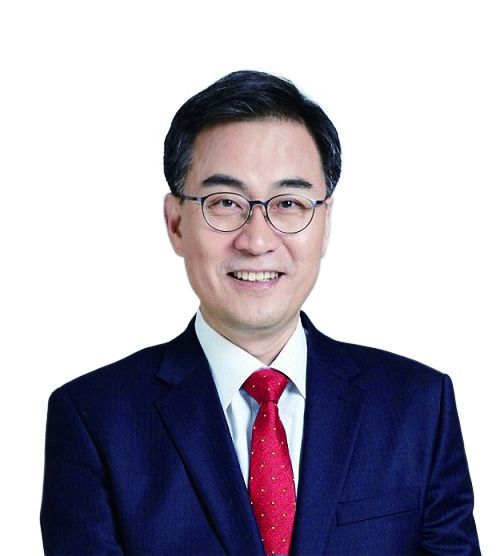
Choi Hyungdoo, a member of the National Assembly representing Masanhappo District in Changwon, South Gyeongsang Province, recently sponsored a partial amendment to the Local Education Autonomy Act. The amendment aims to allow each region to determine the method of selecting its superintendent of education according to local circumstances and to eliminate the requirement that superintendent candidates must have at least three years of experience in education or educational administration, in order to foster regional development through educational innovation.
Under the current law, superintendents of education are elected at the city or provincial level during local elections. Candidates must have at least three years of experience in education or educational administration, or a combined total of at least three years in both fields.
The direct election system for superintendents was introduced to enhance the representativeness of residents. However, ongoing issues have been raised regarding excessive political conflict during elections, lack of expertise, and increasing election costs.
In particular, while education is a major concern for all citizens, including parents, university professors with no connection to primary or secondary education are eligible to run, whereas citizens who have spent 12 years educating their children and have learned about the challenges and potential innovations in primary and secondary education are excluded. This has led to issues of discrimination and inequality.
Furthermore, by allowing only those with educational backgrounds to run, the system has fostered exclusivity, resulting in the dominance of certain alumni networks and conflicts between members and non-members of the Korean Teachers and Education Workers Union.
In advanced countries such as the United States, the heads of local governments appoint superintendents to promote integrated local governance, including education. In contrast, South Korea has uniformly applied the direct election system for superintendents across all regions.
As a result, the current system fails to adequately reflect local circumstances and residents' demands, with election outcomes often determined by collusion among union-affiliated candidates or the unification of non-union candidates. This selection method is disconnected from the needs of citizens and residents.
There have also been criticisms that, despite the fact that the expertise and qualifications of superintendent candidates should be determined by voters' rational judgment, the legal requirement for relevant experience restricts voter choice and deprives citizens from diverse social backgrounds of the opportunity to run for office.
Choi Hyungdoo emphasized, "By allowing city and provincial ordinances to determine the method of appointing superintendents, each region can choose between direct election and appointment according to local conditions and residents' needs. Deleting the requirement for at least three years of experience in education from the qualifications for superintendent candidates will maximize residents' right to choose and promote region-specific educational autonomy and responsible administration."
He argued that this would enable educational innovation to become a driving force for the development of metropolitan governments through competition over new educational system pledges, such as the introduction of AI digital textbooks.
He also stressed the need for a running mate system for governors and superintendents, in order to improve the inefficiency caused by the compartmentalization of local education and general finances, by integrating the management of local education and general finances, which are often insufficient at the local level.
© The Asia Business Daily(www.asiae.co.kr). All rights reserved.
![Clutching a Stolen Dior Bag, Saying "I Hate Being Poor but Real"... The Grotesque Con of a "Human Knockoff" [Slate]](https://cwcontent.asiae.co.kr/asiaresize/183/2026021902243444107_1771435474.jpg)
















