Redundancy Not Implemented in Cloud Environment
Lack of Backup System Led to Large-Scale Disruption
Due to a fire in the data center of the Daejeon National Information Resources Service (NIRS), 647 government work systems were suspended on September 27, causing significant inconvenience. There are growing concerns that the lack of redundancy in the cloud environment has exacerbated the situation.
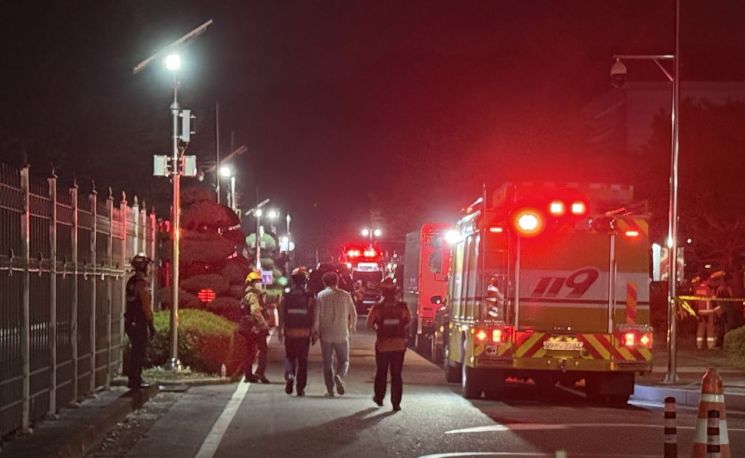
If a 'twin' cloud system with an identical environment had been in place, it would have been possible to operate from another region in the event of a disaster at one location, thereby preventing large-scale service disruptions. However, it is currently known that such a service redundancy (backup) system has not been properly established.
Kim Minjae, Vice Minister of the Ministry of the Interior and Safety, stated at a briefing held at the Government Seoul Office on the same day, "This fire occurred during work to relocate the NIRS’s uninterruptible power supply batteries to the basement, originating from a battery whose power had already been cut off." He added, "We will prioritize the rapid restoration of major government services with significant public impact, such as Korea Post’s financial and postal services."
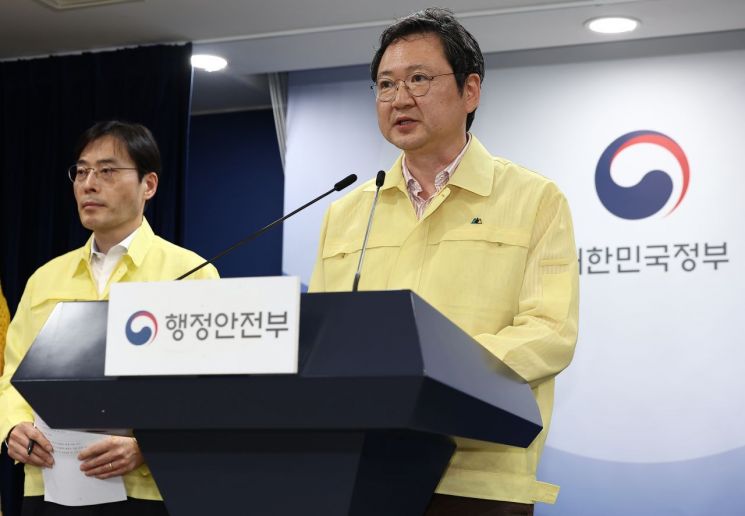 Jaeyong Lee, Director of the National Information Resources Service (right), is answering reporters' questions at the 'National Information Resources Service Government Service Disruption Briefing' held on the morning of the 27th at the briefing room of the Government Seoul Office in Jongno-gu, Seoul. Photo by Yonhap News
The data center that caught fire the previous day is known as the 'G-Cloud Zone,' a private cloud environment operated by the National Information Resources Service. The disaster recovery (DR) system for this area requires both server DR and cloud DR. However, while the NIRS had established a disaster recovery environment for servers, the cloud disaster recovery environment had not been completed, which is believed to have contributed to the complete shutdown of government systems and the escalation of the incident.
The paralysis of government systems caused by the overnight fire at the NIRS has drawn comparisons to the Kakao service outage three years ago. In October 2022, a fire at the data center housing KakaoTalk’s servers caused simultaneous disruptions to KakaoTalk and most other Kakao services. Although some services, including KakaoTalk, were restored after overnight recovery efforts, many users experienced inconvenience and confusion.
In response to the outage, Kakao announced plans to upgrade its disaster recovery system to a triple-redundancy model linking three data centers, and promised to improve its infrastructure and enhance service stability. The Kakao outage highlighted the importance of data center management, but the recent NIRS fire has once again exposed shortcomings in oversight and management.
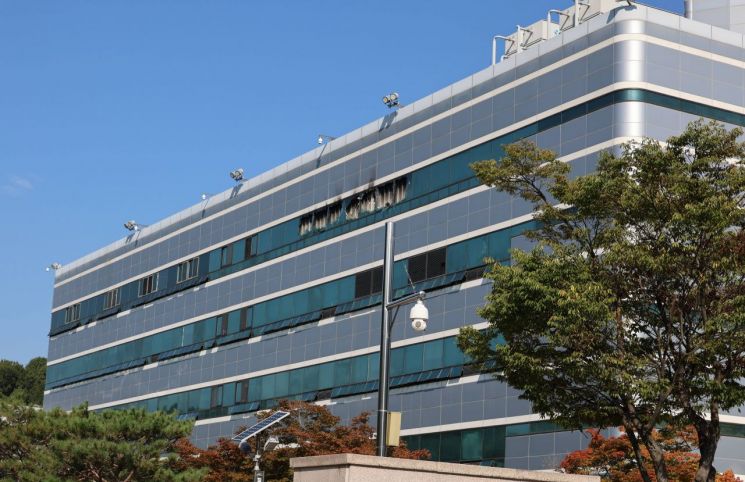
An official from the cloud industry commented, "Given the critical importance of these resources, both server DR and cloud DR are necessary for disaster recovery in the affected area. While the fire itself was the primary cause, the absence of a properly established cloud DR system led to the complete shutdown of government systems and widespread confusion."
Meanwhile, plans had been made to establish redundancy between the main NIRS center in Daejeon and the Gongju center, but these have reportedly been delayed due to budget issues. Although detailed plans for building a cloud disaster recovery system were announced earlier this year, and a phased five-year migration plan was established with detailed consulting scheduled to begin next year, there have also been objections raised regarding the transfer of government cloud operations to the private sector during this process.
© The Asia Business Daily(www.asiae.co.kr). All rights reserved.



















