As the Donald Trump administration has raised the fees for H-1B visas for professionals, the United States Senate has asked major corporations to explain whether there is any correlation between employing workers holding H-1B visas and changes in job opportunities for American citizens.
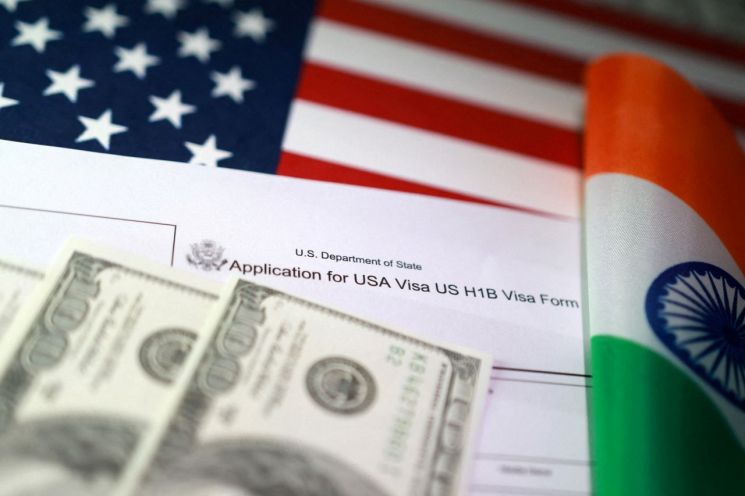
According to the Wall Street Journal (WSJ) on September 25 (local time), Chuck Grassley (Republican, Iowa), ranking member of the Senate Judiciary Committee, and Dick Durbin (Democrat, Illinois), committee chair, sent letters the previous day to companies such as Amazon, asking them to explain why they continue to employ thousands of H-1B visa holders while reducing other jobs.
Specifically, they requested data on the current employment status of H-1B holders, the wages they receive, and whether any Americans lost jobs during the hiring process. Similar letters were sent to Apple, JPMorgan, Google, Meta, Microsoft, and Walmart. The companies were asked to submit the requested materials by October 10.
The WSJ noted that this action came less than a week after President Trump drastically increased the application fees for new H-1B visas, causing confusion among American companies, and assessed that Congress is joining efforts to strengthen oversight of the H-1B visa program.
In its letter to Amazon CEO Andy Jassy, the Senate stated, "It is difficult to believe that Amazon was unable to find American tech workers to fill these positions, especially when domestic talent has been pushed to the sidelines."
For the 2025 fiscal year, Amazon was approved to hire a total of 14,667 H-1B visa holders, including new hires, extensions, and employer changes. Microsoft and Meta were approved for 5,189 and 5,123 H-1B holders, respectively. The U.S. H-1B visa is available to professionals in science, technology, engineering, and mathematics (STEM) fields, with only 85,000 issued annually through a lottery system.
The Trump administration, on September 19, increased the annual H-1B visa fee per person from 1,000 dollars to 100,000 dollars (approximately 140 million Korean won), a 100-fold increase. On September 23, a draft reform plan was published in the Federal Register, proposing changes to the H-1B selection process to favor high-wage and highly skilled workers, thereby further restricting visa issuance.
© The Asia Business Daily(www.asiae.co.kr). All rights reserved.

















