Supreme Court Sides with Haeundae District After Losing in Lower Courts
Busan High Court to Review the Case on Remand
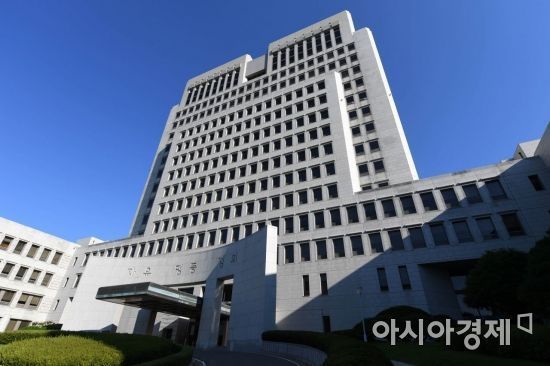
The 33.3 billion won lawsuit over the development charges for the LCT project in Busan will be reviewed again in the appellate court following the Supreme Court's decision to remand the case.
The First Division of the Supreme Court (Presiding Justice Shin Sookhee) on September 25 overturned the lower court's ruling, which had favored the plaintiff, Busan Urban Corporation, in its lawsuit against the head of Haeundae District Office in Busan seeking to cancel the imposition of development charges. The case has been sent back to the Busan High Court.
Previously, the Haeundae District Office considered December 30, 2019, the date of the completion inspection for the LCT real estate development project, as the end point for imposing the charges. After selecting standard land and conducting comparative evaluations, it calculated the land value at the end point and imposed development charges of 33,388,010,000 won on Busan Urban Corporation.
Busan Urban Corporation filed a lawsuit to cancel the imposition, arguing that the end point for the development charges should be, at the latest, March 16, 2014, when the site development work for the tourism facility land was completed, and that the land value at the end point should be recognized based on the actual transaction price.
The court of first instance ruled in favor of Busan Urban Corporation. The court stated, "The defendant calculated the value under Article 10, Paragraph 1 of the Act on the Restitution of Development Gains based on an inappropriate end point for the tourism facility land within the project site. Even though this amount was higher than the transaction price for the land as specified in Article 10, Paragraph 2 of the same law, the defendant still set it as the land value at the end point. Therefore, the imposition of development charges based on this calculation is unlawful."
The appellate court upheld the first instance decision.
However, the Supreme Court's judgment differed. The court accepted Haeundae District Office's argument, stating, "The completion of the site development work for the tourism facility land on March 16, 2014, cannot be considered as the actual completion date of the development for the tourism facility land, which would mark the end point for imposing the charges on that portion."
The court further stated, "It is difficult to consider that the plaintiff's transaction price qualifies as a case where the land value at the end point can be recognized based on the actual transaction price, such as when the sale price of the land is determined with the approval of the state or a local government." As a result, the Supreme Court accepted the defendant's appeal and remanded the case, overturning the lower court's ruling that had upheld the plaintiff's claim.
© The Asia Business Daily(www.asiae.co.kr). All rights reserved.

















