The World’s Oldest Person, a Spanish Woman, Passed Away at 117 Last Year
Requested That Her Longevity Be Studied to Help Others
Genetic Factors Behind Her Longevity... Lifestyle Also Played a Role
A study has been published revealing the secrets behind the longevity of Spanish woman Maria Branyas Morera, who passed away at the age of 117 years and 168 days as the world’s oldest person. According to Yonhap News on September 24 (local time), citing the UK’s Guardian and the US’ New York Times, researchers from the Josep Carreras Leukaemia Research Institute and the University of Barcelona studied the genes and lifestyle of Maria Branyas Morera, who died last year. The research findings were published in the medical journal Cell Reports Medicine.
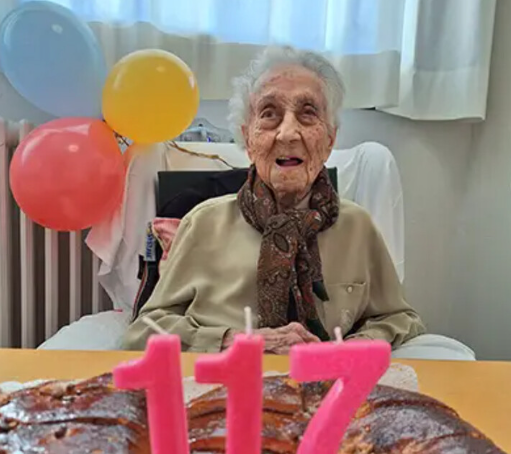 Spanish woman Maria Branyas Morera, who passed away last year at the age of 117 years and 168 days. Guinness World Records
Branyas was born in San Francisco, United States, in 1907 and moved to Spain, her parents’ homeland, at the age of eight. She lived through two world wars, the Spanish Civil War, the Spanish flu, and the COVID-19 pandemic. At 113, she contracted COVID-19 and recovered, and from 2023 until her death, she was recognized as the world’s oldest living person.
Her son died at the age of 52, but her two daughters are currently 92 and 94 years old. Other family members and relatives passed away from common diseases such as Alzheimer’s, cancer, tuberculosis, kidney disease, and heart disease.
During her lifetime, Branyas requested that doctors study her longevity to help others. In response, the research team created and analyzed her biological profile using blood, saliva, urine, and stool samples collected one year before her death, examining her genome, transcriptome, metabolome, proteome, and microbiome.
Genes That Protect Heart and Brain Cells... Low Levels of Inflammation in the Body
The researchers stated, "Branyas showed clear signs of aging, such as telomere attrition, abnormal B cell populations, and clonal hematopoiesis, which increases the risk of leukemia and inflammatory diseases." However, they explained, "Her telomeres were unusually short, which may have limited cell division and prevented cancer." They also noted, "DNA analysis revealed genetic variants that protect heart and brain cells from disease and dementia. Her overall inflammation levels were low, reducing the risk of cancer and diabetes, and her cholesterol and fat metabolism were efficient."
Dr. Manel Esteller, who led the research, said, "Branyas’ biological age was at least 10 to 15 years younger than her actual age." The New York Times reported, "Branyas was a genetic lottery winner, possessing variants that predict longevity."
However, her healthy lifestyle was also considered to have contributed to her longevity. Branyas was not overweight and did not smoke or drink alcohol. She ate three yogurts a day, and her microbiome contained a high proportion of beneficial Bifidobacterium. Since 2001, she had lived alone but resided in the same village as her family and maintained an active social life with friends always nearby. Until five years ago, she also played the piano.
Dr. Esteller added, "We hope this study will help develop new treatments for elderly health," and noted, "Branyas’ parents passed on very good genes, but we cannot choose our parents."
© The Asia Business Daily(www.asiae.co.kr). All rights reserved.
![Clutching a Stolen Dior Bag, Saying "I Hate Being Poor but Real"... The Grotesque Con of a "Human Knockoff" [Slate]](https://cwcontent.asiae.co.kr/asiaresize/183/2026021902243444107_1771435474.jpg)
















