Goolsbee: "We need information to be confident inflation is temporary"
Schmid: "Current somewhat restrictive rate is appropriate"
Bowman concerned about cooling employment... Myron: "Rates should be cut by 0.5 percentage points several times"
Within the U.S. Federal Reserve, there are diverging opinions among committee members regarding the pace and scale of future interest rate cuts. Some members advocate caution in further rate reductions due to inflationary pressures, while others argue that a more aggressive approach is needed, citing concerns over a sharp slowdown in the labor market.
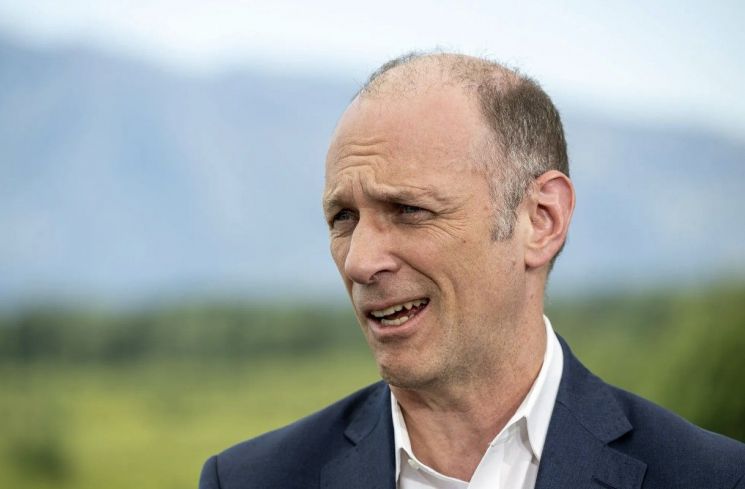
Austan Goolsbee, President of the Chicago Federal Reserve Bank, told reporters on the 25th (local time), "We still need information that allows us to be confident that the recent rise in inflation is temporary."
He noted, "Inflation has exceeded the 2% target for the past four and a half years and is rising again recently." He explained that interest rates could be lowered if inflation stabilizes at 2% and the labor market remains balanced, but emphasized, "It is risky to move ahead before we are certain of that." He also mentioned price increases due to tariffs, stating, "Even by simply holding rates steady, we are effectively achieving the effect of a rate cut." President Goolsbee expressed optimism about the possibility of a soft landing for the economy, but added that the risk of stagflation-a combination of rising prices and economic slowdown-should not be overlooked.
Jeff Schmid, President of the Kansas City Federal Reserve Bank, also supported a cautious approach to further easing. Speaking at an event in Dallas on the same day, he said, "Last week's 0.25 percentage point rate cut was a reasonable risk management strategy," but also assessed, "While the current policy rate is somewhat restrictive, this position is appropriate." He noted that inflation remains too high and employment is cooling, but overall, the situation is balanced. He stated, "Any further adjustment to the policy rate will be decided after closely monitoring future inflation and labor market indicators."
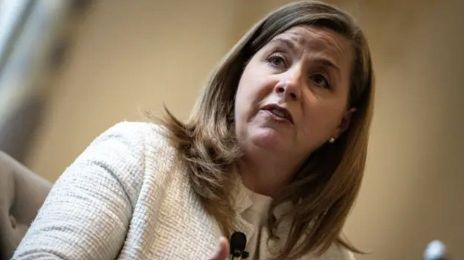
On the other hand, there were also calls emphasizing the need for faster rate cuts.
Michelle Bowman, Vice Chair of the Federal Reserve, said at an event in Washington, D.C. on this day, "Inflation is within the target range of 2%, but the labor market is weaker than expected," adding, "There could be three rate cuts by the end of the year." She also projected that tariff-driven price increases are likely to be one-off events. Bowman raised the need for further rate cuts in response to labor market slowdown and economic downturn risks, while stressing the importance of the Fed's independence and transparency in policy decisions.
Steve Myron, a Federal Reserve Governor who recently joined the Federal Open Market Committee (FOMC) as an "economic advisor to Trump," went further, arguing that the Fed should implement several 0.5 percentage point rate cuts. He cited the risk of economic slowdown as the basis for his position. In an interview with Fox News on this day, Myron said, "In my view, even just a few 0.5 percentage point cuts in a short period would allow us to reach our target," adding, "After adjusting monetary policy and reaching the target, we can proceed more cautiously again." In a Bloomberg interview, he also stated, "The current policy rate is much higher than the neutral rate and is excessively restrictive," and argued, "It is better to act proactively and cut rates rather than wait for a major disaster." Myron, who was appointed by President Donald Trump after taking office in January, has repeatedly pressured the Fed for rate cuts and is considered one of Trump's closest confidants.
Previously, on the 17th, the Fed implemented its first rate cut of the year, lowering the federal funds rate by 0.25 percentage points from 4.25-4.5% to 4.0-4.25% per annum. However, there are still significant differences of opinion regarding the future path of rates. The dot plot suggests the possibility of two additional cuts this year, but among the 19 FOMC members, 7 believe no further cuts are needed this year, 2 support one more cut (0.25 percentage points), and 9 advocate two more cuts (0.5 percentage points) within the year. Myron believes a total of 1.25 percentage points in additional cuts are needed this year. As the Fed faces the dual challenges of tariff-driven inflation and a slowing labor market, analysts note that uncertainty surrounding the future policy path remains high.
© The Asia Business Daily(www.asiae.co.kr). All rights reserved.


















