Caution Over AI Rally Drives Third Consecutive Day of Losses
US Q2 Growth Rate Hits 3.8%, Highest in Two Years
New Unemployment Claims Fall to 218,000, Below Expectations
Optimism for Rate Cuts Eases, Treasury Yields Decline
Oracle Drops Over 3% After Wall Street Warns of "40% Downside"
The three major indices on the New York Stock Exchange in the United States declined simultaneously on September 25 (local time). As doubts persist over the sustainability of the artificial intelligence (AI) rally, the release of stronger-than-expected economic data has raised concerns that the US Federal Reserve (Fed) may hesitate to cut interest rates, dampening investor sentiment. Investors are now focusing their attention on the inflation data scheduled for release the following day, amid heightened caution.
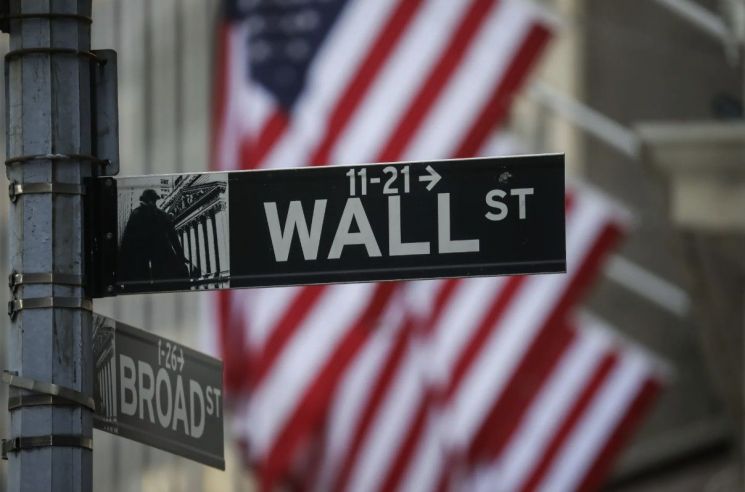
As of 10:46 a.m. on this day at the New York Stock Exchange, the blue-chip Dow Jones Industrial Average was down 44.76 points (0.1%) from the previous trading day at 46,076.52. The large-cap S&P 500 Index fell 27.32 points (0.41%) to 6,610.65, while the tech-heavy Nasdaq Index dropped 110.931 points (0.49%) to 22,386.924.
By stock, Oracle declined by 3.5%. The sell-off was triggered after Rothschild Redburn released a report stating that market expectations for Oracle's cloud business were overly optimistic, warning that the stock price could fall by as much as 40% in the future. Alphabet, Google’s parent company, was down 0.37%, and Meta, Facebook’s parent company, fell 1.43%. Federal Reserve Chair Jerome Powell's comments on "overvalued stock prices," along with growing caution regarding the AI rally, weighed on technology stocks overall. Nvidia, however, rose by 0.65%.
The US economy showed stronger-than-expected expansion. On this day, the Bureau of Economic Analysis (BEA) under the US Department of Commerce announced that the final figure for second-quarter real gross domestic product (GDP) increased by an annualized 3.8% compared to the previous quarter. This is 0.5 percentage points higher than the previously announced preliminary figure of 3.3%, and also surpasses the Reuters forecast of 3.3%. The growth was bolstered by a reduction in the trade deficit due to decreased imports, as well as a recovery in consumer spending.
Labor market indicators were also positive. According to the US Department of Labor on the same day, the number of new unemployment benefit claims for the week of September 14-20 was 218,000, down by 14,000 from the previous week’s 232,000. This figure was also below the market expectation of 233,000. This data somewhat alleviates recent concerns about a cooling labor market.
With the economy proving resilient, some are now questioning the future path of interest rate cuts. Previously, the Fed, citing concerns over a cooling labor market, cut the benchmark interest rate by 0.25 percentage points to a range of 4.0-4.25% on September 17. According to CME FedWatch, the probability of an additional 0.25 percentage point cut in October fell from 91.9% the previous day to 83.4% as of now.
US Treasury yields are also on the rise. The 10-year Treasury yield, a global benchmark for bond rates, rose by 4 basis points (1bp = 0.01 percentage points) from the previous trading day to 4.19%. The 2-year yield, which is sensitive to monetary policy, climbed 5 basis points from the previous day to 3.63%.
However, some experts believe that this GDP figure will not alter the Fed’s interest rate trajectory. Paul Stanley, Chief Investment Officer (CIO) at Granite Bay Wealth Management, said, “It is unlikely that today’s strong GDP data will change the Fed’s path for rate cuts,” explaining, “because this data is looking at the past.”
Market attention is now focused on the August Personal Consumption Expenditures (PCE) price index, which will be released on September 26. Core PCE inflation, the indicator most closely watched by the Fed, is expected to have risen by 0.2% month-over-month last month, slowing from 0.3% in July.
© The Asia Business Daily(www.asiae.co.kr). All rights reserved.

















