Including Tattoos and Semi-Permanent Makeup
"Tattooist" Status Granted Upon Obtaining National License
Tattoo procedures performed by non-medical professionals have been legalized for the first time in 33 years. Until now, if a non-medical professional performed a tattoo procedure, it was considered a violation of the Medical Service Act and subject to punishment, following the Supreme Court's 1992 ruling that classified tattooing as a "medical practice."
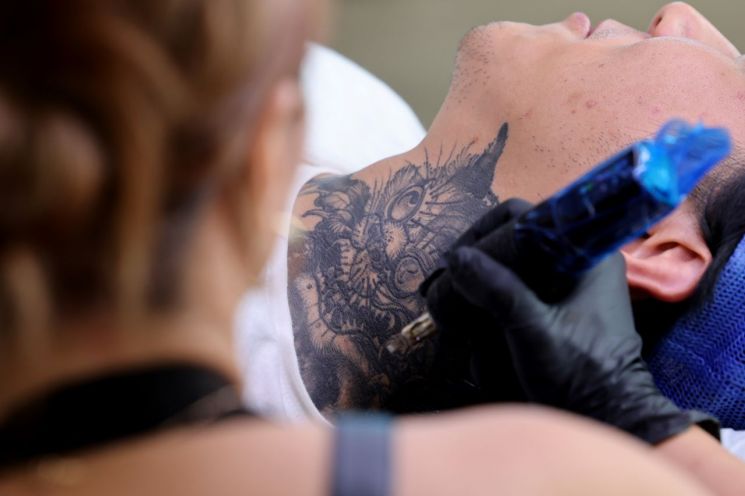 A tattoo artist working at a tattoo shop in downtown Seoul on the 27th of last month. Photo by Yonhap News
On September 25, the National Assembly held a plenary session and passed the "Tattooist Act," which permits non-medical professionals to perform tattoo procedures, with 195 out of 202 members present voting in favor and 7 abstaining.
The Tattooist Act aims to bridge the gap between the law and reality by establishing legal standards for the qualifications and licensing of tattooists, registration of tattoo shops, and hygiene and safety management requirements. Since the Supreme Court's 1992 decision classifying tattooing as a medical practice, non-medical tattoo procedures have been subject to crackdowns. However, semi-permanent makeup for eyebrows and lips, as well as cosmetic and aesthetic tattooing, have become mainstream. Despite the social demand, with 13 million people having experienced tattoos, institutional oversight has been lacking, leading to ongoing concerns over safety issues such as infections and side effects.
The new law defines both tattoos and semi-permanent makeup as "tattoo procedures" and grants exclusive rights to perform them only to those who pass a national exam and obtain a license as a tattooist. However, tattoo removal remains prohibited.
In addition, tattoo procedures on minors without parental consent are banned, and tattooists are required to complete mandatory hygiene and safety management training to protect public health and safety. Tattooists are also required to document and keep records of the date of the procedure, types and quantities of pigments used, and the location and scope of the tattoo. The law will take effect two years after its promulgation, and for up to two years after implementation, special provisions such as temporary registration will apply.
© The Asia Business Daily(www.asiae.co.kr). All rights reserved.

















