Korea Real Estate Board Releases Weekly Apartment Price Trends
The rate of increase in apartment prices has grown across most areas of Seoul. Although the market appeared to be stabilizing following the June 27 loan regulations, concerns over a deepening supply shortage have intensified. The government's housing supply measures have been perceived as insufficiently different from previous policies, which has, in turn, fueled buying sentiment even further.
According to weekly apartment price trend data released by the Korea Real Estate Board on September 25, the apartment sale price growth rate in Seoul was recorded at 0.19%. This marks a slight increase from the previous week's 0.12%. Since the beginning of this month, the rate of increase in Seoul apartment prices has expanded for three consecutive weeks. This level of growth is the highest since mid-July this year (0.19% as of July 14).
By district, Seongdong-gu recorded the highest increase at 0.59%. Mapo-gu (0.43%), Gwangjin-gu and Songpa-gu (0.35%), Gangdong-gu (0.31%), and Yongsan-gu (0.28%) also saw notable growth. In 22 out of Seoul's 25 districts, the rate of increase was higher than the previous week. The Korea Real Estate Board explained, "Buying inquiries have increased, particularly for complexes undergoing reconstruction, large-scale complexes, and those near subway stations, and as transactions at higher prices are being observed, apartment prices have risen across Seoul."
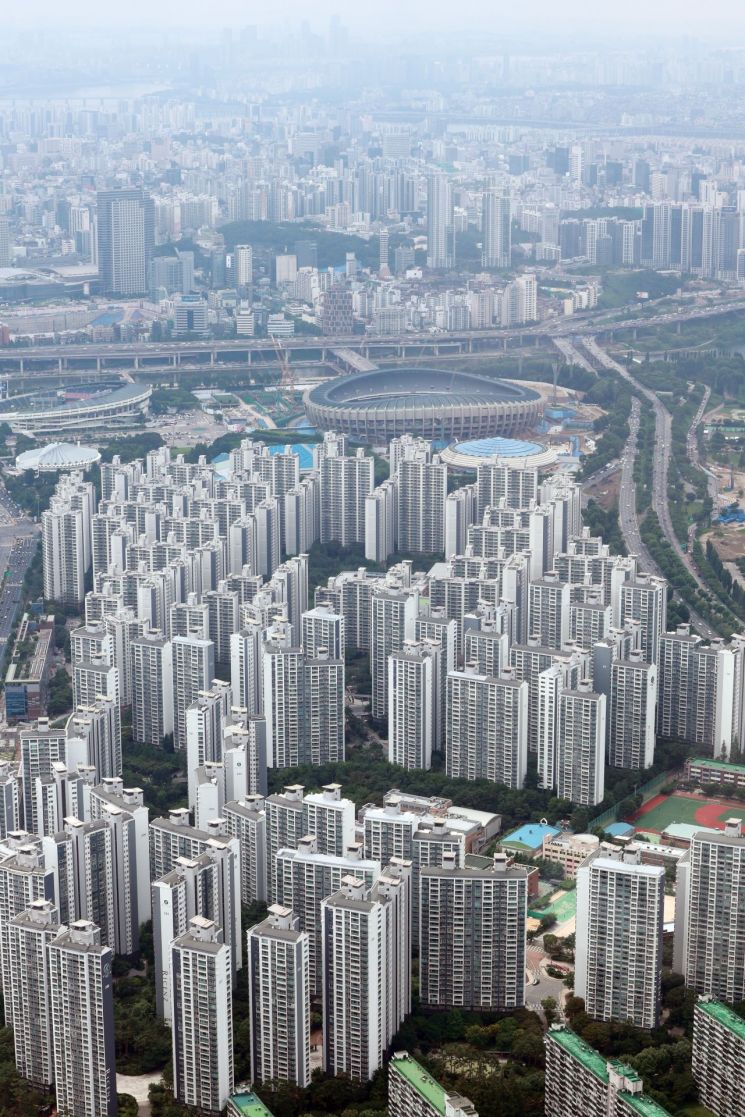 Apartment complexes in downtown Seoul as seen from Lotte World Tower Seoul Sky in Songpa-gu, Seoul. Photo by Yonhap News
Previously, after the Seoul Metropolitan Government lifted land transaction permit zones, apartment prices in Seoul, which had been rising sharply, began to climb more moderately following the implementation of government loan regulations. However, after the government announced plans to expand housing supply earlier this month, the upward trend has accelerated again. Although public institutions such as Korea Land and Housing Corporation (LH) have announced plans to speed up housing supply by directly implementing projects, these measures have been deemed insufficient to dispel market concerns over a supply shortage. Furthermore, as the government has signaled that it could introduce additional regulations at any time to curb demand, there has been a surge in buying activity, particularly in preferred areas, as buyers rush to purchase before further restrictions are imposed.
Apartment prices in the Seoul metropolitan area, including Seoul, rose by 0.07%, with the rate of increase widening compared to the previous week. In non-metropolitan regions, prices decreased by 0.01%. Jeonse prices (long-term rental deposits) in Seoul also rose slightly, increasing by 0.09%, while the nationwide average rose by 0.04%.
© The Asia Business Daily(www.asiae.co.kr). All rights reserved.

















