Wouldn't most drivers already know how the brake system works? In recent cases of vehicles suddenly accelerating and crashing, a significant number of drivers have claimed sudden unintended acceleration. They argue that even though they pressed the brake pedal, the car suddenly lurched forward and the accident could not be prevented. However, according to some black box footage and police investigations, it was found that, at the time of the accident, the driver's foot was actually on the accelerator pedal, not the brake. In the case of the vehicle crash at City Hall Station, the police also concluded that the driver pressed the accelerator instead of the brake pedal at the time of the accident.
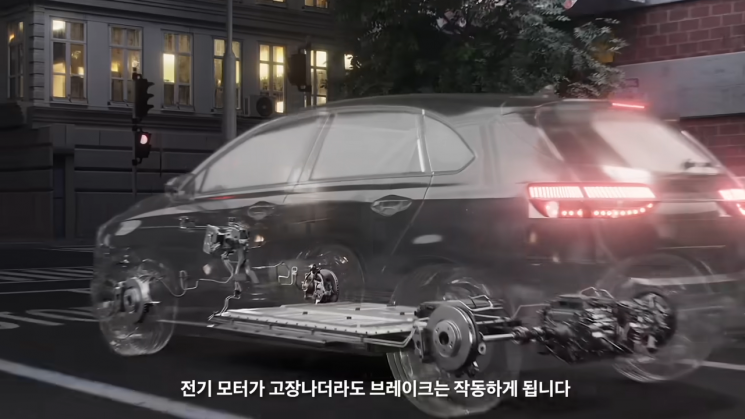
Drivers Involved in Vehicle Crash Accidents Claim "Sudden Unintended Acceleration"... Hyundai Releases Explanation Video
On September 22, Hyundai Motor Company released a video titled "How Brakes Work" on its official website and YouTube channel, which has been well received among drivers. The key point of the video is that "the automobile brake system is designed to operate whenever the brake pedal is pressed."
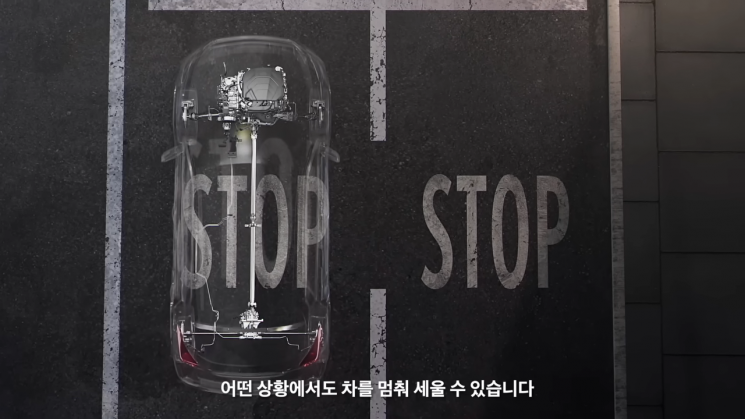
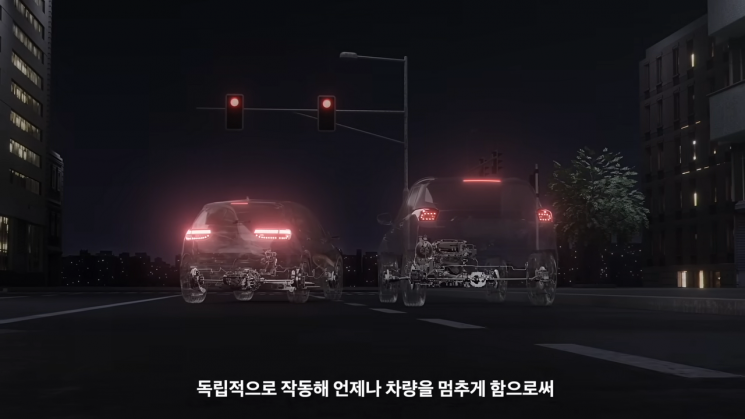
According to Hyundai Motor Company's explanation, the brake system amplifies the force applied by the driver to the brake pedal to generate strong braking power. However, the force generated by simply pressing the brake pedal is not always sufficient to overcome the significant kinetic energy produced by the vehicle's weight and driving speed. To compensate for this, an assembly consisting of a brake master cylinder and a brake booster has been developed. If there is a problem with the brake booster, the brake pedal may feel stiff or hard. However, even in this situation, pressing the brake pedal firmly will still produce braking power.
"Whether Gasoline or Electric, Brakes Work When Pressed Even If the Engine Is Off"
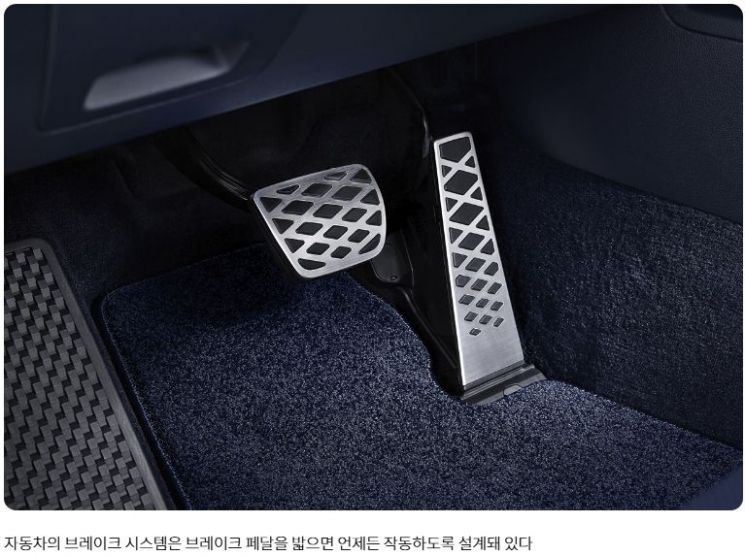
If you have ever pressed the brake pedal repeatedly after the engine was turned off, you may have noticed that the pedal feels soft at first but gradually becomes firmer with each press. This happens because, once the engine stops, the intake vacuum is no longer supplied, and each press of the pedal gradually depletes the remaining vacuum inside the booster, eventually causing the vacuum to disappear. As a result, the booster can no longer provide additional force, making the brake pedal feel hard. However, even in this situation, the brake system itself continues to function normally. Even if the engine is off, pressing the brake pedal will illuminate both the rear brake lights and the upper auxiliary brake light.
All recently released vehicles are equipped with a brake override function. When the brake pedal is pressed while the accelerator pedal is also being pressed, the car's electronic control system is designed to prioritize the signal from the brake pedal, immediately activating the braking system. The reason braking takes precedence over acceleration is that safety is prioritized in all driving situations.
 Most of the captured images of the vehicle crash scenes show drivers claiming sudden unintended acceleration.
Online Users Praise the Video: "Excellent Quality," "Please Make More"
Online users who watched the Hyundai Motor Company YouTube video responded with overwhelming praise, saying, "This kind of video is really great." Other comments included, "As cars become more automated over time, there are more people who don't really understand how they work, so this kind of content is really valuable," and "Both the video quality and content are top-notch." "The quality of the video is so good that it kept me focused the entire time. I hope Hyundai continues to produce more videos like this in the future." "There should be more videos that clearly state what is right and wrong," and "I hope many people use this as a reference," were among the reactions.
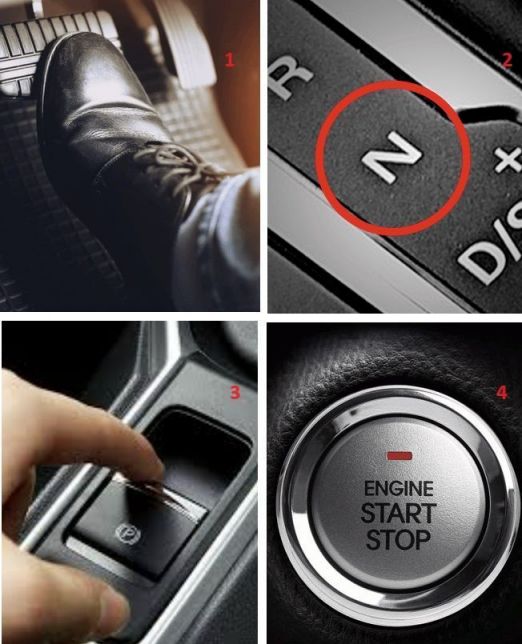 The four-step procedure for dealing with sudden unintended acceleration is ▲press the brake pedal firmly once ▲shift the gear to neutral ▲engage the parking brake ▲turn off the car engine.
© The Asia Business Daily(www.asiae.co.kr). All rights reserved.



















