Fair Trade Commission Announces "Comprehensive Measures to Strengthen Franchisee Rights"
Headquarters Required to Accept Franchisee Group Negotiations
"Franchise Business Model at Risk"
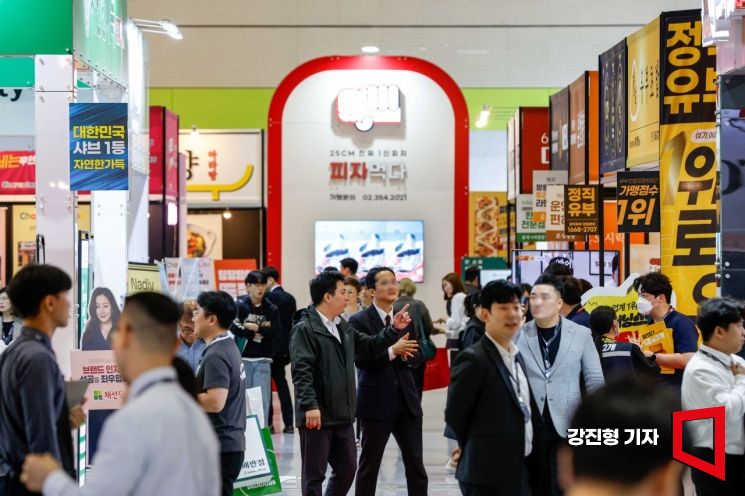 Signs and advertisements of franchise companies participating in the franchise expo held at COEX in Seoul in 2023 are densely displayed. Photo by Kang Jin-hyung
The franchise industry is on high alert ahead of the introduction of collective bargaining rights for franchisees. If franchisee organizations are legally recognized as negotiation partners, sweeping changes to the management structure, which has so far been led by headquarters, will become inevitable. The industry has cited the following as major concerns: weakening of brand control, decline in profitability, risks of collective action, and regulatory uncertainty.
According to industry sources on October 3, the core of the "Comprehensive Measures to Strengthen Franchisee Rights and Interests" announced last month by the Fair Trade Commission is to establish a legal framework that allows franchisee organizations to negotiate with franchise headquarters on an equal footing during operations. To this end, the government plans to implement a "Franchisee Organization Registration System," which will require organizations that meet certain criteria to register with the Fair Trade Commission, thereby granting them official representative status.
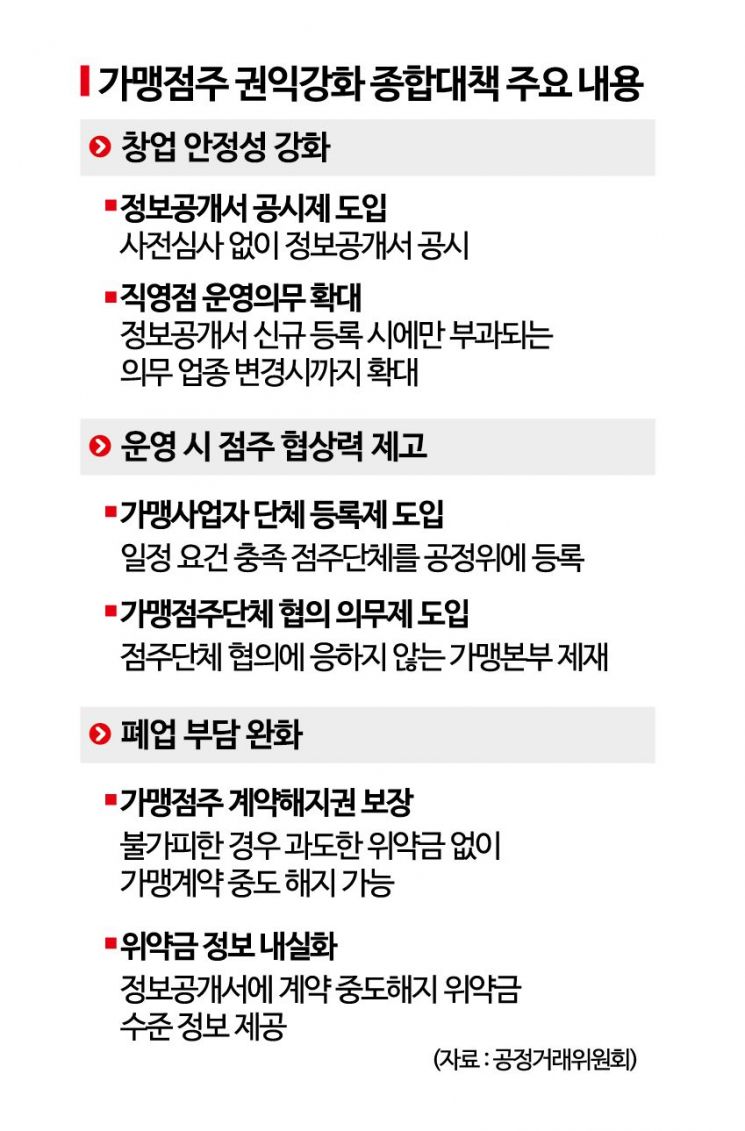
While the industry agrees with the intent of the system, there is widespread concern about the practical burdens it may impose. A representative from the headquarters of Franchise A stated, "There is no disagreement that protecting franchisee rights is necessary," but added, "If the system malfunctions, both headquarters and franchisees could suffer damages."
Franchise headquarters have pointed to the potential damage to brand consistency as a side effect of the Fair Trade Commission's comprehensive measures. The core competitiveness of a franchise lies in maintaining uniform service and quality nationwide. However, if collective bargaining rights are guaranteed, initiatives such as discount promotions, new menu launches, and changes to operational manuals-typically led by headquarters-could become difficult to implement without the consent of franchisee organizations. The representative explained, "Quick decision-making is essential to maintain brand identity, and if the negotiation process is prolonged, consumer satisfaction could decline."
There is also concern that failed negotiations could lead to collective action by franchisee organizations. If these groups function like labor unions and resort to simultaneous business suspensions or boycotts of headquarters policies, the brand image could suffer irreparable damage. This risk is particularly high in the food service sector, which has extensive direct contact with consumers. A representative from Franchise B expressed concern, saying, "The relationship between franchisees and headquarters cannot always be structured as a power dynamic. Imposing additional obligations on headquarters and listening only to franchisees could ultimately harm not just headquarters and franchisees, but also consumers."
This could immediately lead to a decline in headquarters' profitability. A significant portion of headquarters' profits comes from logistics margins, royalties, and shared advertising expenses. However, if collective bargaining becomes possible, franchisees are likely to strongly demand a reduction in their cost burden. Typical demands include lowering the share of advertising and promotional expenses or reducing the number of mandatory supply items. Both within and outside the industry, there is analysis that franchise headquarters may have to redesign their profit-sharing structures with franchisees. A senior executive in the franchise industry pointed out, "Even if headquarters concedes just 1% of logistics margins, it could result in annual losses of billions of won. We may face a situation where the entire existing structure must be redesigned."
Some in the industry warn that these regulatory changes could shake the entire business model of the franchise sector. A representative from Franchise C stated, "Most franchise headquarters already communicate regularly with franchisee councils to coordinate opinions. However, for small and medium-sized franchise companies, increased management burdens could threaten their very survival."
© The Asia Business Daily(www.asiae.co.kr). All rights reserved.
![Clutching a Stolen Dior Bag, Saying "I Hate Being Poor but Real"... The Grotesque Con of a "Human Knockoff" [Slate]](https://cwcontent.asiae.co.kr/asiaresize/183/2026021902243444107_1771435474.jpg)

















