ICPRI Releases Evaluation Results
No Innovation City Earned S or A Grade Among 10 Nationwide
Naju Alone Received a B Grade, Others Deemed Isolated Islands
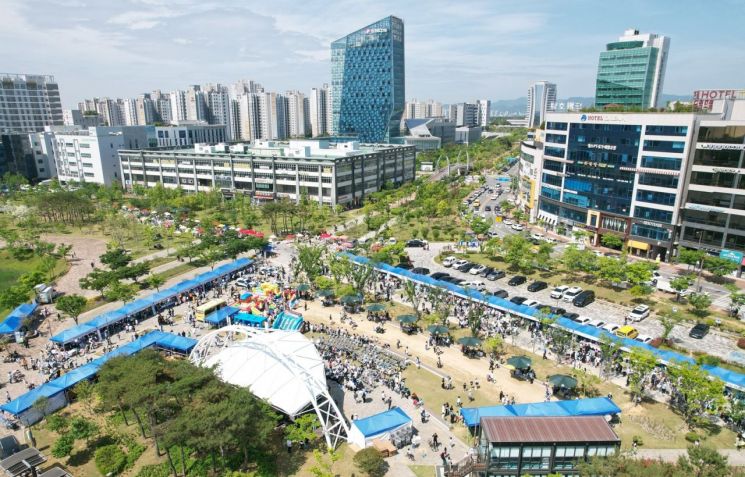
The "Gwangju-Jeonnam Joint Innovation City," established in Naju, South Jeolla Province, received the highest score in the "Innovation City Mutual Growth Index" evaluation, which targeted all 10 innovation cities nationwide. However, critics point out that none of the innovation cities in the country received the highest grade, indicating that they are failing to fulfill their roles as hubs for balanced regional development.
According to the results of the "Innovation City Mutual Growth Index Survey" announced on the 23rd by the private research institute Innovation City Policy Research Institute (ICPRI), Gwangju-Jeonnam Joint Innovation City received a score of 681.3 out of 1,000, earning a B grade among the 10 innovation cities nationwide.
None of the 10 innovation cities received an S or A grade.
With the exception of Gwangju-Jeonnam Joint Innovation City, all nine other innovation cities received a grade of C or lower, and cities such as Busan, Ulsan, Jinju, and Jeonju remained at a D grade. Seogwipo received the lowest E grade with a score of 382.1.
The analysis points to a lack of "cooperation" and "vitality" as key issues. For example, Busan received a B grade in growth indicators but received an E in vitality and a D in cooperation. Ulsan also has high growth potential but was rated D due to declines in vitality and cooperation.
Naju received a C grade in growth, but earned B grades in both vitality and cooperation.
Over the past decade, Naju has implemented a variety of policies to revitalize Bitgaram Innovation City and improve living conditions. The city has also enhanced residential environments by expanding transportation and daily life infrastructure, including improving public transportation between Gwangju and Naju, upgrading road networks, and addressing parking shortages. The establishment of new schools within the innovation city, as well as the expansion of libraries, sports facilities, and cultural centers, has increased convenience for residents.
This first-ever nationwide "Innovation City Mutual Growth Index" consists of a total of 1,000 points, broken down into "Growth" (200 points), "Vitality" (300 points), and "Cooperation" (500 points). The index analyzes the connectivity and performance of innovation cities in relation to their local governments. Specifically, the "Growth" category evaluates economic growth, industrial growth, population growth, and future innovation; the "Vitality" category assesses housing and transportation, educational conditions, healthcare and welfare, cultural creativity, and environmental friendliness; and the "Cooperation" category includes talent cooperation, social cooperation, and innovation cooperation as evaluation indicators.
The Policy Research Institute explained that this index serves as a benchmark for balanced development, showing whether regions and institutions are growing together beyond the mere physical relocation of innovation cities.
The Policy Research Institute stated, "Innovation cities are innovation cities in name only and remain isolated islands without mutual growth. The government (under Lee Jaemyung) must push ahead with a proper second phase of public institution relocation. As the second phase of public institution relocation has been presented as a national policy task, we plan to directly gather local voices and translate them into concrete policy alternatives."
© The Asia Business Daily(www.asiae.co.kr). All rights reserved.

















