Moldova Set to Hold General Election on the 28th
Fake News Campaigns Target Pro-European Government
The small Eastern European country of Moldova, located between Ukraine and Romania, is set to hold a general election on the 28th to elect a new 101-seat parliament. The international community is closely watching the outcome of this election, as it is seen as a pivotal choice between continuing Moldova's pursuit of European Union (EU) membership or strengthening its ties with Russia.
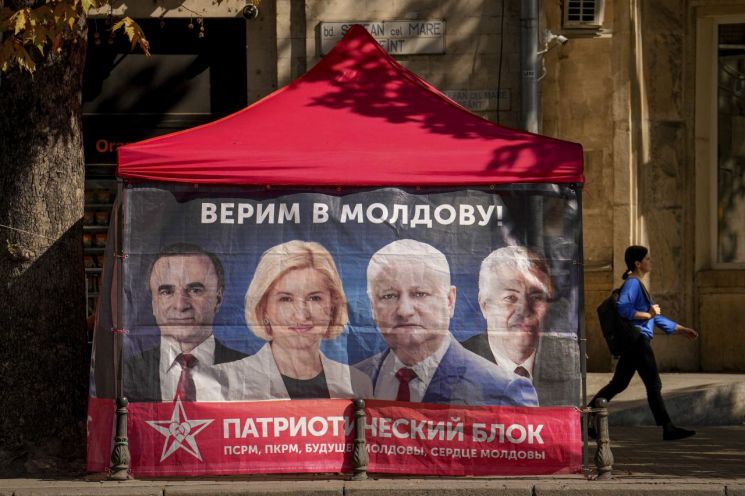 The small Eastern European country Moldova is scheduled to hold a general election on the 28th to elect a new 101-seat parliament. Photo by AP News Agency
On September 22 (local time), international news agencies such as AP and AFP reported that Moldovan President Maia Sandu, in a video address, criticized Russia for allegedly paying hundreds of people in an attempt to influence the general election. Moldovan authorities uncovered a large-scale riot plot believed to have been backed by Russia and arrested 74 people on the same day.
Earlier, Moldovan police, together with security forces, conducted 250 searches targeting more than 100 individuals, resulting in the arrest of 74 people. The police stated, "This riot plot was coordinated through criminal organizations in the Russian Federation." Viktor Furtuna, the chief prosecutor for organized crime and special cases at the Moldovan Prosecutor General's Office, explained, "The 74 people arrested will be detained for up to 72 hours," adding, "Most of them systematically traveled to Serbia for training, and their ages range from 19 to 45."
Moldova's General Election Marred by Disinformation, Vote-Buying, and Widespread Illegal Activities
Elections in Moldova have traditionally been plagued by disinformation, vote-buying, and various forms of electoral distortion and illegal activities. This time, online disinformation is actively being spread to destabilize the pro-European government. According to Euronews, a sophisticated pro-Russian disinformation campaign known as "Matryoshka" is intensifying its activities in Moldova. Disguised as legitimate media outlets, the campaign spreads fake news such as "President Sandu embezzled 24 million dollars (about 33 billion won)" and "She is addicted to psychoactive substances." After last year's presidential election, President Sandu also stated, "Criminal organizations bought votes from the people," defining this as "an attack on democracy and freedom."
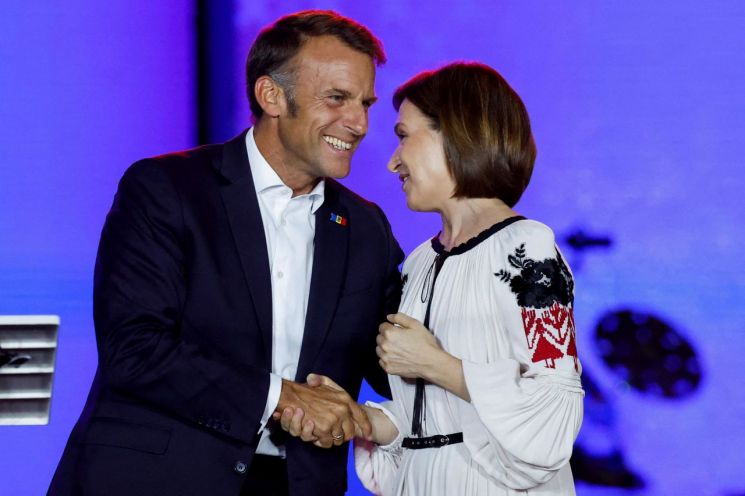
Currently, the Party of Action and Solidarity (PAS), led by pro-European President Maia Sandu, holds the majority in Moldova's parliament. If PAS wins the general election, it is expected that Moldova will continue to pursue its goal of joining the EU by 2030. However, pro-Russian opposition parties are also determined to regain power. The Heart of Moldova Party, Moldova's Future Party, Socialist Party, and Communist Party-each with pro-Russian leanings-have formed the "Patriotic Bloc" to consolidate their forces against PAS. Based on recent opinion polls, Reuters reported that PAS could lose its majority or face the prospect of having to form a coalition government with minor parties. If the pro-Russian opposition wins, Moldova's plans to join the EU are expected to face significant setbacks.
Previously, President Sandu and PAS faced a crisis in the presidential election held in November last year. President Sandu failed to secure a majority in the first round and only won re-election after defeating a pro-Russian candidate in the runoff. During that presidential election, a referendum on EU membership was also held, with approval barely surpassing the majority at 50.35 percent. Moldova's severe inflation and chronic corruption issues also pose significant challenges for President Sandu and PAS.
Meanwhile, Russia has argued that Moldova is deliberately fueling anti-Russian sentiment to win the election and has accused Europe of interfering in the electoral process. French President Emmanuel Macron, German Chancellor Friedrich Merz, and Polish Prime Minister Donald Tusk visited Moldova last month to express their support for the Sandu administration and its efforts to join the EU. President Sandu and the ruling Party of Action and Solidarity, both with pro-EU orientations, hope to maintain power and secure Moldova's place in the EU bloc, situated between Romania and Ukraine.
© The Asia Business Daily(www.asiae.co.kr). All rights reserved.


















