China Tops List of Foreign Visitors to Japan in August, South Korea Ranks Second
Japan National Tourism Organization: "Expansion of Flight Seats Contributed to Growth"
The number of foreign tourists visiting Japan in August this year reached an all-time high. Despite negative factors such as rumors of a major earthquake in eastern Japan in July and controversies over some restaurants refusing entry to Korean and Chinese customers, the expansion of flight routes and the summer vacation season have continued to drive tourism growth.
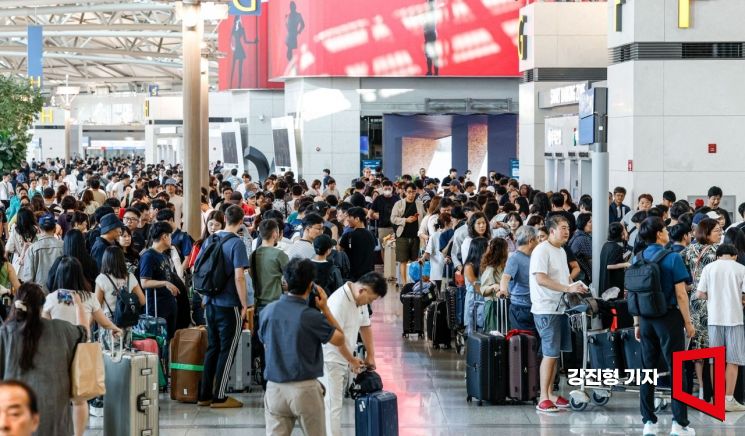 On the 25th, ahead of the peak summer vacation season, Incheon International Airport Terminal 1 was crowded with travelers. Incheon International Airport Corporation forecasted that approximately 3.91 million people will use Incheon Airport over the three weeks from late July to early August, the peak summer season. 2025.7.25. Photo by Kang Jinhyung
On the 23rd, the Japan National Tourism Organization (JNTO) announced that the number of foreign visitors to Japan in August was 3,428,000, marking a 16.9% increase compared to the same month last year. This is the highest figure ever recorded for August.
By country, China ranked first with 1,018,600 visitors, a 36.5% increase. South Korea was second, with 660,900 visitors, up 8.0%. Taiwan followed with 620,700 visitors, a 10% increase, while Hong Kong saw a decrease of 8.3% to 226,100 visitors. The United States recorded 194,500 visitors, an 11.7% increase.
JNTO cited the expansion of flight seat availability as a major factor behind the increase in South Korean tourists. JNTO stated, "Despite rising travel demand to Southeast Asia and China, the increase in flights such as the Gimpo-Chubu (Nagoya) route and charter flights between Cheongju and Kobe, along with the summer vacation effect, led to a record number of South Korean visitors to Japan in August."
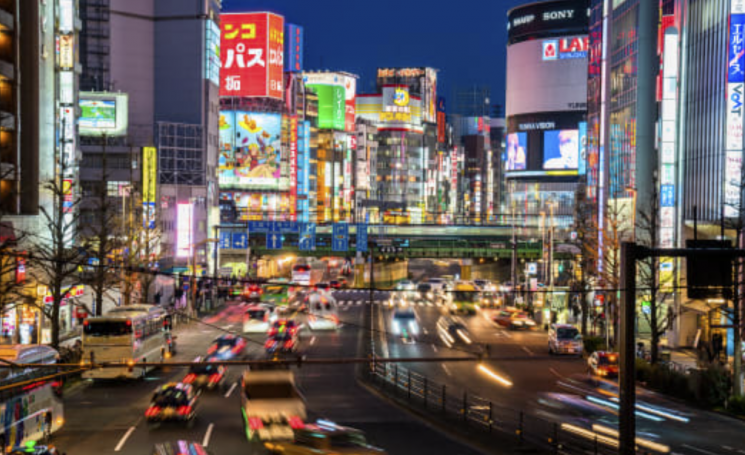
Japan's Tourism Remains Popular Despite 'July Earthquake Rumors' and 'Tourist Discrimination' Issues
Japan's tourism industry continues to grow despite several negative factors. Earlier this year, rumors of a major earthquake in July spread throughout Japan, leading to a decline in tourism demand. One Hong Kong airline even temporarily suspended regular routes connecting Hong Kong to two smaller Japanese cities, citing a sharp drop in passengers and deteriorating business performance.
Additionally, there have been cases in Japan where some restaurants have openly refused entry to Korean and Chinese customers, sparking controversy. In May, a restaurant in Osaka posted a note on its entrance stating, "We do not accept Chinese customers because they are rude." In July last year, an Italian restaurant in Okubo, Shinjuku, Tokyo, put up a sign saying, "Although this is an era of diversity and tolerance, we cannot work while forcing ourselves to have negative feelings. Therefore, we do not accept Korean or Chinese customers."
The South China Morning Post analyzed these discriminatory actions as efforts to gain support from some nationalist groups, noting that dissatisfaction with 'overtourism' in Japan and backlash against the inconsiderate behavior of some foreign tourists have combined to fuel the spread of such measures.
© The Asia Business Daily(www.asiae.co.kr). All rights reserved.
![Clutching a Stolen Dior Bag, Saying "I Hate Being Poor but Real"... The Grotesque Con of a "Human Knockoff" [Slate]](https://cwcontent.asiae.co.kr/asiaresize/183/2026021902243444107_1771435474.jpg)

















