Unilateral Withdrawal Not Permitted Under Passenger Transport Service Act
"Transfer System Is Key to Public Transportation Convenience"
"Concern Over Increased Burden on Citizens if Withdrawn"
Warning of Business Suspension and Fines
The Seoul Metropolitan Government has announced plans for legal action, including suspension of business, in response to the Village Bus Transportation Association’s notice of withdrawal from the transfer system. The city maintains that unilateral withdrawal from the integrated transfer system is not permitted under the Passenger Transport Service Act.
On September 23, the Seoul Metropolitan Government stated, "Withdrawal from the transfer system legally constitutes a change or adjustment in transportation fares, and under the Passenger Transport Service Act, such changes require notification to and approval from the city. Unilateral withdrawal without prior consultation and approval is not allowed."
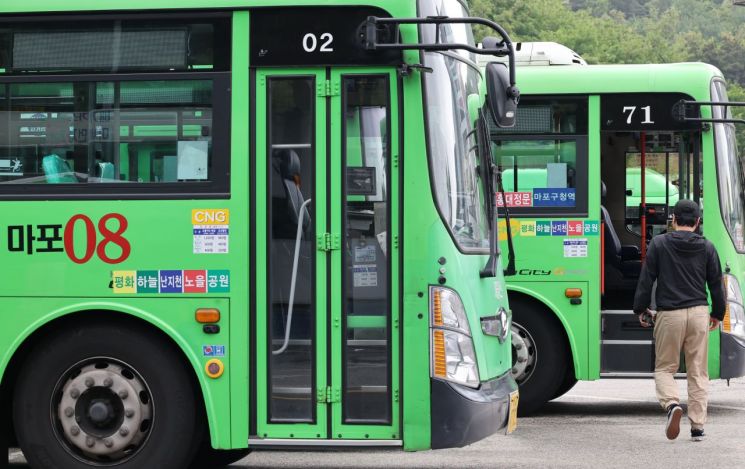
Previously, on September 22, the Village Bus Transportation Association declared that it would leave the transfer system if the city did not expand financial support. The association demanded that the city revise and settle the fare settlement rules in the public transportation transfer agreement, establish new regulations for compensation and methods regarding transfer loss, and adjust transportation costs to reflect inflation and wage increases.
The association argued that village bus operators, which currently operate as private enterprises, have been accumulating deficits due to the transfer system. When a passenger transfers from a village bus to another form of public transportation, the fare settled for the village bus is 676 won, resulting in a loss of 524 won per passenger compared to the base fare of 1,200 won. Although the city partially compensates for these deficits, the association claims there are limits. "Over the past 20 years, average annual transfer losses have reached 100 billion won, and the amount not compensated by the city exceeds 1 trillion won," the association stated. "Nevertheless, the city is demanding even more frequent service, pushing the village bus industry into a crisis," they added.
However, the Seoul Metropolitan Government countered on the same day, stating, "Unilateral withdrawal is not possible." The city emphasized that the integrated transfer system, introduced in the Seoul metropolitan area in 2004, "greatly improved convenience for citizens by allowing free transfers between subways, city buses, and village buses." The city further argued that if village buses withdraw from the transfer system, passengers will have to pay additional fares when transferring, and that vulnerable groups and low-income citizens would be disproportionately affected.
Regarding the association’s claims of insufficient financial support, the city pointed out, "Over the past five years, financial support for village buses has more than doubled, from 19.2 billion won in 2019 to 41.2 billion won in 2025. However, the number of trips per route has decreased by 24 percent, and arbitrary operations by bus companies have increased inconvenience for citizens." Based on an analysis of vehicle terminal operation records, the city claimed that operators are running fewer vehicles than authorized, resulting in intervals exceeding 40 minutes, non-compliance with first and last bus schedules, and irregular service intervals, all of which directly harm public transportation convenience.
The city also revealed unreasonable practices, such as companies applying for subsidies for vehicles parked at depots and not in operation. Some operators were found to increase service only on weekends, when passenger numbers are low, to meet the legal minimum, while failing to provide sufficient buses during peak weekday morning and evening hours when demand is highest, leaving citizens without service when they need it most.
In particular, the Seoul Metropolitan Government criticized the association for repeatedly demanding increased subsidies and insisting on withdrawal from the transfer system through press briefings, without responding to additional proposals from the city. The city announced plans for legal action against the association’s withdrawal. "If the association forcibly withdraws from the transfer system, this will constitute an act that disrupts the smooth transportation of passengers under Article 23 of the Passenger Transport Service Act, and we plan to respond with legal measures such as suspension of business or imposition of fines," the city stated.
Yeo Jangkwon, Director of the Seoul Metropolitan Government’s Transportation Bureau, said, "Village buses are a vital mode of transportation for citizens, and demanding financial support without improving service only shifts the burden onto the public. The city will continue discussions to protect the public nature of village buses, but if withdrawal is forced, we will take all necessary actions, including legal measures, to prevent inconvenience to citizens."
© The Asia Business Daily(www.asiae.co.kr). All rights reserved.

















