Infectious Erythema Alert Issued in Okinawa, Japan
Increased Risk of Miscarriage or Stillbirth for Infected Pregnant Women
In Naha, the central city of Okinawa, Japan, a so-called "apple disease" outbreak has prompted local health authorities to issue a warning.
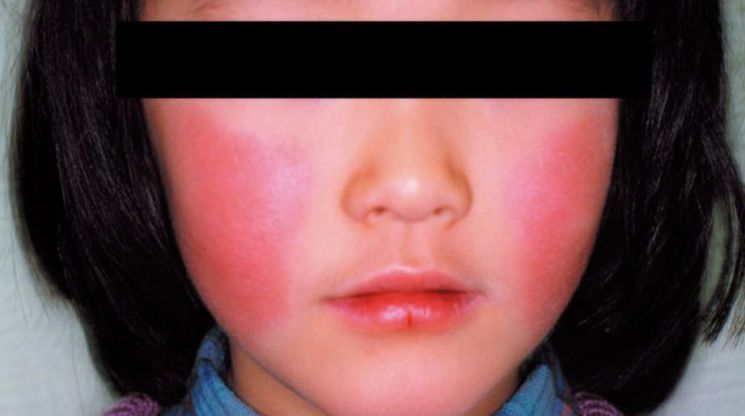 Appearance of red rash on both cheeks caused by infectious erythema, also known as "apple disease." National Institute of Infectious Diseases, Japan
On the 21st, Okinawa TV (OTV) reported that the Naha City Health Center issued an alert on the 18th regarding the increasing cases of infectious erythema, commonly known as apple disease, across the city. According to Japan’s Ministry of Health, Labour and Welfare, infectious erythema is a viral disease caused by parvovirus B19. It is mainly transmitted through coughing or sneezing and frequently occurs among infants and children aged 2 to 15 during winter and spring. The disease has an incubation period of about 5 to 16 days and is nicknamed "apple disease" because it causes red rashes on both cheeks, arms, or legs. Often, symptoms such as fever or cold-like signs appear before the rash develops on both cheeks. Infectious erythema is contagious even before the rash appears, but it is believed to lose its infectivity once the rash emerges.
When adults are infected, symptoms such as headache or arthritis may also occur. Pregnant women need to be especially cautious, as infection during pregnancy can be transmitted to the fetus, potentially resulting in miscarriage or stillbirth. According to Seoul Asan Medical Center, if infection occurs within the first three months of pregnancy, the risk of fetal hydrops is highest, and the miscarriage rate reaches 19%. During the 2011 outbreak, there were as many as 49 cases of miscarriage or stillbirth reported in Japan.
There is no specific treatment for infectious erythema. Treatment is based on symptoms: for itching, at-home bathing therapies are recommended, and for joint pain or mild fever, antipyretic analgesics are prescribed.
Local health authorities stated that, as of the week starting from the 8th of this month, pediatric clinics in Naha reported up to 20 patients per clinic. The Naha City authorities warned that not only children but also pregnant women and adults should actively seek vaccination and early diagnosis, and emphasized the importance of following infectious disease prevention guidelines, such as thorough handwashing and wearing masks.
Meanwhile, reports from May indicated that the number of "apple disease" patients increased across Japan, reaching the highest level in the past decade. According to the National Institute for Health Crisis Management, approximately 2,000 pediatric clinics nationwide reported an average of 1.30 patients per clinic during the week ending April 27, marking a three-week upward trend and the highest level in the last ten years.
© The Asia Business Daily(www.asiae.co.kr). All rights reserved.

















