Marriage with Parental Consent for 16- and 17-Year-Olds Now Banned by Law
Strong Measures Enacted to Address Early Marriage and Sexual Crimes
Bolivia in South America has passed a bill in its parliament that completely bans the marriage of minors. This amendment makes both marriage and common-law unions involving anyone under the age of 18 illegal, and removes the provision that previously allowed minors to marry with parental consent.
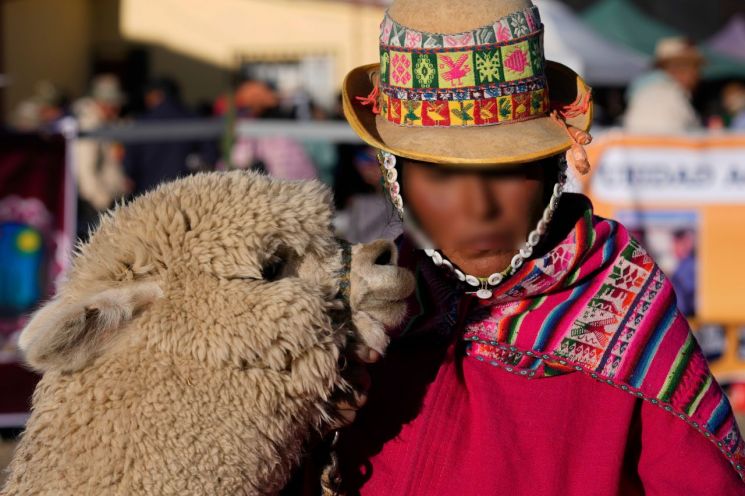 Bolivia in South America has passed a bill in its parliament that completely bans the marriage of minors (photo is for illustrative purposes and unrelated to the article content). Photo by AP Yonhap News
The Bolivian Human Rights Office announced in a local press release on the 18th that the bill had passed the lower house by a majority vote and would proceed to the president's signature and promulgation. The bill had already been reviewed by the Senate, and President Luis Arce has expressed his support for its implementation.
Until now, Bolivia had recognized the marriage of 16- and 17-year-olds with parental or guardian consent. This was closely tied to the tradition of early marriage in indigenous communities, and discussions about raising the legal marriage age had been delayed in a society that emphasizes cultural preservation, such as designating 36 indigenous languages as official languages.
However, in recent years, there has been ongoing criticism that children and adolescents are being exposed to risks such as sexual violence, unwanted pregnancies, and human trafficking due to early marriage. Human rights organizations have strongly condemned the reality that early marriage is being exploited as a means for adult men to commit sexual violence against underage girls.
According to the "Broken Dreams" report published by the Bolivian Human Rights Office, between 2014 and 2023, 468 girls aged 10 to 15 and 4,804 adolescents aged 16 to 17 continued their married lives with parental consent. The international child rights NGO Save the Children also presented statistics showing that, as of 2014, 32,300 girls under the age of 15 were classified as married.
Virginia Velasco, the lower house member who sponsored the bill, emphasized on social media that this amendment is a significant measure that promises young people the right to escape forced and unjust marriages and to secure their education and future.
In Central and South America, 13 countries, including Mexico, Chile, and Peru, have already banned the marriage of minors under the age of 18. With this legal amendment, Bolivia has become another country in the region to outlaw child marriage.
According to BBC Mundo, even before the amendment, cohabitation between adults and minors under the age of 16 was already prohibited by law. However, about 3% of Bolivian girls entered into common-law or cohabiting relationships before the age of 15. Jimena Tito, a child protection expert at Save the Children, pointed out that minors are exposed to various crimes due to marriage and cohabitation.
According to data from the Bolivian Ministry of Health, from 2015 to 2023, the number of reported pregnancies among children and adolescents exceeded 458,000. The practice of early marriage is mainly attributed to power dynamics within families, economic reasons, and social tolerance.
Assemblywoman Velasco stressed, "We must change the reality where communities condone and accept these practices as normal." Velasco, a member of the Movement for Socialism party who led the bill, described it as a historic step forward in protecting the rights of children and adolescents, and announced plans to continue raising awareness of these rights in schools and local communities.
The debate over this legal amendment has caused significant upheaval within the ruling party, coinciding with former President Evo Morales being investigated for allegations of sexual assault and child trafficking involving a 15-year-old minor. Morales is accused of having a forced relationship in 2015 with a female adolescent who was 15 at the time, and it is reported that she gave birth to his child.
© The Asia Business Daily(www.asiae.co.kr). All rights reserved.

















