Trump Signs Proclamation to Reform Professional Visa
"Extension Possible for Up to Six Years"
Introduction of 'Gold Card'
Individuals Must Pay $1 Million, Companies $2 Million
The Trump administration in the United States has decided to significantly increase the fees for the H-1B visa, known as a professional visa. Each individual will be required to pay 100,000 dollars (approximately 140 million Korean won) per year, and this condition will apply for up to six years.
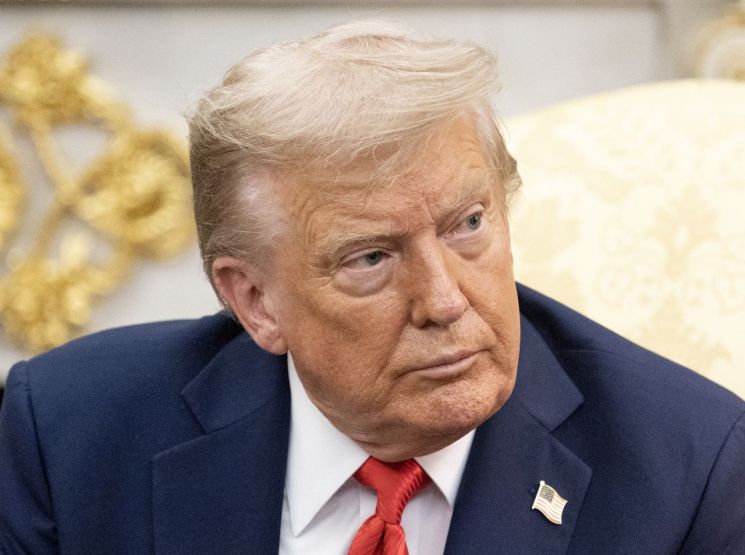
On September 19 (local time), President Donald Trump signed a proclamation at the White House outlining the reform of the H-1B system. The H-1B visa is for highly skilled foreign professionals in the fields of science, technology, engineering, and mathematics (STEM). Currently, the number of visas issued is limited to 85,000 per year, the basic stay period is three years, extensions are possible, and applicants are allowed to apply for permanent residency.
With this measure, the application fee, which was previously 1,000 dollars, has been increased by a staggering 100 times. Furthermore, the same amount must be paid each year for renewals.
Secretary of Commerce Howard Lutnick emphasized, "Whether it is a renewal or an initial application, companies must consider whether this foreign national is worth paying 100,000 dollars," adding, "The key is that this cost applies every year for six years." He made it clear that "the United States will now truly accept only the best," and stressed the intention to prevent visa abuse.
President Trump also stated, "In some cases, companies will have to pay a considerable cost," and predicted that the overall number of H-1B visas issued will decrease.
The proclamation pointed out that the H-1B visa has been used not to supplement American jobs, but to replace them with low-wage foreign labor. It specifically criticized IT companies for laying off American employees and replacing them with foreign workers in order to reduce costs.
Recently, after hundreds of Korean workers were detained at a construction site of a Korean company in Georgia, the United States and South Korea have been discussing improvements to the visa system. With the U.S. raising its visa barriers in this context, it is expected to have an impact on Korean companies and technical personnel as well. However, some observers note that if the U.S. government introduces separate measures for Korean corporate dispatch personnel, the impact may be mitigated.
Introduction of 'Gold Card' for High-Paying Applicants
On the same day, President Trump also signed an executive order for a new permanent residency program called the 'Gold Card.' This program targets talented individuals and investors who can make substantial contributions to the United States. Individuals who pay 1 million dollars and companies that pay 2 million dollars can receive expedited visa benefits.
The White House explained, "The Gold Card will open doors to successful entrepreneurs and investors and strengthen America's interests." President Trump also emphasized, "We will block illegal immigration and prioritize foreign nationals who benefit the United States."
Secretary Lutnick stated that the Gold Card will replace the existing EB-1 and EB-2 visas, with an annual cap of 80,000. Applicants must also pay an additional 15,000 dollars for the review process.
He also mentioned that a 'Platinum Card' is being prepared, which will allow up to 270 days of stay in the United States per year without taxes on overseas income for those who pay 5 million dollars. While this requires congressional approval, he noted that there is already a waiting list.
© The Asia Business Daily(www.asiae.co.kr). All rights reserved.

















