Semiconductors, Pharmaceuticals, Critical Minerals, Energy, Shipbuilding, and More
Lutnick: "If the U.S. Demands Funds, Japan Must Provide... Fundraising Is Japan's Problem"
The Wall Street Journal (WSJ) reported on September 18 (local time) that the Donald Trump administration is considering ways to revive the manufacturing sector, such as building factories and other infrastructure, using the 550 billion dollars (approximately 767 trillion won) that Japan agreed to provide under the U.S.-Japan trade agreement.
The Trump administration plans to invest 550 billion dollars in semiconductors, pharmaceuticals, critical minerals, energy, shipbuilding, and quantum computing.
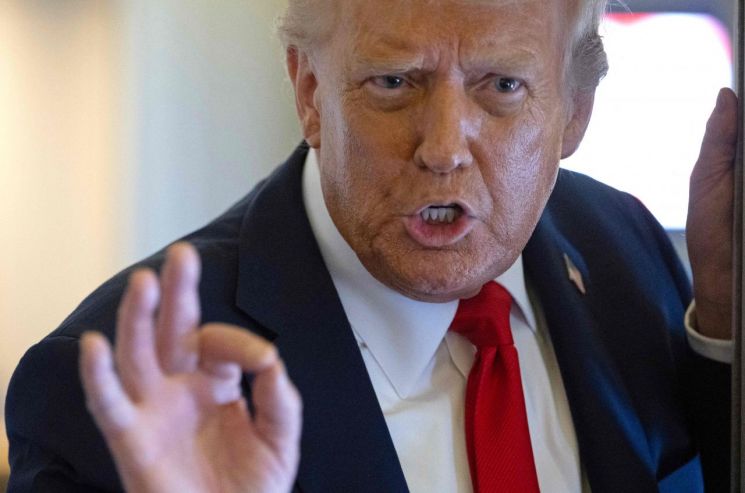
Some projects will receive government benefits, such as regulatory reviews under expedited procedures. According to documents reviewed by WSJ and sources familiar with the matter, the Trump administration is also considering entering into lease agreements to allow companies access to federally owned land and waters. However, the details are still being negotiated and may change.
President Trump has made the revival of American manufacturing a key priority for his second term. He claims that his trade policies will bring supply chains back to the United States and create a large number of new jobs.
So far this year, manufacturing employment in the United States has been sluggish. While overall U.S. employment increased from January to August, manufacturing jobs decreased by 38,000 during the same period.
If the Trump administration's plan succeeds, it could help President Trump fulfill his campaign promises. The administration will also have the authority to decide which industries receive government support.
However, WSJ raised questions about whether companies will be willing to participate in such projects with long-term confidence, given that large-scale projects could take years or even decades to complete, and a future president could halt them midway.
WSJ also reported that President Trump and Secretary of Commerce Howard Lutnick have privately discussed building gas turbine and generic drug production facilities, as well as investing in new nuclear power plants and pipelines.
The core of Japan's 550 billion dollar investment in the United States is outlined in a memorandum of understanding signed by the United States and Japan on September 4.
The investment deadline is set for January 19, 2029, the day before President Trump's term ends. President Trump has discretion over the use of the 550 billion dollar investment fund. The review of investment destinations will be conducted by an investment committee composed of Americans and chaired by Secretary Lutnick, which will make recommendations to President Trump. If Japan does not provide the funds, the United States may increase tariffs on Japanese goods.
The method for distributing investment returns also favors the United States. Before the principal and interest are repaid, the United States and Japan will each receive half of the returns. After repayment, however, the United States will take 90 percent of the profits, while Japan will receive only the remaining 10 percent.
There are also differing interpretations between the U.S. and Japanese sides regarding how the funds will be raised. The Japanese side views the investment as taking the form of loans or guarantees. However, according to Secretary Lutnick, Japan's investment is a "capital call," a Wall Street term referring to a method in which investors commit funds in advance and are required to provide them as soon as an investment project is determined.
In a recent interview with CNBC, Secretary Lutnick said, "If we ask for money to build a project, they (Japan) are required to provide it to the United States. How will they raise the funds? That's their problem to solve."
© The Asia Business Daily(www.asiae.co.kr). All rights reserved.

















