Supreme Court: "Royalties Are Taxable If Patented Technology Is Used in Korea, Even Without Local Registration"
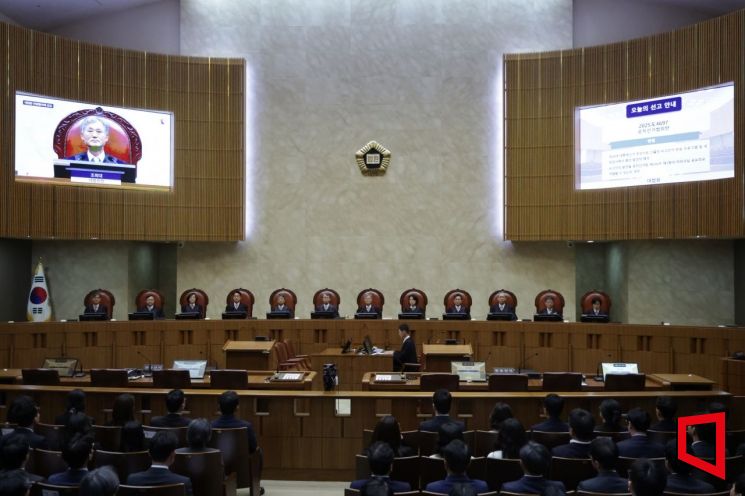
The Supreme Court Grand Bench ruled that "royalties for patents not registered in Korea can still be subject to taxation," siding with the tax authorities in the legal dispute with SK Hynix. The court overturned the previous rulings in favor of SK Hynix in the corporate tax lawsuit and remanded the case for retrial, effectively reversing the decisions of the first and second trials.
On September 18, the Supreme Court Grand Bench, presided over by Justice Kwon Youngjun, overturned the lower court's ruling that had favored SK Hynix in its lawsuit against the head of the Icheon Tax Office seeking cancellation of a refusal to amend a tax assessment, and sent the case back to the Suwon High Court.
The case dates back to 2011, when SK Hynix was sued by Company A, a U.S.-based patent management firm, for patent infringement in the United States. The two companies reached a settlement agreement in 2013, under which SK Hynix agreed to pay Company A 1.6 million dollars annually for five years. In January 2014, SK Hynix paid the agreed 1.6 million dollars in royalties to Company A and withheld and paid 310 million won in corporate tax.
However, in June 2015, SK Hynix filed a claim for a corporate tax refund with the tax office, arguing that, under the Korea-U.S. Tax Treaty, the payment was not subject to domestic taxation. SK Hynix contended that royalties for patents registered only in the United States did not constitute "domestic source income of a foreign corporation" as defined by the Corporate Tax Act.
The tax office rejected the claim, leading SK Hynix to file a lawsuit. Both the first and second instance courts ruled in favor of SK Hynix, stating, "All patents were either registered or filed in the United States and not registered in Korea," and "regardless of whether the patents were actually used for manufacturing or sales in Korea, the royalties cannot be regarded as domestic source income subject to withholding tax."
The Supreme Court, however, took a different view. The court held that "if royalties for patent rights are paid as consideration for the use of patented technology in manufacturing, sales, or other activities in Korea, even if the patents are not registered in Korea, such royalties constitute domestic source income."
The court further pointed out, "Nevertheless, the lower court erred in law by concluding that the royalties did not constitute domestic source income solely because they related to patents not registered in Korea, without examining whether the patented technology was actually used for manufacturing or sales in Korea."
The Supreme Court explained that the "use" of technology or information can occur anywhere, regardless of the country where the patent is registered. The court noted that the previous Supreme Court precedent, which was based on the principle of territoriality of patent rights (i.e., where the patent is registered), only means that the use of patented technology in Korea does not constitute patent infringement against a foreign patent holder. It does not mean that patented technology cannot be used in Korea or that other legal consequences cannot arise from such use.
The court concluded that the second instance court erred by failing to examine whether the patented technology was actually used for manufacturing or sales in Korea.
In contrast, Justices Noh Taeak, Lee Heungku, and Lee Sukyeon dissented, stating, "Under the principle of territoriality of patent rights, 'use of a patent' can only occur within the country where the patent is registered. Only royalties paid as consideration for the use of a patent in Korea can be considered domestic source income. In this case, the royalties were paid for the use of U.S. patent rights within the United States, not for the use of the patented invention in Korea."
A Supreme Court official explained, "This Grand Bench ruling means that, regardless of where the licensed patent is registered, if the patented technology is actually used for manufacturing or sales in Korea, such use constitutes domestic use of the patent, and the royalties become domestic source income subject to Korean taxation."
© The Asia Business Daily(www.asiae.co.kr). All rights reserved.

















