September 23 to December 7 at Seolmundae Halmang Exhibition Hall
Special Exhibition on Jeju Dialects and Jeju Language
The National Hangeul Museum, under the Ministry of Culture, Sports and Tourism, is co-hosting the regional traveling exhibition "Can't Resist Dialects!" with the Seolmundae Halmang Exhibition Hall at the Jeju Stone Park Management Office in Jeju Special Self-Governing Province. This marks the first special planned exhibition at the Seolmundae Halmang Exhibition Hall, which opened last June, and will be held in the exhibition hall's special exhibition room from September 23 to December 7.
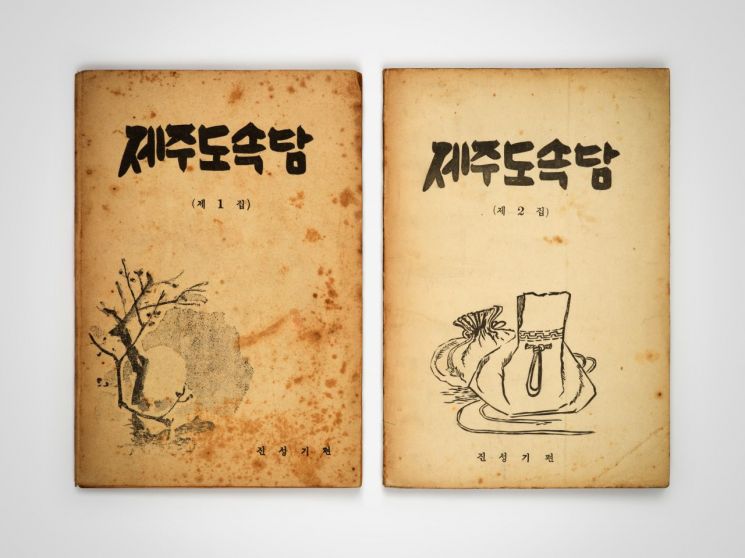
This exhibition aims to promote the diversity of our linguistic culture and highlight the importance of dialect preservation by reinterpreting the special exhibition "Can't Resist Dialects!" held by the National Hangeul Museum in 2024. As the first planned exhibition focusing on Jeju dialect and language, it serves as an opportunity to reaffirm the value of dialects as regional cultural heritage.
The exhibition is organized into three main themes, bringing together over 120 dialect-related materials, including literature, newspapers, audio, and video resources. Part 1, "The Language of This Land," explores perceptions of dialects across different eras through materials such as the "Elementary School Korean Dictionary" (1925) and the "Unified Korean Spelling Proposal" (1933), and features videos showcasing the vivid speech of dialect speakers from various provinces.
Part 2, "Words Containing Landscapes," presents the first edition of "Silence of My Beloved" (1926), the handwritten manuscript of "A Spoon on Earth," and other literary works, as well as records by outsiders encountering unfamiliar landscapes, to illustrate the life scenes embedded in dialects.
Part 3, "Jeju Language Shaped by Wind and Stone," introduces the characteristics of the Jeju language, which has been shaped by its natural environment, and the regionally distinct languages divided by Hallasan Mountain, presented in the voices of local residents. It also highlights the efforts of Jeju language researchers who have worked to preserve the endangered language. Key research materials such as the "Jeju Dialect Collection" (1947), "Dialect Survey Cards" (1950s), and "Study of Jeju Dialect" (1960), as well as the activities of local organizations dedicated to the preservation of Jeju language, are also featured.
The exhibition opening ceremony will take place at 2 p.m. on September 22, one day before the official opening, in the lobby of the Seolmundae Halmang Exhibition Hall. The ceremony will feature a joint performance by the Jerajin Boys and Girls Choir, who sing in Jeju language, and singer Yang Jeongwon.
Kang Jeongwon, Director of the National Hangeul Museum, stated, "It is crucial to pay attention to the preservation of the Jeju language, which UNESCO designated as a 'critically endangered language' in 2010, and to make efforts to safeguard our rich linguistic heritage. I hope this exhibition will awaken appreciation for the unique linguistic culture of the Jeju region and become a special occasion to share the diversity of our language with the local community."
To expand opportunities for enjoying Hangeul culture in 2025, the National Hangeul Museum is holding traveling exhibitions in seven regions, including Gongju, Gimpo, Gumi, Gangneung, Busan, and Jeju. Currently, the museum is presenting the exhibition "Today's Hangeul, Sejong's Hangeul," which is linked to the Hangeul International Pre-Biennale at the Bakyeon Culture Center in Sejong City, and the Hangeul Experiment Project "Modern Hangeul Research Institute," which reinterprets Hangeul from a design perspective, at the Busan Citizens' Hall.
© The Asia Business Daily(www.asiae.co.kr). All rights reserved.

















