How Should Leftover School Meals Be Used?
Institutional Discussions on Sharing and Achieving Carbon Neutrality
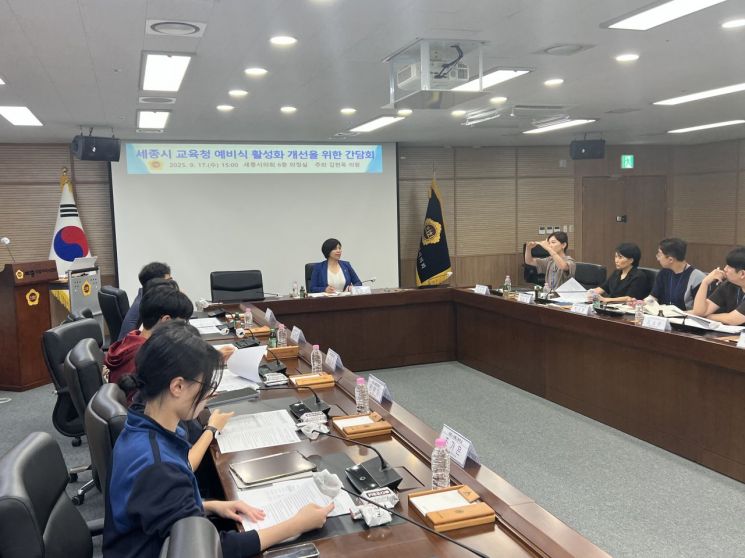 Hyunok Kim, Sejong City Councilor, is hosting and speaking at a meeting on measures to revitalize preliminary school meals.
There has been a proposal to support underprivileged groups by providing leftover food from school meals to social welfare organizations or food banks, instead of simply discarding it. This is considered a representative carbon-neutral practice, as it contributes to reducing food waste and lowering greenhouse gas emissions.
This is in contrast to a 2019 incident at a night school in Daejeon, where leftover food from school meals was given to students with disabilities, sparking controversy over serving leftovers. In this case, however, the approach is being evaluated positively for its constructive intent.
On September 17, Hyunok Kim, a member of the Sejong City Council, hosted a meeting on “Measures to Revitalize Preliminary School Meals,” discussing ways to promote sharing through preliminary school meals and achieve carbon neutrality.
The meeting was attended by Hyunok Kim, who organized the event; Oh Jongmin, an official from Seongji High School in Yongin, Gyeonggi Province, which won the 2025 International Green Apple Environment Award for Excellence; Jeong Jiyeong, a teacher at Saerom High School, along with students from the Sebadu (Change the World with Action) club; officials from the Sejong City Office of Education; and the food bank manager from the Sejong City Social Welfare Council. They shared their perspectives from the field.
Oh Jongmin stated, “Donating leftover school meals is an exemplary case featured in textbooks, and institutionalizing it can contribute to carbon neutrality and improve students’ environmental awareness.”
An official from the city’s Office of Education explained, “Donating preliminary meals can simultaneously achieve carbon neutrality and support for marginalized groups, but it must be accompanied by a safe delivery system and institutional improvements.” Students from the Sebadu club actively requested support, saying, “It is necessary to revise ordinances and promote awareness so that the scope of donations can be expanded beyond just finished products.”
Previously, in June of last year, Assemblywoman Kim sponsored the ordinance bill to promote the donation of leftover school meals, which was enacted. This meeting was organized to enhance the effectiveness of the ordinance and explore ways to expand it throughout the local community.
Assemblywoman Kim stated, “Preliminary school meals are not just leftovers, but valuable resources that embody sharing, environmental protection, and education. With institutional support, we can expect to achieve carbon neutrality, protect the environment, spread a culture of sharing, and foster a sense of community among students.”
© The Asia Business Daily(www.asiae.co.kr). All rights reserved.

















