Establishing a Rapid and Stable Project Implementation System
Accelerating the Tapgol Park Improvement Project
Jongno District in Seoul (Mayor Jung Moonheon) is set to fully implement the 'Jongno-type Rapid Maintenance Project,' aiming to supply 19,360 apartment units across 31 redevelopment zones.
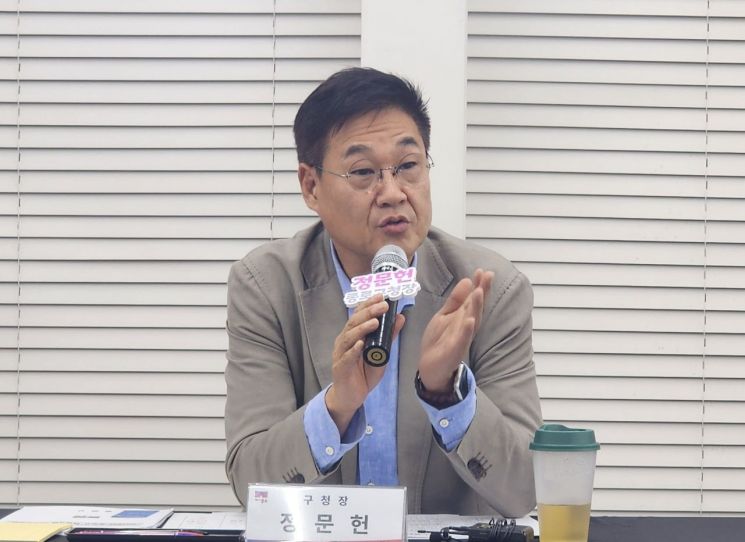
On September 16, during a press conference at the Gana Art Center in Pyeongchang-dong, Mayor Jung Moonheon stated, "Over the past three years, we have focused on resolving the issues of residential area deterioration and unbalanced development caused by building height restrictions in altitude control zones and construction limitations in scenic areas."
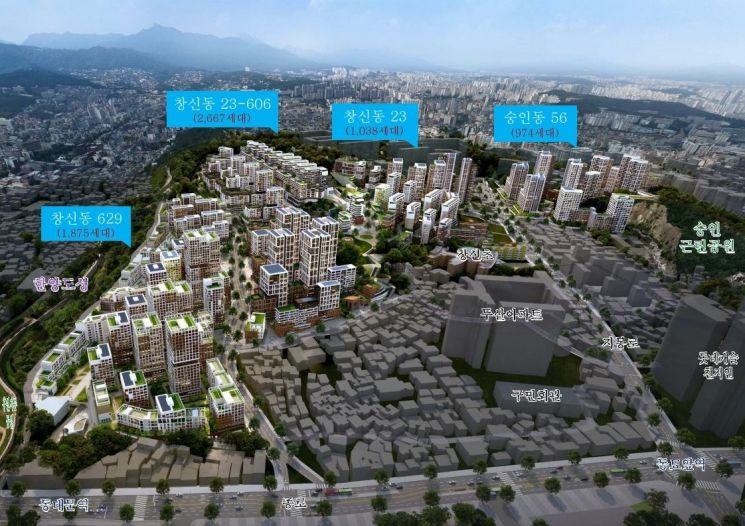
The most prominent and fastest-moving redevelopment areas are in Changsin-dong and Sungin-dong. The site at 23 Changsin-dong (64,822.4 square meters) is a low-rise, aging residential area with a slope nearing 20%, making development particularly challenging. With the consent of 76.3% of residents, it was designated as a housing maintenance-type redevelopment zone in December last year. The site is now awaiting union establishment approval in December this year and integrated review in the first half of next year.
Once the procedures are complete, a new residential complex with up to 28 floors and a total of 1,038 units will be supplied, which is expected to alleviate housing instability and revitalize the local commercial area.
The site at 56 Sungin-dong (42,402.3 square meters) was designated as a redevelopment zone in December last year with 70% resident consent, and the project implementation method will be decided by December this year. After redevelopment, the area will be transformed into a residential complex with up to 26 floors and 974 units.
The district office also expects to save approximately 21 billion won in budget through new housing supply, the conversion of quarry land into parks, and the construction of an underground modern integrated sanitation facility at these two sites.
In addition, large-scale apartment complexes with up to 29 floors and 4,542 units will be built in the areas of 23-606 Changsin-dong (143,148.7 square meters) and 629 Changsin-dong (92,190.8 square meters), where the rapid integrated planning was finalized in November last year. The design will feature terraced complexes suited to the hilly terrain, a skyline harmonized with the view of the Hanyangdoseong Fortress, and integration with the Naksan-Dongdaemun pedestrian axis, taking both urban landscape and living environment into account. The district plans to finalize and announce the designation of the redevelopment zones as early as October this year and decide on the project implementation method in the first half of next year.
Additionally, an urban redevelopment project for a 27-story, 176-unit residential complex at 2-12 Sinmunno is underway, with the contractor selection process set to begin in the first half of next year. In the area of 210-2 Haengchon-dong, the district will resubmit the site as a candidate for rapid integrated planning in November this year, aiming to supply up to 20 floors and 1,500 housing units.
Meanwhile, Jongno District is also launching the 'Tapgol Park Improvement Project' to preserve the historical significance and public value of Tapgol Park, a major site of the independence movement.
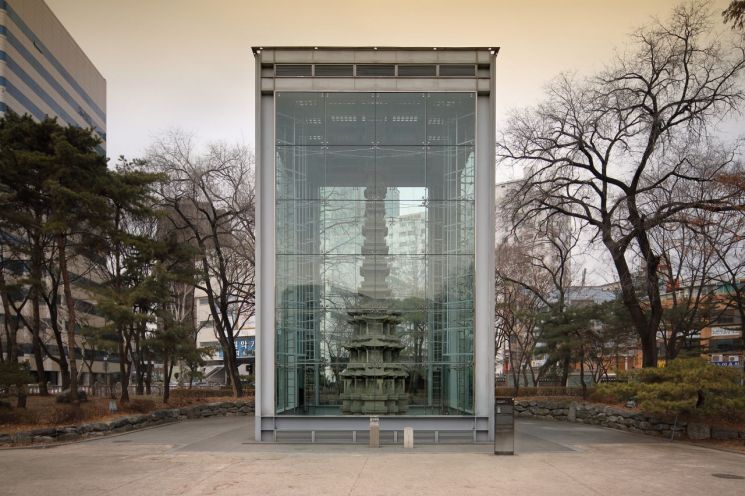
The core of the project is to improve the glass protective structure covering the Ten-Story Stone Pagoda of Wongaksa Temple Site, a national treasure, and to enhance the surrounding park environment. The Ten-Story Stone Pagoda of Wongaksa Temple Site, built in 1437 (the 13th year of King Sejo's reign), is a representative Buddhist stone structure from the Joseon Dynasty. To prevent damage from acid rain and bird droppings, a glass enclosure was installed over the entire pagoda.
However, due to severe internal condensation and ventilation issues causing significant damage to the original structure, and because the glass enclosure's light reflection obstructs visitors' views, the district is working with the National Heritage Administration to pursue the removal of the glass structure.
This month, the district will commission the 'Basic Design for Improving the Glass Protective Structure of the Ten-Story Stone Pagoda of Wongaksa Temple Site' and form an advisory committee with the National Heritage Administration and Jongno District. They plan to develop and review more than four proposals, including removal, improvement, and relocation of the pagoda, as well as preservation measures.
After a final report meeting in February next year and finalizing the basic design in March, the district will submit the plan to the National Heritage Administration's committee and apply for national funding to begin the full-scale improvement work.
Alongside this, Jongno District will also strengthen the historical identity of Tapgol Park by relocating and restoring the west gate, repairing the park's walls, and constructing a historical memorial hall. The removal of the west gate is scheduled for November this year, while repairs to the walls and internal improvements will begin in August next year.
To preserve the value of Tapgol Park and ensure citizens can use the park comfortably, the district has been enforcing regulations since July 31, prohibiting recreational activities such as playing Baduk and Janggi, as well as smoking, drinking, dancing, and commercial activities.
Mayor Jung Moonheon stated, "Tapgol Park, where the March First Independence Declaration was first read aloud, is a symbolic site that proclaimed Korea's independence to the world," adding, "We are working to return it as an open civic park."
© The Asia Business Daily(www.asiae.co.kr). All rights reserved.



















