Security Diplomacy to Expand Through Annual Xiangshan Forum, September 17-19
China is set to host a large-scale security forum, bringing together defense and military leaders, as well as academic figures, from over 100 countries. Attention is focused on whether Chinese President Xi Jinping will deliver a message aimed at the United States, which has experienced ongoing tensions with China during tariff and trade negotiations.
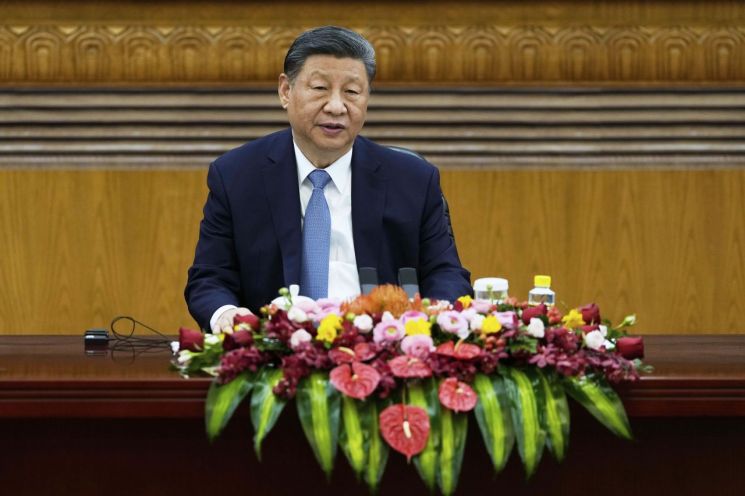
According to China’s state-run Xinhua News Agency and other sources on September 16, China will hold the 12th Xiangshan Forum at the Beijing International Convention Center from September 17 to 19, under the theme of “Jointly Safeguarding International Order and Promoting Peaceful Development.” The event is expected to draw around 1,800 participants, including defense and military leaders, think tank experts, and academics from more than 100 countries.
The Xiangshan Forum, an annual multilateral security conference launched by China’s Ministry of National Defense in 2006, is often referred to as the “Chinese version of the Shangri-La Dialogue (Singapore Asia Security Summit).” While the event itself is overseen by the Chinese Minister of National Defense, President Xi uses a congratulatory letter as a platform to promote China’s security initiatives and vision for international order. Previously, at the 80th anniversary military parade commemorating the victory in the War of Resistance Against Japan on September 3, President Xi called for unity against hegemonism and power politics, effectively issuing an indirect criticism of the United States.
There is also speculation that the Xiangshan Forum may reveal specific information about the latest weapons that were showcased during the recent military parade. At the parade, China unveiled the nuclear-capable Dongfeng (DF)-5C intercontinental missile, the long-range DF-61 missile, the DF-26D with a maximum range of approximately 5,000 kilometers, and the medium- and short-range ballistic missile DF-17. In addition to the DF series, China also displayed the YJ-21 hypersonic missile, capable of striking U.S. aircraft carriers from long distances, as well as other YJ-series missiles. The JL-3 submarine-launched ballistic missile (SLBM), which can reach targets across the entire United States, and other JL-series missiles were also showcased.
James Char, a professor at the S. Rajaratnam School of International Studies at Nanyang Technological University in Singapore, stated, “Foreign delegations participating in this year’s Xiangshan Forum will seek to obtain more technical information about certain weapon systems of the People’s Liberation Army. This event presents an opportunity to learn about China’s evolving military modernization and the leadership of the People’s Liberation Army.”
It is expected that Western countries will send relatively lower-level delegations to the forum, maintaining their stance of treating Singapore’s Shangri-La Dialogue as the region’s de facto premier security conference. In fact, while the United States sent a deputy assistant secretary of defense last year, this year it plans to send the defense attach? from the U.S. Embassy in Beijing. Other key attendees include Ng Eng Hen, Singapore’s Minister for Defence, and Mohamed Khaled Nordin, Malaysia’s Minister of Defence.
With tensions rising in the South China Sea, this year’s event is drawing even greater attention. Recently, China issued strong warnings to the United States over training exercises involving the Fujian aircraft carrier and the passage of U.S. and British warships through the Taiwan Strait. Senior Chinese officials have also repeatedly pressed their U.S. counterparts to stop interfering in the Taiwan issue during high-level calls.
© The Asia Business Daily(www.asiae.co.kr). All rights reserved.

















