31% in 2019... Up 15 Percentage Points in Five Years
As the low birth rate issue becomes increasingly serious, a recent survey found that nearly half of Taiwanese women aged 15 to 24 do not intend to have children in the future.
On September 15, Yonhap News, citing Taiwanese media such as the Liberty Times, reported these findings. According to the results of the "Women's Living Conditions Survey" released earlier this month by Taiwan's Ministry of Health and Welfare, the proportion of women of working age (15 to 64) who said they do not intend to have children increased from 19.2% in 2019 to 26.6% last year, a rise of 7.4 percentage points.
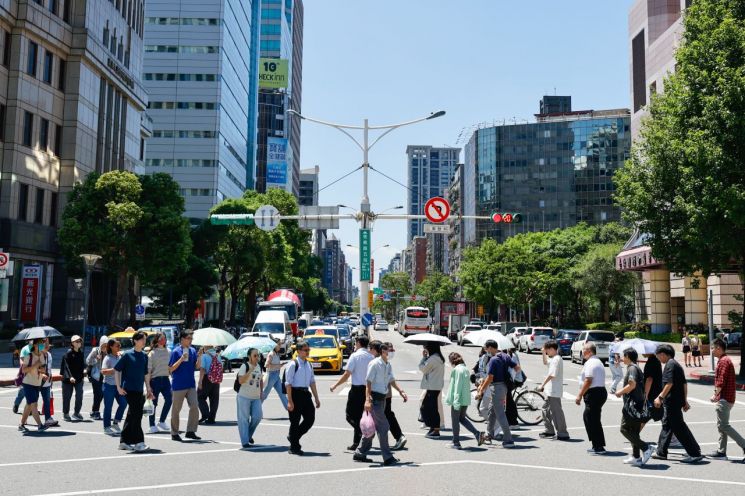
Breaking down the data by age group, the proportion of women aged 15 to 24 who responded that they do not intend to have children rose from 31.3% in 2019 to 45.9% last year, an increase of 14.6 percentage points. Among women aged 25 to 34, the figure increased from 27.3% to 37.4% over the same period, a rise of 10.1 percentage points. For women aged 35 to 44, the rate went up from 18.1% to 25.9%. Additionally, the proportion increased from 14.6% to 21.2% among those aged 45 to 54, and from 8.6% to 12% among those aged 55 to 64.
60% of Respondents Cite "High Economic Burden"
When asked why they do not wish to have children, 60.3% of respondents cited "the economic burden is too great" as their primary reason. This was followed by "not wanting to change their current lifestyle for children" (49.4%), "concerns about children's education and future development" (34.3%), and "worries about not having enough time to care for children" (24.7%).
The burdens of childcare and career interruption also contributed to hesitancy about childbirth. Married women with children spent an average of 4.41 hours per day on housework and childcare without pay, which is 2.6 times more than their male partners, who spent 1.72 hours. The survey also found that women who left work due to pregnancy and parenting took an average of about 3 years and 9 months to return to work.
Experts pointed out that a lack of support for women in both the workplace and at home has led the younger generation to avoid the long-term burden of childcare, making the aversion to childbirth more severe. Lu Jender, Deputy Minister at the Ministry of Health and Welfare, noted, "Low birth rates are a common challenge for developed countries," and added, "As women's education levels and employment rates rise, marriage and parenting are generally being pushed down the list of priorities, but traditional expectations for women's roles at home have not changed."
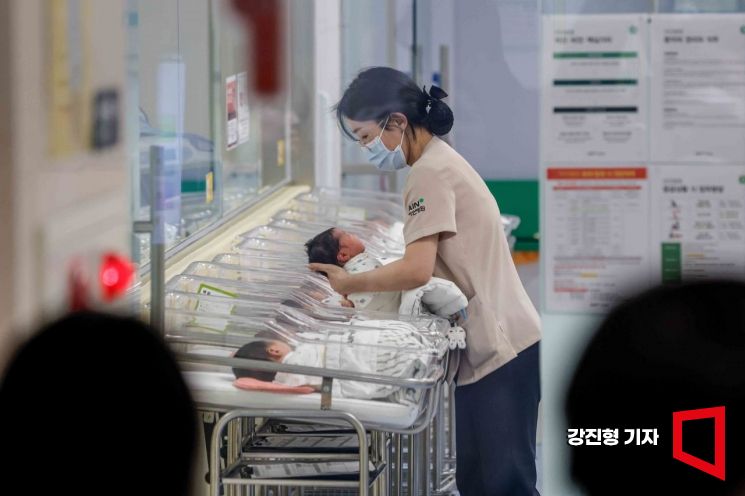 Medical staff are caring for a newborn in the neonatal unit at Ain Hospital in Michuhol District, Incheon. Photo by Jinhyung Kang
Meanwhile, similar survey results have been observed in South Korea. Last year, the Korea Future Population Research Institute, together with research firm Embrain, conducted an in-depth survey on perceptions of marriage and childbirth among 2,000 men and women aged 20 to 49 nationwide. The results showed that 43% of men and women in their 20s to 40s said they do not intend to have children. However, about 44% of these respondents said they might consider having children if government policies and corporate support were significantly expanded.
The proportion of those who responded "no intention to have children" was much higher among women (52.9%) than men (33.1%). By age group, the intention not to have children was highest among those in their 40s at 63.9%, followed by those in their 30s at 35.2%, and those in their 20s at 23.6%. The reasons women cited for not wanting children included "not feeling the need to have children" (13.9%), "not having the financial means to care for and raise children" (12.7%), and "the high cost of children's education" (10.7%). For men, the main reasons were "feeling insecure about employment or their job" (17.9%), "not having the financial means to care for and raise children" (16.0%), and "not feeling the need to have children" (10.5%).
© The Asia Business Daily(www.asiae.co.kr). All rights reserved.


















