Tariff and Weak Domestic Demand Combine
Concerns Grow Over Economic Slowdown in the Second Half
As China's economic indicators for production and consumption last month fell short of market expectations, analysts are diagnosing that the outlook for an economic slowdown in the second half of the year is becoming a reality, and pressure on authorities to implement stimulus measures is expected to intensify.
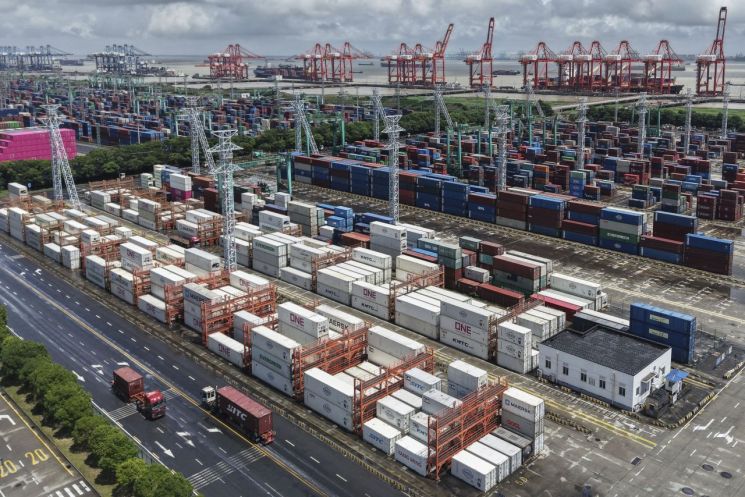
According to major economic indicators for August released by the National Bureau of Statistics of China on the 15th, China's industrial production in August rose by 5.2% compared to the same month last year. This figure falls short of Bloomberg's forecast of 5.6%. Retail sales in August increased by 3.4% year-on-year, also below Bloomberg's projection of 3.8%.
Fixed asset investment, which reflects changes in capital investment in factories, roads, power grids, and real estate excluding rural areas, rose by only 0.5% from January to August compared to the same period last year, showing a sharp slowdown. Bloomberg noted that the growth rate of fixed asset investment for January to August was the worst since 2020.
The National Bureau of Statistics of China stated that the overall economic situation in August was stable but also diagnosed that "the external environment remains unstable and there are many uncertainties, so the economy still faces many risks and challenges."
As China's major economic indicators for August deteriorated further compared to July, which had been the weakest month of the year, experts predicted that the Chinese economy would show a downward trend in the second half. In the first half of this year, China posted solid results, with gross domestic product (GDP) increasing by 5.3% year-on-year, buoyed by export effects stemming from pre-demand during the suspension of mutual tariffs with the United States. However, there are concerns that it will be difficult to maintain growth momentum in the second half as export enthusiasm cools and the impact of the tariff war becomes more pronounced.
China is also in a situation where it must stimulate sluggish domestic demand while simultaneously curbing overproduction. Carlos Casanova, Chief Asia Economist at Union Bancaire Priv?e (UBP) in Hong Kong, said, "If a more pronounced economic slowdown emerges in the fourth quarter, monetary easing measures could be introduced," adding, "If the situation worsens, downward revisions to corporate earnings and risks to the stock market rally may follow."
There are also expectations that pressure on Chinese authorities to implement stimulus measures to prevent a further economic downturn will intensify. Lin Song, an economist at ING in the Netherlands, analyzed, "The economic slowdown over the past few months provides strong grounds for additional short-term stimulus measures."
© The Asia Business Daily(www.asiae.co.kr). All rights reserved.

















