First Case of Highly Pathogenic Avian Influenza This Year in Paju
Strengthened Measures to Prevent Human Infection
KDCA Urges On-Site Response Teams
to Strictly Follow Preventive Guidelines and Report Symptoms
The Korea Disease Control and Prevention Agency (KDCA) announced on September 15 that, together with local government authorities, it dispatched on-site response personnel to a poultry farm in Paju, Gyeonggi Province, where the highly pathogenic avian influenza (AI) virus was detected and culling was carried out on September 13.
This measure is aimed at preventing human infection with AI. While AI originally infected poultry such as chickens, ducks, and wild birds, it has recently shown a trend of crossing the interspecies barrier and gradually spreading to mammals and humans. This is the first time that the H5N1 strain of AI antigen has been detected at a domestic poultry farm during the 2025-26 season, and to date, there have been no reported cases of human infection with AI in South Korea.
The on-site response personnel, in cooperation with local authorities, checked whether high-risk groups such as farm workers and culling participants were wearing personal protective equipment, and encouraged strict adherence to preventive measures to avoid human infection with AI. They also conducted epidemiological investigations, including identifying any symptomatic individuals among farm workers.
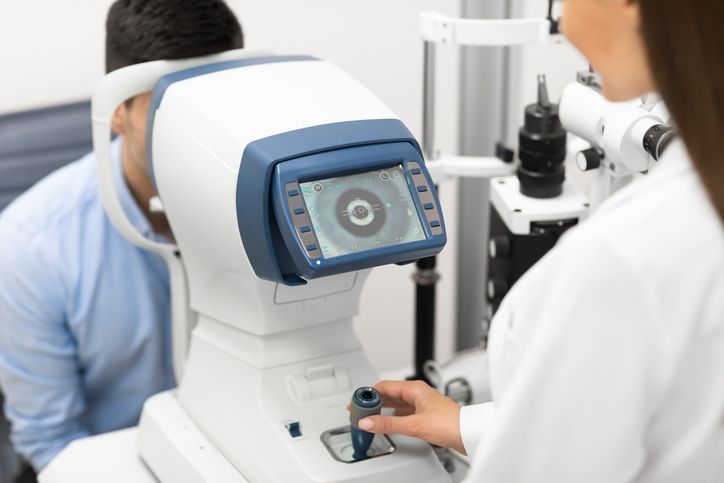 The symptoms of AI human infection reported so far are similar to typical influenza symptoms such as fever, cough, sore throat, and muscle pain. Ophthalmic symptoms such as conjunctivitis may also accompany. In particular, a new clinical pattern has recently been identified overseas, where confirmed cases showed mild eye discomfort without respiratory symptoms. Getty Images
The symptoms of AI human infection reported so far are similar to typical influenza symptoms such as fever, cough, sore throat, and muscle pain. Ophthalmic symptoms such as conjunctivitis may also accompany. Additionally, gastrointestinal symptoms such as nausea, vomiting, and diarrhea, as well as neurological symptoms, and severe respiratory illnesses like pneumonia or acute respiratory failure may also occur.
The KDCA urged farm workers and those involved in culling operations to immediately report to a public health center if they develop any of these symptoms within 10 days, which is the maximum incubation period for AI after culling. The agency especially emphasized that, since a new clinical pattern has recently been identified overseas-where confirmed cases presented with mild eye discomfort without respiratory symptoms-any related symptoms should be promptly reported.
Previously, the KDCA expanded the operating period of its "AI Human Infection Response Team," which had only been active during special quarantine periods, to a year-round system this year, reflecting the increasing incidence of AI and the emergence of cases in mammals such as cats and leopard cats in South Korea. In addition, the agency is strengthening cooperation with relevant ministries and local governments to actively implement preventive measures against human infection with AI. It is also preparing to ensure that, in the event of suspected cases, rapid diagnosis, antiviral prescriptions, and isolation can be carried out swiftly and smoothly.
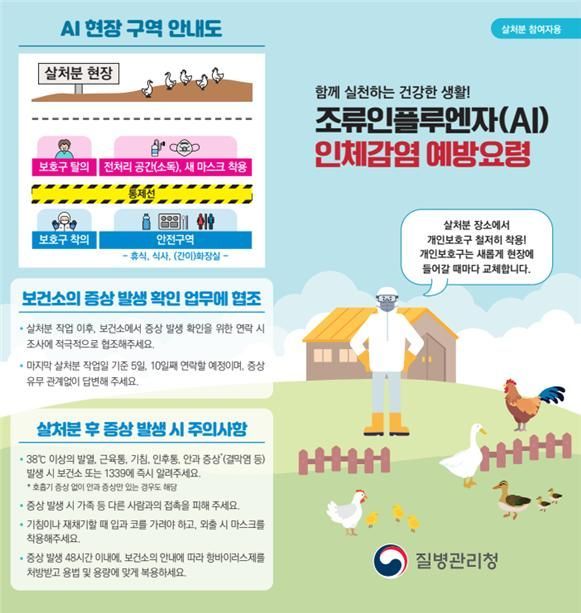
Im Seungkwan, Commissioner of the KDCA, stated, "Thanks to thorough management, there have not yet been any cases of avian influenza human infection in South Korea, but animal and human infections continue to be reported overseas." He emphasized, "It is crucial to avoid contact with animals suspected of being infected, and if contact is unavoidable, to take extra precautions by wearing personal protective equipment."
© The Asia Business Daily(www.asiae.co.kr). All rights reserved.


















