US Pressures for Follow-up Talks on US Investment Fund
Push for Quick Agreement on Execution Timing and Terms
Burden from 'Japan Precedent': Funds to Be Sent Within 45 Days, 90% of Profits to US After Recovery
Presidential Office and Minist
The tug-of-war continues between South Korea and the United States over the detailed management of a US$350 billion (approximately 488 trillion won) investment fund, which resulted from the Korea-US tariff negotiations. While the US is pressuring the South Korean government by demanding a higher proportion of direct investment and proposing unreasonable profit-sharing terms, the South Korean government is also demanding various safeguards from the US side to prevent shocks to the foreign exchange market that could result from executing such a massive investment.
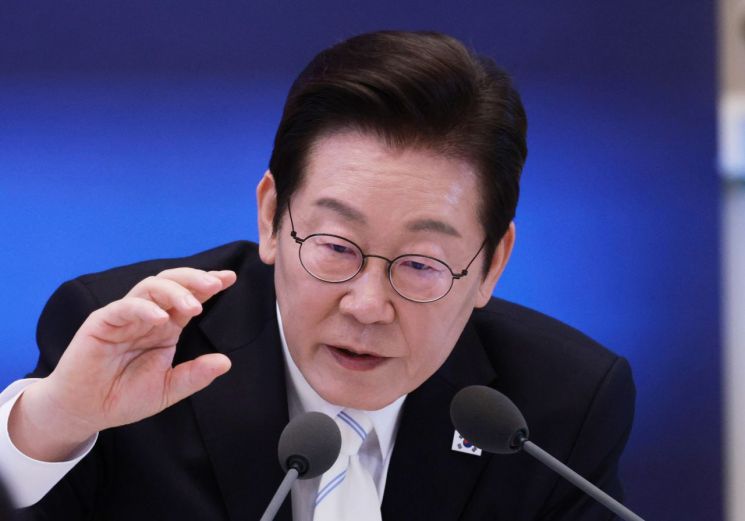
President Lee Jaemyung declared at a press conference marking his 100th day in office on September 11, "There will be no backdoor deals. We will not engage in any negotiations that go against the national interest, rationality, or fairness." Accordingly, the South Korean government plans to continue negotiations with multiple options on the table. It is also reported that the government recently raised the necessity of concluding an unlimited Korea-US currency swap agreement.
According to relevant ministries and the presidential office on September 15, the government is prioritizing the national interest and market stability, and is asking the US to establish mechanisms that can preemptively block any instability in the foreign exchange market that may arise during the investment execution process. The government is reportedly working hard to strengthen its negotiating position by putting issues such as pacing the investment, executing it in installments, and hedging against currency risk on the negotiation table to minimize shocks to the foreign exchange market.
In particular, the government is leveraging the fact that Japan, which concluded a similar tariff agreement, suffered less from capital outflows because it secured an unlimited dollar-yen currency swap. South Korea has reportedly demanded an additional currency swap agreement that would allow it to borrow dollars from the US without limit. As of August, the amount South Korea has pledged to invest in the US is equivalent to 83% of its foreign exchange reserves, which stand at about US$416.3 billion. In contrast, Japan's US$550 billion investment is about 42% of its foreign exchange reserves, which amount to approximately US$1.32 trillion. Japan also enjoys different funding conditions as an issuer of a key currency. A senior official at the presidential office explained, "We are discussing various issues, including an unlimited Korea-US currency swap." The Ministry of Economy and Finance also stated, "We are currently discussing various measures to minimize the impact on the foreign exchange market during the Korea-US investment negotiations."
Until now, the South Korean government has repeatedly conveyed its concerns to the US that a massive investment in the US executed all at once could increase volatility in the foreign exchange market (exchange rates). The government has likely discussed options such as dividing the investment into stages over several years according to demand, and setting a cap on the amount executed at any given time. On the other hand, the US is likely to have demanded a clearer governance structure to reduce negotiation uncertainty, including specifying the proportion of direct and indirect investment, risk sharing, profit distribution, and decision-making structure, as well as presenting execution timelines for major sectors.
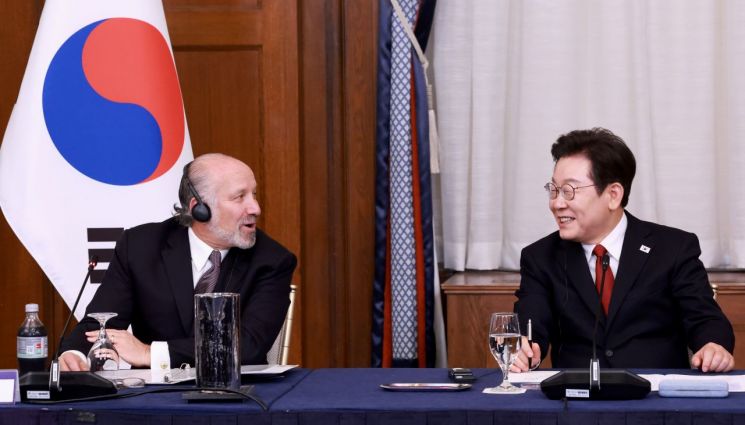
However, the fact that Japan, which pledged a US$550 billion investment in the US, concluded its negotiations with the US on September 4 (local time) is a burden for the South Korean government. The US side completed negotiations with Japan on the condition that it would designate the investment targets directly and that the funds would be transferred within 45 days. The agreement also included a profit-sharing condition: until the investment is recovered, profits are split 50-50, but after recovery, the US takes 90% of the profits. As a result, former Japanese Prime Minister Shigeru Ishiba, who stepped down on September 7, was criticized for passively finalizing the follow-up negotiations exactly as the US wanted.
So far, the direction of South Korea's negotiations is markedly different from Japan's. The South Korean government is seeking to reduce the proportion of direct investment and to minimize the actual burden by structuring most of the investment as guarantees and loans. It is also insisting that South Korean companies should determine the investment targets through their own business feasibility reviews. Regarding profit sharing, the government maintains that the method proposed by the US is difficult to accept, as it significantly lacks rationality and fairness.
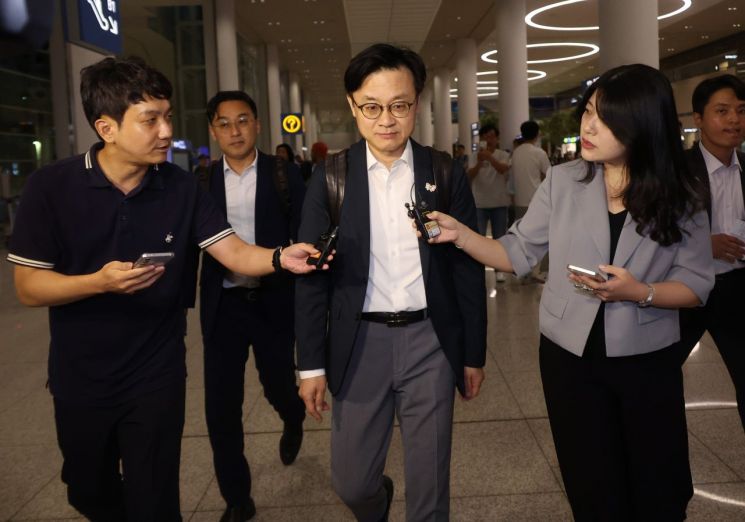
Going forward, the key issue is whether the US will accept the negotiation cards presented by the South Korean government. In the process, South Korea also needs to secure improvements on other issues, such as reciprocal treatment in Korea-US shipbuilding cooperation and the visa issue that has come to the fore due to the arrest and detention of Korean workers at the Hyundai Motor Company and LG Energy Solution battery plant construction site in Georgia, US. However, given the US's continued hardline stance, it remains uncertain whether proposals such as an unlimited Korea-US currency swap will be accepted in the near future. There is also the possibility that the negotiations could be prolonged.
At a press briefing on September 12, National Security Office Director Wi Sunglak stated, "Although there is a sense of urgency on the US side, our position is to thoroughly check and assess every aspect." Presidential spokesperson Kang Yoojeong also explained at a briefing on September 14, "This is not a negotiation with a predetermined goal and a set path to reach it. Instead, both sides are presenting new conditions and working to strike the optimal balance. Since this is a tariff negotiation where both sides are calibrating under different conditions, I believe there will be a point where we can announce something to the public that serves the national interest. There are so many variables in this negotiation."
© The Asia Business Daily(www.asiae.co.kr). All rights reserved.



















