Preparing to Study Abroad in Other Countries Again
In June, the U.S. government announced an entry ban for citizens of 19 countries, causing difficulties for new university students.
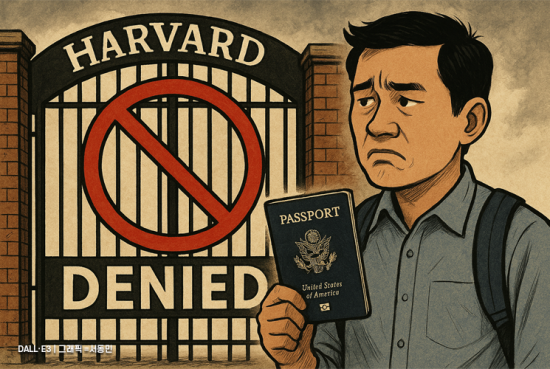
On September 13 (local time), the Associated Press reported that the Donald Trump administration suspended the issuance of student visas and imposed an entry ban for citizens of 19 countries, including Afghanistan, Myanmar, and Iran. As a result, a growing number of newly admitted university freshmen are unable to enter the United States and are missing out on enrollment despite being accepted to universities.
This measure has had a particularly direct impact on international students who need new visas before starting university, as the U.S. government only allowed entry for those who already had valid visas.
There are no precise statistics on how many foreign students have been unable to enroll in U.S. universities due to this measure. However, considering that 5,700 citizens from the countries subject to the entry ban received F-1 (student) and J-1 (exchange visitor) visas from the U.S. State Department between May and September last year, it can be estimated that a similar number of foreign students were unable to come to the United States this year.
Foreign freshmen unable to enter the United States are now preparing to study in other countries or are applying to defer their admission, waiting indefinitely for the entry restrictions to be lifted. Bahara Sagari, a 21-year-old living in Afghanistan, decided to study in the United States as soon as the Taliban regime banned women from attending university. She was accepted to Knox College in Illinois, but due to the entry ban, she could not begin her campus life for the new semester starting in September. Sagari requested a deferral from Knox College but was denied, and after receiving a conditional offer from a university in Poland, she is now undergoing the application review process.
Puya Karami, a 17-year-old from Iran, had planned to study polymer chemistry at the University of Pittsburgh. However, after being unable to enter the United States, he postponed his admission to next year and is now preparing for a visa interview, which may not be scheduled anytime soon. Karami said, "I am doing everything I can."
Meanwhile, in June, the Trump administration cited the risk of terrorism and public safety concerns as reasons for refusing to issue visas and imposing a complete entry ban on citizens of 12 countries, including Iran, Yemen, Afghanistan, Myanmar, and Chad. In addition, for citizens of seven countries, including Venezuela, Burundi, and Cuba, the government suspended the issuance of certain visas, such as student, exchange visitor, and tourist visas, and banned entry for holders of those visas.
© The Asia Business Daily(www.asiae.co.kr). All rights reserved.

















