Government and Financial Institutions to Exclude URLs from Notification Messages
The government has urged the public to exercise caution, warning that a variety of smishing attacks are expected as the application and distribution period for the second round of livelihood recovery consumption coupons begins. These attacks may involve impersonating the government, credit card companies, or banks to provide information about eligibility and payment amounts, approve card usage, or solicit applications.
According to the government on September 14, a total of 430 smishing cases related to the first round of livelihood recovery consumption coupons have been detected and addressed so far. No actual damages from smishing distribution have been reported.
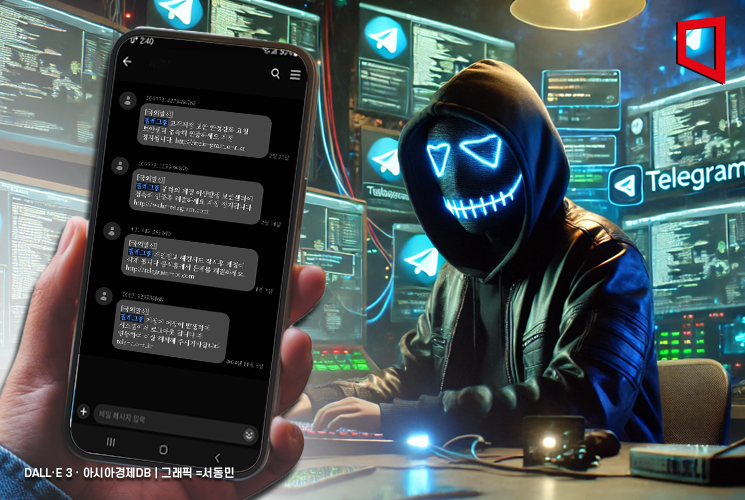
The government’s analysis of smishing types related to the first round of consumption coupons revealed that most cases were advertisements for illegal gambling sites or attempts to induce site access. Smishing malicious apps designed to steal personal information were also detected. These apps have a function that, once infected, redistributes smishing text messages to people in the victim’s contact list, so users need to be especially cautious.
To prevent smishing damage in advance, the government, credit card companies, and local currency operators will not send text messages or social network service (SNS) notifications containing direct internet links (URLs) related to the second round of livelihood recovery consumption coupons. They also plan not to provide banner links or app push notifications with similar functions.
If you receive a suspicious smishing message or suspect that your device has been infected with a malicious app after clicking a URL in a message, you should refer to the smishing prevention guidelines and report the incident to the Korea Internet & Security Agency’s 118 Counseling Center for assistance.
Starting September 12, before the application and distribution of the second round of livelihood recovery consumption coupons, the government began sending smishing prevention messages sequentially under the names of each telecommunications company. When applying for the coupons online, a smishing warning will be included on the application page. For seniors and other digitally vulnerable groups, warnings will also be provided during in-person applications at banks and community centers.
The Financial Supervisory Service, the National Police Agency, and the Korea Internet & Security Agency plan to strengthen monitoring of smishing attacks and operate a rapid response system that initiates immediate investigations upon receiving damage reports.
© The Asia Business Daily(www.asiae.co.kr). All rights reserved.

















