Reduced Startup and Management Costs
A Total of 46 Businesses Benefit from Regulatory Grace Period
Ministry of Health and Welfare Plans to Resume Efforts Within the Year
"Fortunately, the extension of the regulatory grace period means we can continue our business without issues for the time being."
Recently, the number of shared beauty salon startups has been increasing, but uncertainty persists as legalization has been delayed.
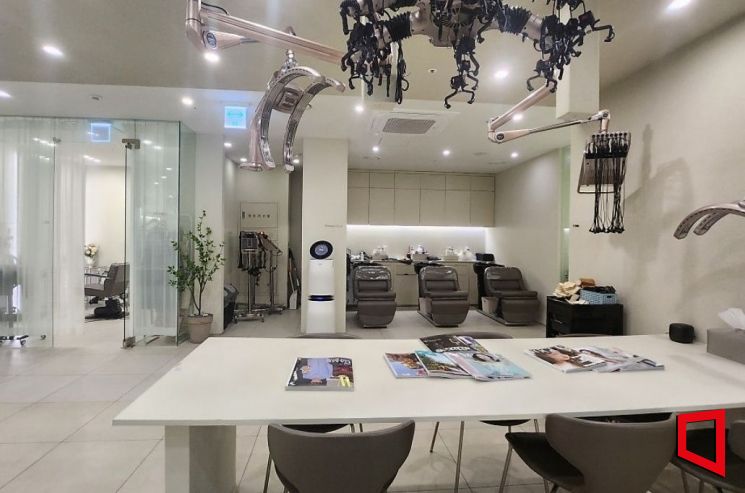 On the 16th, a shared shampoo room and heat perm machines are set up at a shared hair salon in Seongsu-dong, Seongdong-gu, Seoul. Photo by Park Seungwook
On the afternoon of September 17, at a hair salon in Seongsu-dong, Seongdong-gu, Seoul, each salon owner was greeting their own customers and guiding them to separate rooms. In more than ten rooms within the same space, different owners were styling their clients' hair. These individuals are not co-founders but independent business operators who pay usage fees and commissions to share the space. Facilities such as heat perm machines and shampoo rooms are used communally, and reservations are often required.
Reducing startup costs is a major advantage of shared beauty salons. Salon owner Han Jeongjik (32) said, "The operating costs, such as deposit and monthly rent, are similar to those of a regular business, but since there are no interior design costs, the initial investment can be reduced." He added, "Currently, the interior design cost per 3.3 square meters is between 1.7 million and 1.8 million won, so this helps ease a significant burden."
Ease of management is also considered an advantage. The owner of a shared beauty salon in Seodaemun-gu, Seoul, explained, "With a regular startup, you have to handle all the cleaning and equipment management yourself, but in a shared beauty salon, these tasks are handled by the company, making it more efficient."
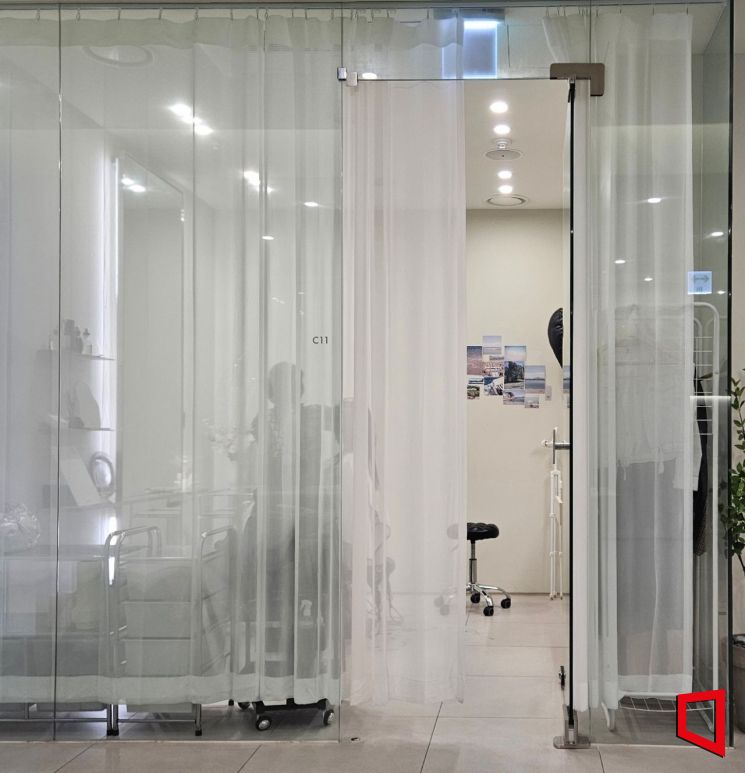 On the 16th, the owner is styling a customer's hair at a shared hair salon in Seongsu-dong, Seongdong-gu, Seoul. Photo by Seungwook Park
However, under the current Public Health Control Act, operating multiple beauty businesses in one establishment requires separate shampoo rooms and heat perm machines. Shared beauty salons can only operate through the regulatory sandbox system. Currently, 46 businesses are operating under the regulatory sandbox, with a maximum business period of four years. Of these, two have received temporary permits, allowing them to operate for an additional four years.
The Ministry of Health and Welfare attempted to institutionalize shared beauty salons by amending the enforcement rules of the Public Health Control Act in September 2022, but the effort failed. Organizations such as the Korea Beauticians Association opposed the move, arguing that the entry of large corporations would inevitably harm small business beauty salons. A Ministry of Health and Welfare official stated, "We plan to push for the institutionalization of shared beauty salons again by the end of this year, but no specific schedule has been set."
© The Asia Business Daily(www.asiae.co.kr). All rights reserved.


















