Dongducheon City Implements Comprehensive Mid- to Long-Term Development Plan
Envisioning a "Sustainable City of Environment and Safety"
Addressing Complex Issues of Odors, Crime, and Disasters
All-Out Measures Including Expanded CCTV Deployment
Dongducheon City in Gyeonggi Province has begun developing a mid- to long-term strategy in the fields of environment and safety to address structural urban issues such as long-standing accumulated complaints about odors, deteriorating air quality, and disaster and safety blind spots.
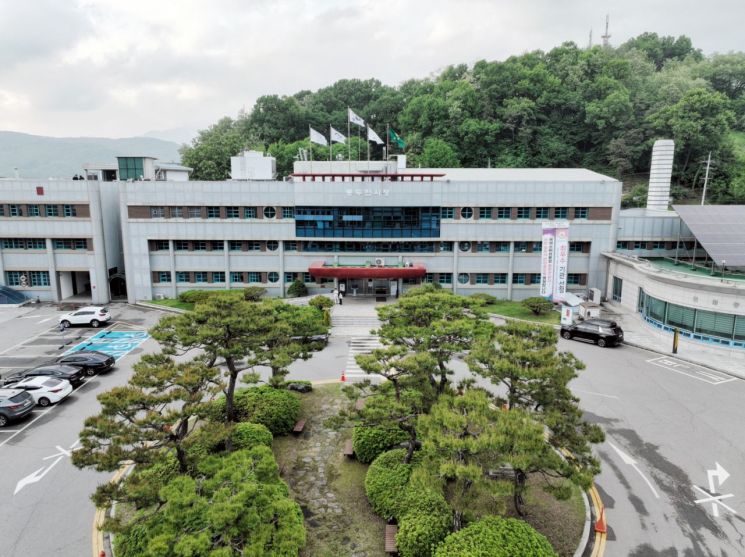
This strategy goes beyond simply improving urban infrastructure, focusing instead on enhancing the quality of life for citizens and establishing a comprehensive safety net throughout daily life.
The Korea Institute of Local Autonomy and Economy, which formulated this strategy, analyzed the entire city and diagnosed that livestock odors, air pollution, declining performance of aging sewage treatment facilities, and safety blind spots in daily life are all interwoven, making systematic and mid- to long-term improvements urgently necessary. In particular, the areas of Habongam-dong, Tap-dong, Saengyeon-dong, and Jungang-dong have experienced prolonged odor complaints, while abandoned houses left unattended were identified as factors highly likely to cause crime and safety accidents.
This analysis was largely consistent with citizen feedback. In a survey of 2,205 residents, 14.8% of respondents cited the need to renovate and utilize vacant houses, and in interviews, many people raised concerns about the lack of CCTV in alleys and side streets, as well as the need for stronger nighttime lighting. Citizens also commonly proposed the necessity of improving odor and water quality through river maintenance, expanding wildfire prevention facilities, and strengthening disaster response capabilities.
Based on these findings, the institute proposed three strategies: establishing a sustainable eco-friendly urban foundation; strengthening disaster and accident prevention and daily safety; and building a resident-participatory environment and safety governance system.
First, for areas with severe odors, the installation of odor reduction facilities for livestock farms and the introduction of advanced mitigation technologies at sewage and food waste treatment facilities were suggested. The strategy also included the opinion that regular inspections and support for mitigation equipment should be provided for emission sources such as restaurants and small-scale manufacturers to strengthen management.
For areas near train stations and railways, it was proposed that buffer green zones, walking trails, bike paths, small parks, and soundproof walls be created to improve both the cityscape and residential environment. The issue of hygiene and aesthetics caused by pigeons along the railway was highlighted as requiring separate management measures, such as installing soundproof nets to deter birds, improving facility structures to suppress nesting, and strengthening regular cleaning and disinfection.
In addition, for crime-prone areas such as Saengyeon-dong, Jungang-dong, Bosan-dong, and Jihaeng-dong, the plan includes expanding the installation of community-based security CCTV, with a focus on concentrated placement in child and senior protection zones. The strategy also calls for additional street and security lighting along the Sincheon Stream and in old downtown alleyways to alleviate nighttime walking anxiety, and for the introduction of automated equipment and advanced treatment processes at aging sewage treatment plants to enhance stability and efficiency.
Proposals also include dredging rivers and expanding rainwater pumping station capacity to prepare for heavy rainfall, as well as installing wildfire prevention surveillance cameras and establishing an early warning system linked to meteorological data. Long-abandoned houses, which pose complex risks such as odors, illegal dumping, and crime, should be classified as vulnerable living environments and addressed with tailored responses that combine enhanced security infrastructure, temporary safety measures, and environmental maintenance.
Furthermore, it was suggested that resident-participatory environmental monitoring systems be introduced at key sites such as Sincheon Stream, livestock complexes, and sewage treatment plants, and that public-private disaster response systems be established by strengthening voluntary disaster prevention group activities. The plan also aims to improve the efficiency and speed of response through the operation of public-private disaster response councils, regular joint drills and simulations, and the establishment of smart monitoring platforms.
In addition, the importance of revitalizing environment and safety education and citizen campaigns was emphasized, including outreach education, experiential learning for children and youth, and campaigns to promote environmental conservation practices, all aimed at spreading a culture of safety in the community through voluntary citizen participation. The need for continuous administrative support and the establishment of a participation base was also highlighted.
This strategy aims for a mid- to long-term approach focused on solving structural problems and enhancing the quality of life for citizens, rather than short-term stopgap measures. The realization of Dongducheon City's goal of becoming a "Safe City Dongducheon" is especially meaningful in that it is a practical model created together with citizens, rather than a unilateral, administration-led project.
Park Hyungdeok, Mayor of Dongducheon, stated, "Environment and safety are not just administrative matters but the essence of citizens' lives," adding, "Based on this strategy, we will do our utmost to create a city where everyone can live with peace of mind and where people want to stay in a pleasant environment."
© The Asia Business Daily(www.asiae.co.kr). All rights reserved.

















