Up to 50% Tariffs Announced for Non-FTA Countries
On U.S.-Related Interpretations: "Strategy Developed Before Trump’s Election"
The Mexican government has announced that it will impose tariffs of up to 50% on countries without a free trade agreement (FTA) in order to protect domestic industries and stimulate the economy. Discussions are currently underway with major countries, including South Korea, through their embassies.
On September 11 (local time), President Claudia Sheinbaum of Mexico stated at a press conference, "Mexican tariffs are intended to stimulate the economy," adding, "We are discussing the proposed measures with ambassadors from the countries that will be affected."
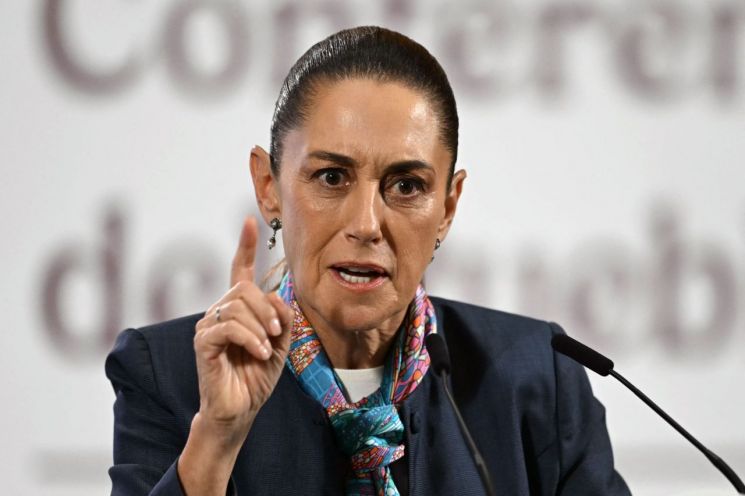
President Sheinbaum explained, "We are informing ambassadors from countries such as South Korea and China that this measure is related to strengthening the Mexican economy," and emphasized, "We do not wish to create conflicts with the countries concerned."
The Mexican government announced the previous day that it had selected 1,463 items across 17 strategic sectors-including automobiles and auto parts, steel and aluminum, plastics, home appliances, and textiles-and would impose differentiated tariffs at the maximum allowable levels within the scope of World Trade Organization (WTO) regulations. The government plans to raise tariffs on Chinese automobiles, which are currently at 20%, to the highest level, and to increase tariffs on items that currently range from 0% to 35% to as much as 50%. These measures are expected to affect 8.6% of all imports, equivalent to approximately 52 billion dollars.
The Mexican government clarified that countries without an FTA will be subject to these tariffs. Since South Korea does not have an FTA with Mexico, it may also be affected by the tariff increases.
This information came to light during the process of submitting the Mexican government’s 2026 budget proposal to the legislature. The Associated Press predicted that the budget bill would pass smoothly through the legislature.
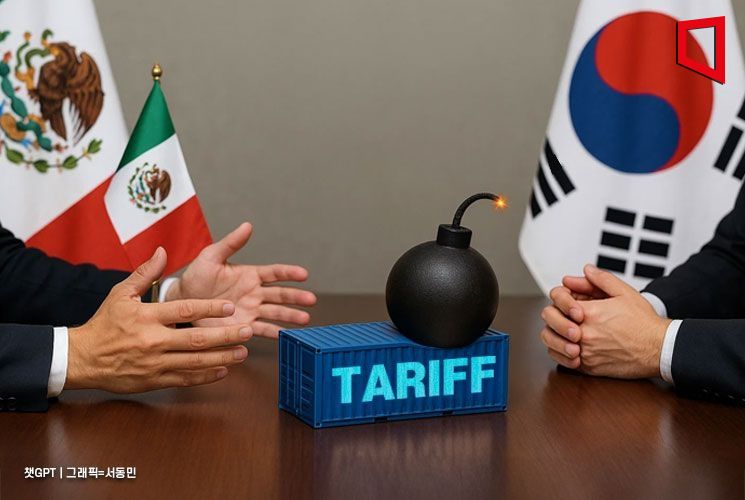
China is expected to be the country most affected by the new tariffs. Some analysts suggest that the move is intended to appease the United States, Mexico’s largest trading partner. However, President Sheinbaum denied this, stating that the industrial strategy was developed before Donald Trump was elected President of the United States last year, and emphasized that the measure is aimed at strengthening domestic production capacity.
In addition to China, South Korea, India, Indonesia, Russia, Thailand, and T?rkiye are also expected to be affected.
Many South Korean companies have established a presence in Mexico, leveraging its position as a key export base to the United States and taking advantage of various industrial policy incentives. In particular, the automotive parts and steel industries are closely monitoring whether their sectors will be included in the new policy. For automobiles, since some parts are produced in South Korea and then assembled in Mexico, the imposition of tariffs would have a significant impact. According to the Mexican government, as of last year, South Korea accounted for 7.1% of Mexico’s steel imports, ranking fourth overall.
© The Asia Business Daily(www.asiae.co.kr). All rights reserved.


















