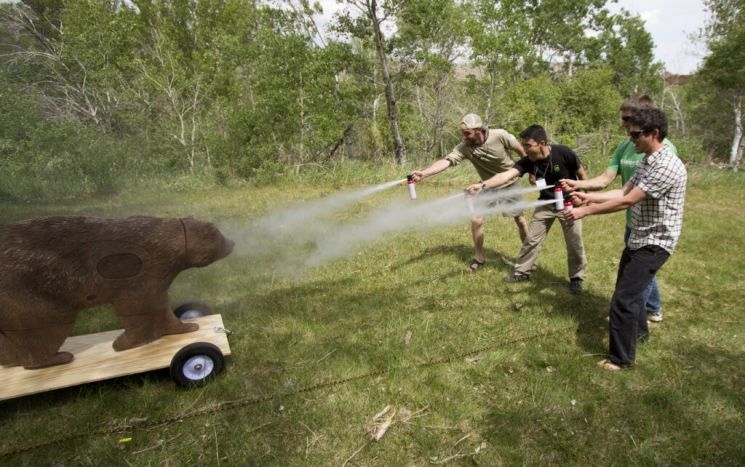
 Professor Tom Smith and his research team at Brigham Young University are practicing spraying bear repellent spray at a wheeled teddy bear doll. Professor Smith · Wildlife Society
After a fatal bear attack occurred in Japan, there has been an unexpected shortage and sellout of bear deterrent products.
On September 11, the local Japanese newspaper Shinano Mainichi Shimbun reported on this trend, calling it an "unprecedented situation." According to the newspaper, outdoor gear shops in Nagano Prefecture have seen a surge in customers seeking bear deterrent products. Recently, a hiker was killed by a brown bear in Shiretoko, Hokkaido, and there have been a series of Asiatic black bear sightings in the mountainous areas of Nagano Prefecture. As a result, some stores have even sold out of bear repellent spray.
Bear Repellent Spray Becomes Essential... Sales Surge at Retailers
At Ishii Sports Nagano, located in Nagano City, bear repellent spray was temporarily out of stock this summer. Following the fatal incident in Shiretoko on August 14, demand for both bear repellent spray and bear bells surged, with spray sales reaching about 1.5 times the previous year's figures. Until now, the main customers were people working in the mountains, but this season, there has been a noticeable increase in purchases by ordinary hikers.
In particular, compact products with a spray range of 2 to 3 meters are gaining popularity. Although these smaller versions are somewhat less effective than larger products with a spray range of about 10 meters, they are also experiencing ongoing shortages. A store representative said, "When I go to the mountains and sense the smell of animals or see claw marks on trees, I make loud noises with a whistle or by clapping to alert wildlife. I always carry spray. Above all, I hope people prioritize safety while enjoying outdoor activities."
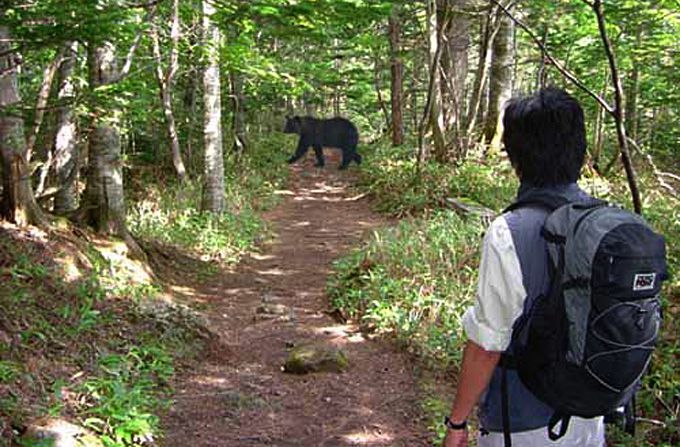 It is best to avoid encountering bears, and if you do, you should respond with spray or other measures. Photo of bear deterrence guidelines by the Shiretoko Nature Foundation in Japan.
At another store, five bear repellent sprays were stocked for the first time this season, but despite being expensive U.S. imports priced at 13,200 yen each (about 120,000 won), they sold out within days. The next restock is scheduled for mid-October. Bear bells and whistles have also been among the best-selling items in recent years. Hiroto Nakayama, a store employee with experience as an "Active Ranger" (nature conservation assistant) for the Ministry of the Environment, emphasizes, "You should enter the mountains only after understanding bear ecology." The store's Instagram account introduces products and also warns, "A mother bear with cubs may attack people to protect her young." At another store, many customers have never used spray before, so the store manager personally advises them on proper usage.
Sprays Containing Capsaicin... Combined Effects of Smell and Sound Achieve 95% Deterrence Rate
Bear repellent sprays contain capsaicin, an ingredient found in chili peppers and black pepper. Depending on the capacity, prices range from 10,000 to tens of thousands of yen. The Shiretoko Nature Foundation, located in an area with frequent bear sightings, even rents out spray to visitors for about 10,000 yen per day. It may seem hard to believe that spraying a harmful liquid can stop a one-ton bear from attacking a person, but research shows it is effective in 95% of cases.
A research team led by Professor Tom Smith of the Wildlife Department at Brigham Young University analyzed 19 cases where spray was used to drive away polar bears between 1986 and 2019. The spray was effective in 18 out of 19 cases, or 95%. The effectiveness of the spray is not only due to its harmful effects on the eyes, nose, and mouth. The process of shaking the spray, the hissing sound it makes, and the liquid spray itself can quickly prompt a bear to shift its priorities from curiosity to "I want to get out of here." In addition to the chemical effect, the visual and auditory impact scares the bear away. Some even say spray is more effective than a gun, as it is easier to use and requires less training. Under extreme stress, people may find it even harder to use a gun properly.
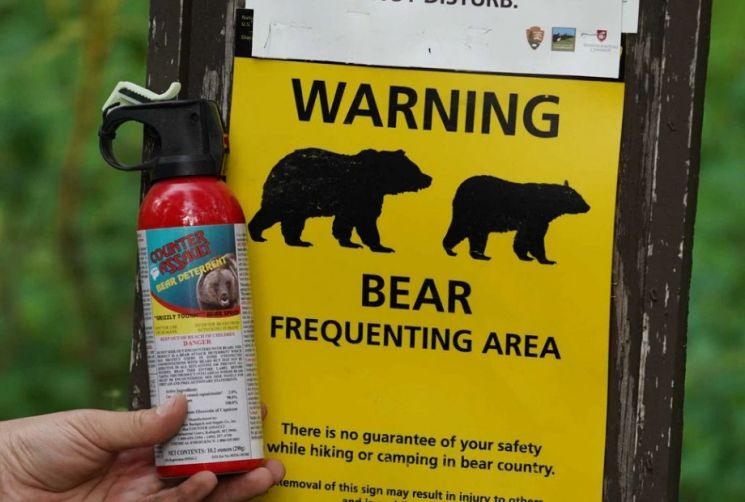 Promotional photo of Counter Assault, the leading brand in bear repellent spray in the United States
Why Spray Is Better Than a Gun
According to a 2012 study led by Professor Tom Smith, using firearms in bear attacks was not particularly effective in preventing injuries or fatalities. The research team analyzed 269 bear-human encounters in Alaska involving 444 people and 357 bears, including 300 brown bears. Of these, 229 cases involved the use of firearms, while 40 involved people carrying guns but not using them. However, the study found no statistical difference in outcomes (no injury, injury, or death) between cases where firearms were used and those where they were not. Professor Smith stated, "If you behave appropriately and carry bear repellent spray, you are much safer than recklessly entering bear habitats with a big gun."
 Professor Tom Smith of the Wildlife Department at Brigham Young University says that spray is better than a gun when encountering a bear. Brigham Young University
Make Noise to Avoid Bears... Use Spray If You Encounter One
It is often said that "bears are afraid of humans," but in some areas, bears do not consider humans a threat at all. In fact, some have learned to see people as "harmless." The basic principle of bear safety is to make your presence known to bears and avoid encounters altogether. The most common method is using a bear bell, which emits a sound that bears dislike. When bears hear the bell, they can prepare themselves, realizing "a person is coming." Other methods include blowing a whistle or playing a portable radio while walking. However, in Shiretoko recently, encounters with bears have occurred even when making noise or talking. Some bears have been seen leisurely eating berries for hours right next to hiking trails. In such cases, bear repellent spray becomes essential.
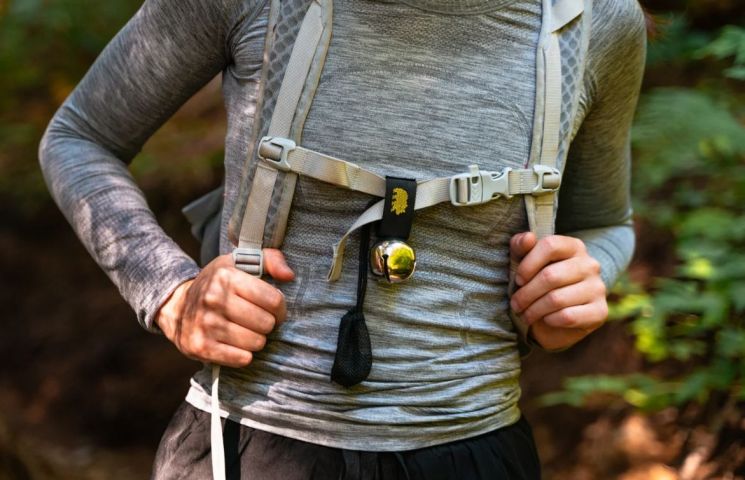 Bear Bell product by Koglan in the United States. It is a product that rings a bell when walking and can be easily attached to clothes, backpacks, dog leashes, etc. Koglan product.
Over 10 Types of Spray Sold in Japan... Beware of Cheap Imitations
Currently, more than 10 types of bear spray are sold in Japan. Among them, the U.S.-made "Counter Assault" has been used by local governments, national park management organizations, police, and the Self-Defense Forces. It contains 1.73% capsaicin, has a spray range of about 9.6 meters, and can spray continuously for about 7 seconds. The price exceeds 200,000 won.
Recently, low-priced "bear spray" products under 100,000 won have been sold online, but many of these are actually personal defense pepper sprays. If the capsaicin concentration is low or the spray duration is short, the product is almost ineffective, which could ultimately be fatal. If you are ambushed without time to use the spray, or if spraying does not stop the attack, you should protect your face and neck and adopt a defensive posture. However, this is only a "last resort to avoid fatal injury." Crouching from the start may signal weakness to the bear and provoke an attack. If the bear enters "predatory mode," recognizing you as prey, your only chance of survival is to fight back desperately.
© The Asia Business Daily(www.asiae.co.kr). All rights reserved.

![Clutching a Stolen Dior Bag, Saying "I Hate Being Poor but Real"... The Grotesque Con of a "Human Knockoff" [Slate]](https://cwcontent.asiae.co.kr/asiaresize/183/2026021902243444107_1771435474.jpg)

















