Op-Ed by Former WSJ Publisher
U.S.-South Korea Alliance Wavers...
South Korea Seeks a Way Out
A veteran American journalist has predicted that, as North Korea strengthens its nuclear capabilities, South Korea may pursue its own nuclear armament due to increasing difficulty in trusting the United States from a security perspective.
On September 9 (local time), Karen Elliott House, former publisher of The Wall Street Journal, wrote in an op-ed titled "Does South Korea Want Its Own Nuclear Weapons?" that South Korea stands at a crossroads where every path seems to lead to a dead end, expressing this outlook.
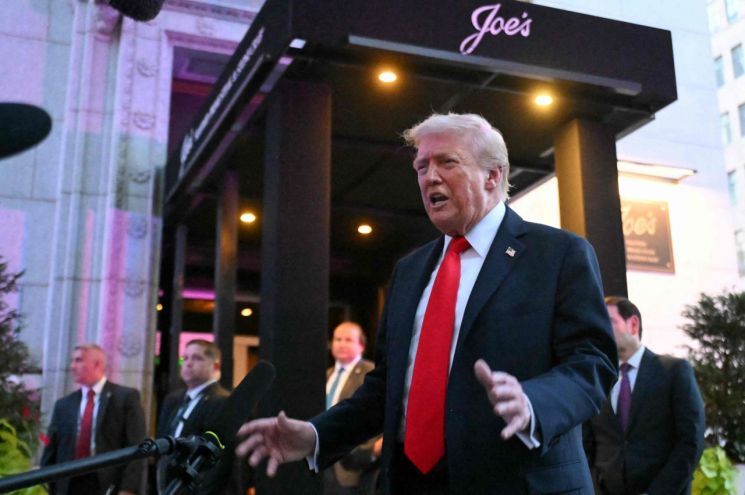
House pointed out that an increasing number of South Koreans believe that independent nuclear armament is the solution. She noted that many South Koreans are concerned that President Donald Trump of the United States, in pursuit of a Nobel Peace Prize, might cancel joint military exercises with South Korea in order to arrange a summit with Kim Jong Un, Chairman of North Korea's State Affairs Commission.
She cited a survey by the Brookings Institution, a U.S. think tank, which found that 35% of South Koreans view the United States as an unreliable ally.
House stated that at a recent security conference held in Seoul, experts discussed a plan in which South Korea would take responsibility for security on the Korean Peninsula while the United States would focus on protecting the broader Asia region, specifically deterring a Chinese invasion of Taiwan.
She explained that this approach comes with a fundamental dilemma. If the United States responds to Chinese aggression, it could trigger a larger conflict and create a situation where North Korea threatens or attacks South Korea. On the other hand, if the United States does not respond, North Korea may judge that the U.S. security commitment is hollow and could launch an attack.
Quoting an anonymous American expert, House reported that North Korea is expected to increase its nuclear arsenal from the current 60 warheads to 150 within the next decade. She also noted that, assuming some warheads fail to hit their targets or are intercepted by the United States, Kim Jong Un is aiming to secure 300 nuclear weapons to ensure survivability in a second-strike scenario.
In contrast, she added that South Korea already possesses enough material to produce 40 nuclear warheads but is unable to manufacture them due to its membership in the Nuclear Non-Proliferation Treaty (NPT).
House pointed out that despite North Korea's enhanced nuclear capabilities and improved relations with China and Russia, Kim Jong Un may still feel insecure. This is because, although North Korea deployed the children of its elite leadership to the war in Ukraine, it is estimated that 2,000 of them have died, potentially leading to discontent among loyalists.
As evidence, she cited the fact that while Kim Jong Un initially ignored the war dead, he has recently begun to honor them with medals and other forms of recognition. She further analyzed that Kim may have drawn strategic lessons by observing Russian President Vladimir Putin's use of nuclear threats as leverage during North Korea-Russia cooperation.
House noted that South Korea is seeking to strengthen cooperation with the North Atlantic Treaty Organization (NATO), Europe, and Japan, and to reinforce the U.S. security commitment to its Asian allies, but has yet to obtain any firm guarantees. She expressed hope that South Korea could turn this situation into an opportunity.
© The Asia Business Daily(www.asiae.co.kr). All rights reserved.
![Clutching a Stolen Dior Bag, Saying "I Hate Being Poor but Real"... The Grotesque Con of a "Human Knockoff" [Slate]](https://cwcontent.asiae.co.kr/asiaresize/183/2026021902243444107_1771435474.jpg)
















