Impact of Fast Food and Convenience Foods
"High Unemployment Means Families Cannot Afford Healthy Foods"
As fast food chains rapidly expand in South Africa, childhood obesity has emerged as a significant social issue.

According to the BBC on September 10 (local time), Kyros Inquiry School in Randburg, near Johannesburg, South Africa, recently introduced a primarily plant-based lunch menu to address the problem of obesity among its students.
According to the United Nations, the number of overweight and obese adolescents worldwide has nearly tripled over the past 20 years. In particular, the number of overweight children aged 5 to 9 increased from 69 million to 147 million, marking the first time in history that the global number of overweight children has surpassed that of underweight children.
As the issue of childhood obesity intensifies, Kyros School has also asked parents to pack lunchboxes focused on "whole foods" instead of processed foods. Whole foods refer to minimally processed foods. Mark Loon, principal of Kyros Inquiry School, said that the school's new policy would serve as an opportunity to teach children the importance of healthy eating habits, emphasizing, "The more schools become conscious of what children eat, the better we can protect students' health."
Causes of the Surge in Childhood Obesity: Processed Foods and Fast Food
UNICEF points out that the spread of convenience foods such as processed foods and fast food in developing countries has become a major factor contributing to childhood obesity.
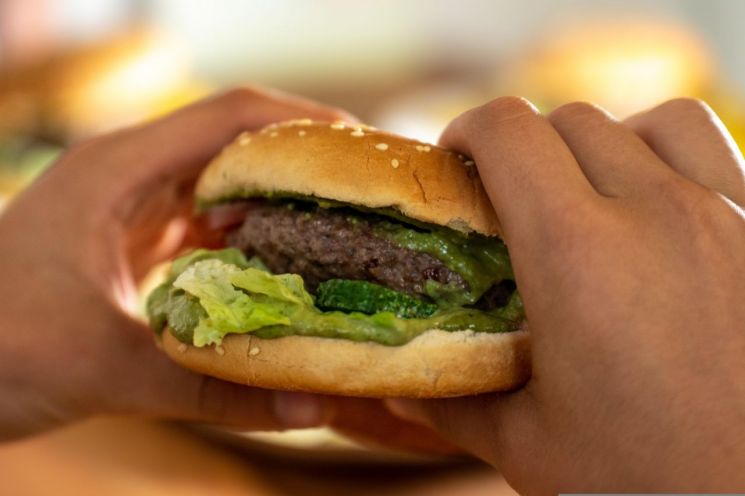
Mamkabella Mthembu (23), a UNICEF activist and trainee lawyer raising awareness about the dangers of fast food, said that as a child, she considered fast food to be "celebration food." She recalled, "I grew up in difficult circumstances with my grandmother, and fast food was a special treat we could only afford when we had money." As a result, she did not perceive fast food as unhealthy, but rather as something to be enjoyed on special occasions.
However, she shared that she began to experience health problems after frequently turning to convenience foods during her university years. "I am now obese, and I still suffer from gum bleeding caused by eating too much candy as a child," she said. "Recently, I have also experienced shortness of breath."
South African Fast Food Market to Grow from 3.7 Trillion Won in 2018 to 6.8 Trillion Won in 2026
In reality, childhood obesity is increasing rapidly in low- and middle-income countries. However, in low-income countries, most overweight children come from wealthy families who can afford high-calorie foods.
In contrast, in South Africa, which is classified as a middle-income country, childhood obesity is widespread across various social classes. This is because more families have easy access to fast food. The South African fast food market is expected to grow by about 83% over eight years, from $2.7 billion (3.74355 trillion won) in 2018 to $4.9 billion (6.79385 trillion won) in 2026.
Gilbert Chitauji, Nutrition Manager at UNICEF South Africa, said, "In the past, we only blamed individual eating habits or lack of exercise, but now we know environmental factors play a bigger role." He added, "We have recommended that the government restrict fast food marketing aimed at children."
The South African government introduced a sugar tax in 2018, but the obesity rate among children under five has soared from 13% in 2016 to 22% today. Chitauji pointed out, "South Africa has enough food, but due to high unemployment, many families cannot afford to buy healthy foods."
© The Asia Business Daily(www.asiae.co.kr). All rights reserved.


















