One in Ten Children Worldwide Is Obese, with Rampant Marketing of Ultra-Processed Foods
Overweight Rate Among Korean Children Rose from 8% in 2000 to 21% in 2022
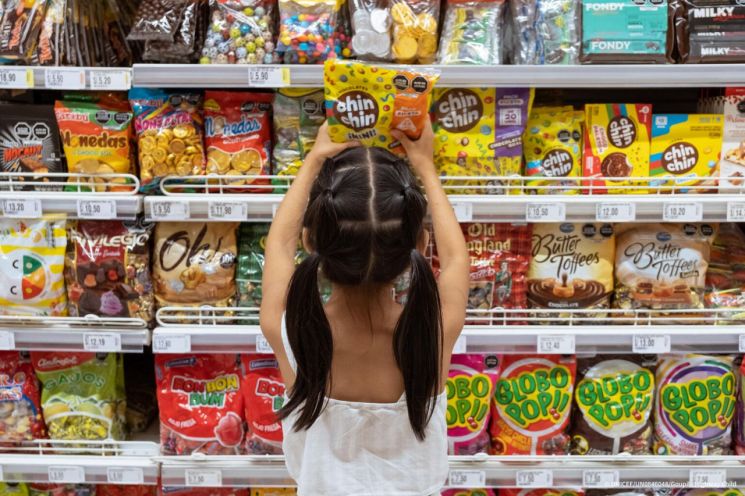 A child picking up a snack from a store shelf in Peru. It shows the food environment threatening children's health. UNICEF Korea Committee
The UNICEF Korea Committee (Chairman Jung Gapyoung) announced on September 10 that UNICEF has released the report "A Table of Greed: The Food Environment Threatening Children's Health," revealing that, for the first time this year, the global obesity rate has surpassed the underweight rate, posing a threat to the health of children worldwide.
According to an analysis of data from 190 countries, the underweight rate among children and adolescents aged 5 to 19 has decreased from about 13% in 2000 to 9.2%, while the obesity rate has increased from 3% to 9.4%. In all regions except Sub-Saharan Africa and South Asia, the obesity rate now exceeds the underweight rate, with 188 million children and adolescents worldwide-one in ten-suffering from obesity.

190 Million Obese Children and Adolescents... Severe in Pacific Island Nations
The study found that Pacific island nations have the highest obesity rates, with Niue at 38%, Cook Islands at 37%, and Nauru at 33% among children and adolescents aged 5 to 19. This figure has doubled since 2000, mainly due to a shift from traditional diets to cheaper and more convenient imported foods. High-income countries also report elevated obesity rates among those aged 5 to 19, with Chile at 27%, the United States at 21%, and the United Arab Emirates at 21%.
Korea is no exception. The proportion of overweight children and adolescents aged 5 to 19 in Korea increased significantly from 19.7% in 2000 to 33.9% in 2022, while the obesity rate rose from 5.8% to 14%.
Obesity, a severe form of overweight, increases the risk of insulin resistance and hypertension, and can lead to life-threatening diseases such as type 2 diabetes, cardiovascular disease, and certain cancers.
 It is important to ensure that children consistently consume a variety of vegetables for balanced growth. Pexels
Ultra-Processed Foods and Fast Food Dominate Schools... Indiscriminate Advertising Also a Problem
The report identifies the dominance of ultra-processed foods and fast food-high in sugar, refined starches, salt, unhealthy fats, and additives-in stores and schools, as well as the ease with which children and adolescents are exposed to advertising through digital marketing, as key factors behind this trend.
The report also warns that without government efforts to prevent childhood overweight and obesity, countries may face economic losses due to obesity-related health problems. It is projected that by 2035, global economic losses from overweight and obesity will exceed 4 trillion dollars annually.
Through the report, UNICEF urges the implementation of comprehensive policies to improve the food environment for children and adolescents, including mandatory food labeling, restrictions on food marketing, and food taxes and subsidies. The organization also calls for creating an environment in which families and communities can demand healthier food environments, including banning the provision, sale, marketing, and sponsorship of junk food in schools.
Jomijin, Secretary-General of the UNICEF Korea Committee, stated, "Malnutrition is no longer just an issue for underweight children. Obesity is having an increasingly significant impact on children's health and development. During critical periods of growth and development, ultra-processed foods are replacing nutritious foods," adding, "Policy efforts are needed to ensure that every child can access affordable, nutritious food, and that caregivers are supported in providing healthy meals."
© The Asia Business Daily(www.asiae.co.kr). All rights reserved.



















