20 New Indicators Introduced
Strengthening Outcome Management for Basic Society and Carbon Neutrality
Gwangmyeong City in Gyeonggi Province is strengthening its indicators for measuring policy outcomes to achieve sustainable development goals.
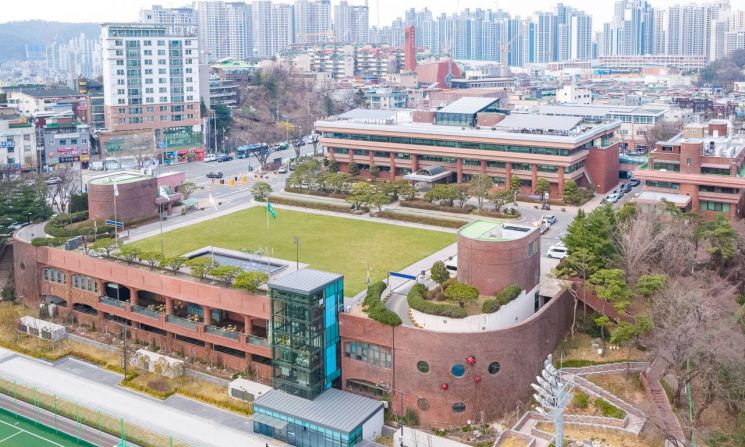
On September 9, Gwangmyeong City announced that it has finalized the 'Second Basic Strategy and Implementation Plan for Sustainable Development' and will expand policies related to the basic society, low-carbon initiatives, and the capitalization of local communities.
According to the 'Framework Act on Sustainable Development,' local governments are required to establish this plan to achieve the 17 Sustainable Development Goals (SDGs) set by the United Nations. The newly established plan will serve as the guideline for the city’s sustainable development policies for five years, from this year through 2029.
The plan includes 33 detailed objectives for achieving the 17 major goals, 48 primary indicators to measure policy outcomes, and 16 supplementary indicators, covering areas such as welfare, education and culture, transportation, housing and safety, climate adaptation and green infrastructure, business and the local economy, as well as resident autonomy and public-private governance.
In particular, this plan strengthens its strategic focus by developing and incorporating 20 new indicators related to the city’s key initiatives: basic society, low-carbon policies, and the capitalization of local communities.
In the social sector, the city plans to quantitatively measure the effectiveness of basic society policies that guarantee all citizens a fundamental standard of living, using indicators such as the basic income beneficiary rate and public meal service utilization rate. Additionally, new indicators have been developed to assess the degree of an inclusive society, such as the elderly care service utilization rate, employment rate for people with disabilities, and volunteer participation rate.
In the environmental sector, the city will use indicators for citizen participation in carbon neutrality initiatives to monitor the process by which citizens’ learning translates into action and to assess the effectiveness of carbon reduction. It has also introduced a new indicator for the adoption rate of zero-energy buildings.
In the economic sector, the city has integrated the capitalization of local communities with environmental, social, and governance (ESG) strategies, adding indicators such as the ESG participation rate among small and medium-sized enterprises, the rate at which public institutions purchase products and services from local companies, and the number of ESG public-private partnership projects.
Park Seungwon, Mayor of Gwangmyeong, stated, "We will actively pursue this plan so that it becomes a foundation for securing sustainability well beyond the next five years."
The city will regularly monitor the implementation of the new plan to ensure that its execution leads to tangible policy outcomes.
Meanwhile, the city added that the average achievement rate for the first basic strategy and implementation plan for sustainable development was 104%, with all goals exceeding 80%. Among these, eight goals closely related to citizens' lives?such as welfare, housing and transportation, local economy, and learning and culture?achieved rates above 100%.
Detailed information about the newly established plan can be found on the Gwangmyeong City Hall website.
© The Asia Business Daily(www.asiae.co.kr). All rights reserved.