KCCI Holds Forum on Greenhouse Gas Emissions Trading Scheme
Call for Reduction of Government's Reserve Allowances
Industry Requests Supplementary Measures for Increased Paid Allocations
As the government prepares to establish the 4th Allocation Plan for the Emissions Trading Scheme, voices from the industrial sector are calling for a rational system design that takes corporate competitiveness into account. Concerns have been raised that as the government's reserve of emission allowances expands, the pre-allocated emission allowances for companies will be reduced, and that additional cost burdens may increase due to rising electricity rates stemming from the expansion of paid allocations in the power generation sector.
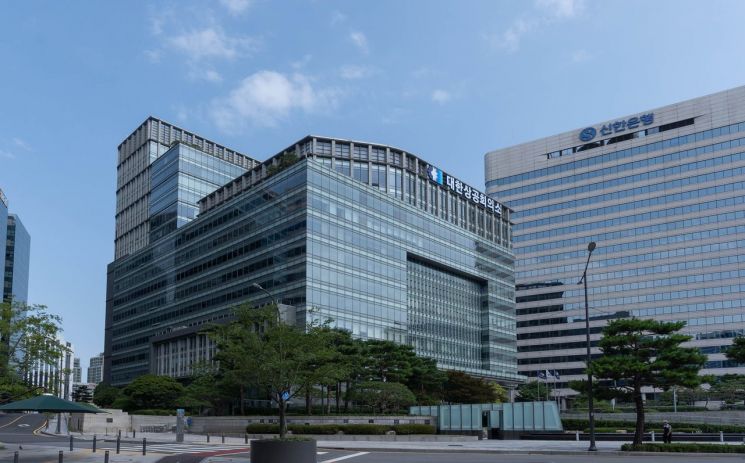
On September 9, the Korea Chamber of Commerce and Industry held a forum on the "4th Allocation Plan for the Greenhouse Gas Emissions Trading Scheme" at its headquarters, attended by more than 150 participants from industry, academia, and civic groups. The Greenhouse Gas Emissions Trading Scheme, implemented since 2015, is a system in which the government pre-allocates emission allowances to each company and allows the trading of surplus or shortfall. The current third planning period ends this year, and the fourth planning period will begin next year, covering 2026 to 2030. The government plans to finalize the 4th allocation plan in September.
The industrial sector has requested: ▲ a reduction in the government's reserve of emission allowances, ▲ supplementary measures in response to the increase in the proportion of paid allocations in the power generation sector, and ▲ an expansion of the use of offset credits. Jung Eunmi, Senior Research Fellow at the Korea Institute for Industrial Economics and Trade, stated, "With the recent sharp increase in domestic manufacturing costs, if companies are further burdened with emission allowance costs, they may even have to consider reducing production operations," adding, "It is necessary to determine an appropriate level of reserve, taking corporate competitiveness into consideration."
According to the Ministry of Environment's recent discussions with the industrial sector to gather opinions on the 4th allocation plan, the government's reserve of emission allowances for market stabilization is expected to increase significantly compared to the 14 million tons reserved in the third planning period. Notably, unlike the first to third periods, the reserve for market stabilization in the fourth period will be included within the total emission cap, which means that the pre-allocated allowances companies receive from the government will be significantly reduced. Furthermore, the Korea Chamber of Commerce and Industry explained that since this reserve will be deducted only from sectors other than power generation, such as industry, the burden on the industrial sector is expected to increase substantially.
The proportion of paid allocations in the power generation sector will be gradually increased from the current 10% to 50% during the fourth planning period. A representative from the steel industry stated, "With Korea Electric Power Corporation's cumulative deficit reaching 28 trillion won and its debt amounting to 200 trillion won, a sharp increase in the proportion of paid allocations in the power generation sector will inevitably lead to higher electricity rates." He emphasized, "In Europe, direct subsidies are provided to industries to offset the burden of rising electricity rates during the implementation of the emissions trading scheme, so Korea also needs support measures to mitigate the impact of electricity rate hikes resulting from the expansion of paid allocations."
The government plans to adjust the limit on the use of offset credits from the current 5%. Regarding this, a project operator engaged in international reduction projects said, "Considering the structural characteristics of domestic industry and the global trend toward reductions, adjusting the limit on the use of offsets could undermine corporate competitiveness and the spread of low-carbon technologies." He added, "As major countries such as Japan are actively utilizing international reductions, Korea should also guarantee at least a 5% limit to ease the burden on companies and contribute to global greenhouse gas reduction."
On the other hand, civic groups presented the opposite view. Kwon Kyunglak, policy activist at Plan 1.5, argued, "It is urgent to restore the emissions trading scheme that was damaged under the previous administration," and insisted, "The 4th allocation plan must drastically reduce the total emission cap, introduce 100% paid allocation for the power generation sector, and abolish the offset system through bold measures."
Cho Youngjoon, head of the Center for Sustainable Management at the Korea Chamber of Commerce and Industry, emphasized, "For the 4th planning period of the emissions trading scheme to be operated successfully, it is essential to design a rational system that companies can manage." He added, "If the government balances the achievement of carbon neutrality goals with the maintenance of industrial competitiveness and continues to improve the system, Korean companies will not fall behind in international competition and will also contribute to reducing greenhouse gas emissions."
© The Asia Business Daily(www.asiae.co.kr). All rights reserved.

















