Obong Reservoir Storage Rate at 12.4% as of September 8
"Expected to Drop to 2.1% Without Rain"
Fire Trucks and Military Helicopters Mobilized for Water Delivery
Plan to Utilize Doam Dam, Idle Since 2001, Gains Traction
The drought in Gangneung, where a 'state of disaster' has been declared, is worsening. As the water supply to 45,000 households in Gangneung has been cut off, authorities are considering the emergency release of water from the nearby Doam Dam to use as agricultural and industrial water.
According to the Ministry of the Interior and Safety on September 9, as of 6 p.m. the previous day, the water storage rate at Obong Reservoir was recorded at 12.4 percent. This is one-sixth of the usual storage rate (71.0 percent) for this time of year. Obong Reservoir is the main source of drinking water for about 80 percent of Gangneung's residents. When the storage rate at Obong Reservoir fell below 15 percent, the government declared a state of disaster on August 30.
If there is no rainfall, the storage rate is expected to drop sharply. According to the government's weekly report on the drought status and outlook for domestic and industrial water, if there is no rain, the storage rate is expected to fall below 5 percent within four weeks.
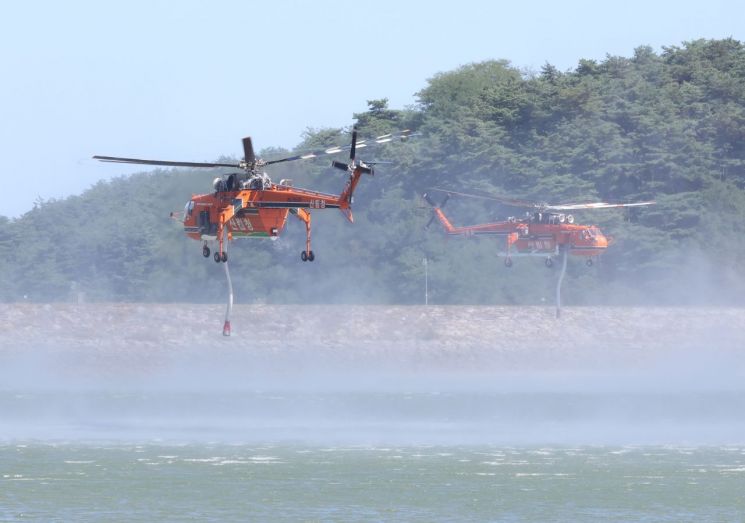
As the drought intensifies, the government is delivering water to Gangneung using helicopters and even naval vessels. A total of 570 vehicles from the fire department, military, and private sector, 5 military helicopters, and 2 vessels from the Coast Guard and Korea Maritime Police Agency have been mobilized. Since it is difficult to use water under the current water rationing, bottled water donated from various regions is also being distributed. In Gangneung, water supply has been cut off to 123 apartment buildings and lodging facilities with water tanks exceeding 100 tons, and the operation of 47 public restrooms as well as 76 lodging facilities with swimming pools and spas has been suspended.
Ultimately, the possibility of utilizing water from Doam Dam has been raised. Doam Dam began operating in 1991, but due to the characteristics of the limestone area, there have been ongoing complaints about the inflow of pollutants and the occurrence of algal blooms in the summer, resulting in the suspension of power generation and water release since 2001. Experts believe that using the dam's water for agricultural and industrial purposes, rather than for domestic use, is a realistic option. At a recent meeting hosted by Gangwon Province, it was reported that Jeongseon County and Yeongwol County expressed no objections to emergency water release.
The Ministry of the Interior and Safety, Gangwon Province, Gangneung City, and other key agencies held a policy meeting to discuss ways to strengthen pan-governmental cooperation. Kim Kwangyong, Director General of Disaster and Safety Management at the Ministry of the Interior and Safety, stated, "We must now assume a situation where the storage rate drops to zero percent and actively review the countermeasures that each agency can implement." He added, "The Ministry of the Interior and Safety, the Ministry of Agriculture, Food and Rural Affairs, the Ministry of Trade, Industry and Energy, and the Ministry of Environment should promptly review and implement both short- and long-term measures to secure additional water sources, such as utilizing the dead water in Obong Reservoir and installing new public wells, without delay."
© The Asia Business Daily(www.asiae.co.kr). All rights reserved.

















