Seo Mihwa Points to Staff Shortages and Excessive Workloads as Root Causes
The number of cases in which healthcare workers at medical institutions have reported and sought counseling for human rights violations has surged, surpassing 6,000 over the past five years. More than half of the victims were nurses.
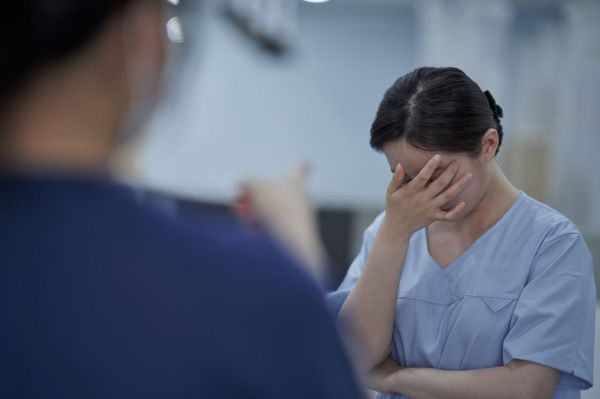
According to the office of Seo Mihwa, a member of the National Assembly Health and Welfare Committee from the Democratic Party of Korea, data from the Human Rights Support Center for Healthcare Workers, operated by the National Health Insurance Service, shows that a total of 6,019 cases of human rights violation counseling were reported from August 2021, when the center opened, through July of this year.
This amounts to an average of four cases per day. Of these, 3,616 were individual counseling sessions, 2,306 were group counseling sessions, and 97 involved legal or labor expert consultations.
The number of counseling cases has increased sharply each year, rising from 79 in 2021 to 711 in 2022, 1,800 in 2023, and reaching a record high of 2,205 in 2024. The upward trend continues, with 1,224 cases already reported between January and July this year.
By reason for counseling, workplace harassment and abuse of authority accounted for the largest share at 13.4% (808 cases), followed by verbal abuse and assault at 2.3% (138 cases), ostracism at 1.4% (87 cases), and sexual issues at 0.8% (50 cases). Numerous cases of human rights violations in medical settings have been reported, such as repeated humiliating remarks made in front of patients and guardians, monitoring of employee attendance through CCTV, and being forced to run personal errands.
By occupation, nurses accounted for the majority at 57.9% (3,487 cases), followed by other hospital staff such as administrative and cleaning personnel at 20.2% (1,213 cases), nurse assistants at 5.8% (352 cases), physical therapists at 3.4% (207 cases), dental hygienists at 3% (180 cases), clinical laboratory technologists at 2.4% (145 cases), radiologic technologists at 1.5% (93 cases), and doctors at 1.4% (87 cases).
Seo emphasized, "Workplace harassment and abuse of authority in medical settings are not just individual issues, but stem from structural problems such as excessive work burdens and staff shortages," adding, "It is urgent to improve systems and establish practical measures so that healthcare workers can work in environments where they are respected."
© The Asia Business Daily(www.asiae.co.kr). All rights reserved.

















