On September 7 (local time), President Donald Trump of the United States announced plans to implement additional sanctions against Russia. By tightening Russia's financial resources in cooperation with the European Union (EU), the United States appears poised to increase pressure on Russia to push for a ceasefire, as Moscow remains passive in negotiations to end the war in Ukraine.
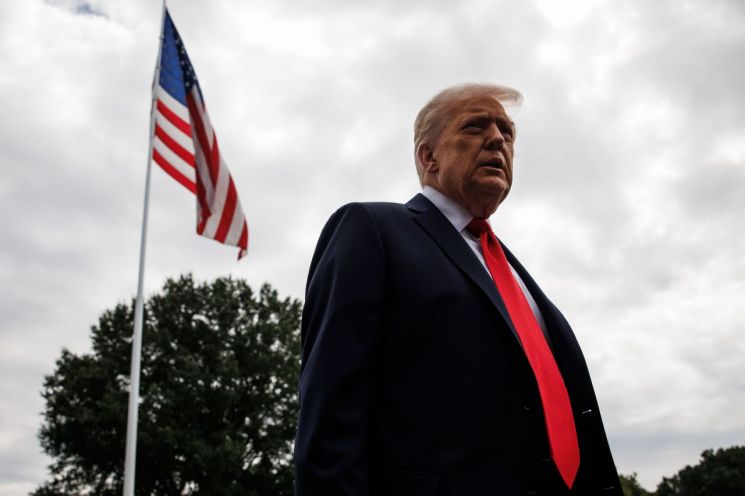
Before departing for New York to attend the men's final of the US Open tennis tournament, President Trump responded "Yes" at the White House when asked by reporters whether the United States was prepared to implement a "second phase" of sanctions against Russia.
Previously, at the end of last month, the United States began imposing a first phase of secondary sanctions by levying an additional 25% tariff-bringing the total to 50%-on India, a major purchaser of Russian oil, on top of the existing 25% reciprocal tariff. As a result, it is anticipated that the second phase of sanctions may not only impose direct tariffs on Russia, but also target other countries purchasing Russian products such as oil, by levying tariffs on them as well.
Last month, after meeting with Russian President Vladimir Putin in Alaska, President Trump has been working to arrange a Russia-Ukraine summit to negotiate an end to the war in Ukraine. However, Russia has continued to escalate its offensive, including launching a large-scale airstrike on Kyiv, the capital of Ukraine, on this day. In addition, President Putin recently attended the 80th anniversary Victory Day celebration of the end of World War II in Beijing, where he met with Chinese President Xi Jinping and North Korean State Affairs Commission Chairman Kim Jong Un to strengthen anti-American and anti-Western solidarity. In response, the United States appears to be increasing pressure on Russia, urging Moscow to return to the negotiating table for a ceasefire.
On the same day, US Treasury Secretary Scott Besant also suggested in an NBC interview that the United States may move forward with secondary sanctions in coordination with Europe. He stated, "We are ready to increase pressure on Russia."
Secretary Besant remarked, "It is a race between how long the Ukrainian military can endure and how long the Russian economy can survive," adding, "If the United States and the EU implement additional sanctions and impose secondary tariffs on countries buying Russian oil, the Russian economy will completely collapse, and that will bring President Putin to the negotiating table."
On September 8, Secretary Besant is scheduled to meet with an EU delegation led by David O'Sullivan, the bloc's Special Envoy for Sanctions, in Washington, D.C. It is expected that specific economic sanctions against Russia will be discussed at this meeting. Previously, on September 5, Ursula von der Leyen, President of the European Commission, held phone calls with President Donald Trump, Vice President J.D. Vance, and Secretary Besant.
Meanwhile, on the same day, Ukrainian President Volodymyr Zelenskyy, in an interview with ABC News, urged for stronger sanctions against Russia, stating, "The way to stop a killer is to take away his weapons," and emphasizing, "Energy is his weapon."
© The Asia Business Daily(www.asiae.co.kr). All rights reserved.

















