NEXT Releases Second Coal Phase-out Report
"11th Electricity Plan's Transition Strategy Needs Revision"
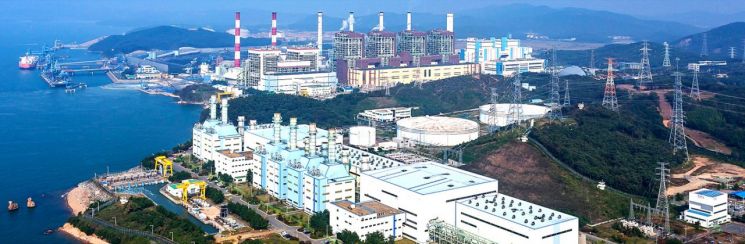
President Lee Jaemyung has pledged to shut down all coal-fired power plants by 2040. However, data shows that currently operating coal power plants will have almost no economic viability after 2035, as their utilization rates are rapidly declining. Analysts say that if the fuel conversion plan in the 11th Basic Plan for Long-term Electricity Supply and Demand (the Electricity Plan) is revised, or if greenhouse gas reduction targets are raised, it would be possible to fully phase out coal power by 2035.
On September 7, the non-profit organization NEXT released a report titled "Coal Phase-out Report 2 (Coal Phase-out Watcher: NEXT Electricity Outlook 2025-Part 2)." This is a follow-up to the first Coal Phase-out Report published in April last year, and it provides a detailed outlook on coal power plant utilization rates by region and year.
According to the report, as of December last year, the total installed capacity of domestic coal-fired power plants was 40.3 gigawatts (GW), an increase of 3.1 GW over two years.
However, during the same period, the utilization rate of coal power plants fell by 8.7 percentage points, and power generation decreased by 20 terawatt-hours (TWh). The utilization rate of newly constructed plants completed after 2020 also dropped from 53% in 2022 to 35% last year. This means that these plants were idle for more than twice as long as they were operating.
There are growing calls for the government to specify a concrete coal phase-out roadmap. The Lee Jaemyung administration, which took office in June, has pledged to phase out coal by 2040. In contrast, the 11th Electricity Plan (2024-2038), finalized in February, still includes plans to operate about 20 GW of coal-fired power in 2038.
Coal Phase-out Report 2 presents seven scenarios, considering factors such as the economic viability of coal power plants, the speed of renewable energy adoption, and the greenhouse gas reduction pathway for the transition sector. The results show that in every scenario, most coal plants lose economic viability after 2035.
In the scenario where current policies (the 11th Electricity Plan) are maintained, it is projected that, in 2035, 15 GW (71%) of the remaining 21 GW of coal capacity in the five main regions (Gangwon, Gyeongnam, Incheon, Jeonnam, and Chungnam) will have an average annual utilization rate below 40%. By 2040, all coal power plants are expected to have utilization rates below 40%.
The report states, "Even if the rollout of renewable energy is delayed compared to the plan, the early closure of coal power plants is inevitable," explaining, "If there is a shortage of renewables, more liquefied natural gas (LNG) will have to be used instead of coal to meet greenhouse gas reduction targets."
The report argues that renewables can be a cost-effective alternative to coal. While it would cost about 54 trillion won to build solar and wind power facilities, this could reduce coal power fuel costs by as much as 108 trillion won.
The Electricity Plan calls for a gradual transition of coal power generation to ammonia co-firing, or to full conversion to LNG or hydrogen.
However, the report finds that coal-ammonia co-firing is ineffective both in terms of greenhouse gas reduction and economic viability. This is because the fuel costs are higher than LNG, it still emits greenhouse gases, and it lacks the flexibility needed to respond to the variability of renewables.
Lee Jiwoo, the lead researcher, emphasized, "Coal phase-out policies require long-term preparation, massive capital, and involve a variety of stakeholders, making it difficult to expect a swift resolution if left solely to the market. It is therefore urgent for the government to present a coal phase-out roadmap with annual targets and concrete implementation plans."
© The Asia Business Daily(www.asiae.co.kr). All rights reserved.

















