Sleeping on the Left Side Aids Digestion Due to Anatomical Structure
Stomach Sleeping Is the Worst...
The "Zero-Gravity Position" Is the Best
A recent study has found that incorrect sleeping postures can have a serious impact on spinal and respiratory health.
Benenden Health, a non-profit healthcare organization, recently surveyed 2,000 adults and found that the majority tend to sleep on their right side.
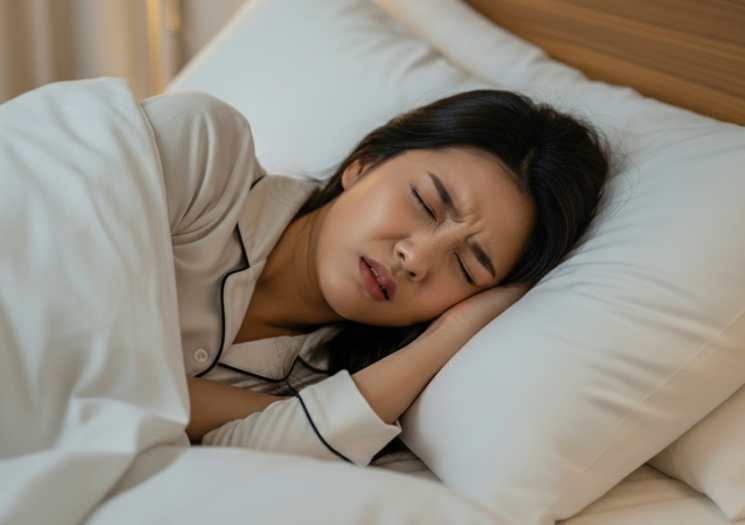
One in five adults surveyed did not believe that sleeping posture affects their health.
However, experts emphasized that certain sleeping positions have a significant impact on spinal, respiratory, and digestive health, noting that sleeping on the left side is more beneficial. In fact, the survey revealed that 85% of respondents reported experiencing sleep difficulties.
Dr. Cheryll Lythgoe of Benenden Health explained, "Sleeping on your left side can help alleviate symptoms of sleep apnea, snoring, and acid reflux." This is because, due to the anatomical structure of the stomach, which is shaped like a pouch, lying on the left side allows food to move more smoothly into the intestines, aiding digestion.
In contrast, sleeping on your stomach should be avoided, as it disrupts spinal alignment, causes neck and lower back pain, and puts additional strain on breathing. This position places unnecessary pressure on the spine and joints, and increases pressure on the lungs and diaphragm, hindering respiration. Dr. Lythgoe warned, "Sleeping on your stomach or in an excessively curled-up position can lead to chronic pain and reduced sleep quality."

Benenden Health physiotherapist Jordan DeHara recommended sleeping in the fetal position with a pillow between the knees, or lying flat with a pillow under the knees, as ways to reduce strain on the lower back and hips. He also added, "Choosing the right pillow is important for improving sleep quality and maintaining spinal health."
Meanwhile, last April, Dr. Tim Mercer, a general practitioner and trainer in the UK, stated through MailOnline that the 'zero-gravity position' is the optimal sleeping posture. This position, researched by NASA, involves keeping the head and legs slightly elevated above the heart to maintain a neutral spine alignment.
This can be achieved simply by using pillows to slightly raise the head and legs. Because this position keeps the airway open and ensures smooth oxygen supply during sleep, it can be especially helpful for people who experience breathing difficulties at night.
© The Asia Business Daily(www.asiae.co.kr). All rights reserved.


















