Urges European Allies to Halt Russian Oil Purchases
Calls for Increased Economic Pressure on China
Announces Visa Restrictions for Central Americans
Acting on Behalf of China
U.S. President Donald Trump is intensifying his economic and diplomatic containment strategy targeting China in response to moves by North Korea, China, and Russia to establish a "new order" following Victory Day. In particular, his direct measures such as pressuring European allies to impose sanctions on China and implementing visa restrictions are seen as a counter-strategy to the growing unity among North Korea, China, and Russia.
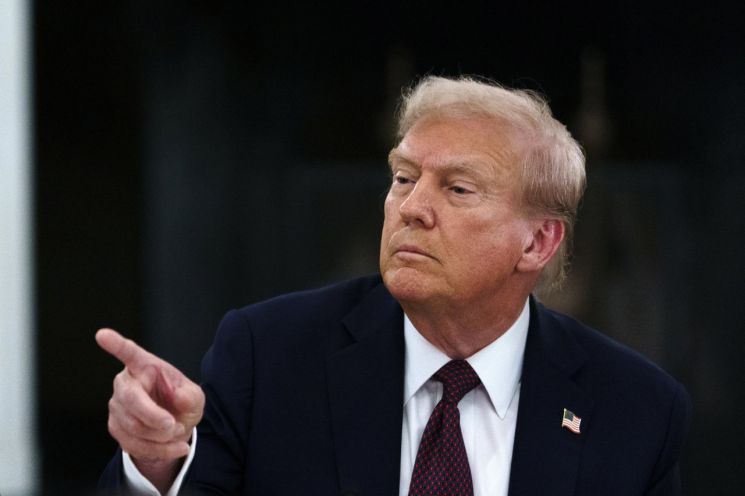
On September 4 (local time), President Trump held phone calls with Ukrainian President Volodymyr Zelensky, as well as European leaders from the "Coalition of the Willing," including the United Kingdom and France, where he simultaneously called for a halt to purchases of Russian oil and for increased pressure on China.
During these conversations, he emphasized the necessity of cutting off oil purchases that fund Russia's war efforts, stating, "We must also apply economic pressure to China, which is supporting Russia's war efforts." By explicitly including China as a target for sanctions alongside Russia, President Trump signaled a clear intention to contain China.
These demands came immediately after North Korea, China, and Russia showcased their "anti-U.S., anti-Western" solidarity at the 80th anniversary Victory Day event presided over by Chinese President Xi Jinping. While President Trump is pushing for a Russia-Ukraine summit to end the war, Russian President Vladimir Putin has maintained a lukewarm stance. There are growing concerns that the North Korea-China-Russia alliance, centered on China, could diminish U.S. diplomatic influence. The Guardian noted, "The strengthening of the three countries' alliance is seen as a sign of weakening of the U.S.-led global order established after the Cold War."
On the same day, the Trump administration announced visa restrictions for nationals of Central American countries who have acted on behalf of China. U.S. Secretary of State Marco Rubio stated, "Today, the State Department is announcing a policy that allows us to restrict the issuance of U.S. visas to individuals who have deliberately acted for the Chinese Communist Party in Central America, undermining the rule of law in the region by directing, approving, or funding such activities."
The Central American region in this context refers to Panama, Costa Rica, Nicaragua, Honduras, and El Salvador. This move goes beyond sanctioning specific individuals and is interpreted as an effort to curb China's expanding influence in Latin America and to defend the U.S.-centered regional order. Reuters reported, "Recently, China has been making moves to expand its influence in Latin America, a region that has traditionally been within the U.S. sphere of influence."
On the same day, Mexico announced it was considering imposing tariffs on Chinese products, coinciding with President Trump's increased pressure on China. Mexican President Claudia Sheinbaum stated at a press conference, "We are considering imposing tariffs on imports from countries with which we do not have a free trade agreement. This could include China, but it is not aimed solely at China."
She explained that this measure is "intended to protect the foundations of the United States-Mexico-Canada Agreement (USMCA) and safeguard certain industries and jobs amid changes in the international trade order since the launch of the Trump administration." Although she emphasized that the measure is not specifically targeting China, it is seen as partially responding to the U.S. pressure campaign, given the current context of President Trump's intensified efforts to contain China.
The South China Morning Post (SCMP) reported, "Such tariffs would fulfill a longstanding demand by President Trump amid the escalating U.S.-China trade war."
The "longstanding demand" referred to by President Trump means that Mexico would directly impose tariffs on Chinese imports to block Chinese products from entering the U.S. market. President Trump has consistently pointed out that Chinese companies exploit loopholes in the USMCA by building factories in Mexico and rerouting exports to the United States. He warned, "China is building the world's largest automobile factory near the Mexican border," and declared, "Such vehicles will never be allowed into the United States," even mentioning retaliatory tariffs of up to 200-250%.
© The Asia Business Daily(www.asiae.co.kr). All rights reserved.

















