Japanese Auto Tariffs to Drop to 15% Next Week
Reduction to Take Effect Before South Korea
Concerns Over Weakened Price Competitiveness for Korean Cars
On September 4 (local time), U.S. President Donald Trump signed an executive order to implement the U.S.-Japan trade agreement, which includes lowering tariffs on Japanese automobiles to 15%. The United States has also agreed to reduce tariffs on South Korean automobiles from 25% to 15%, but since the reduction for Japan will take effect first, concerns have been raised that the price competitiveness of South Korean cars in the U.S. market could weaken for the time being.
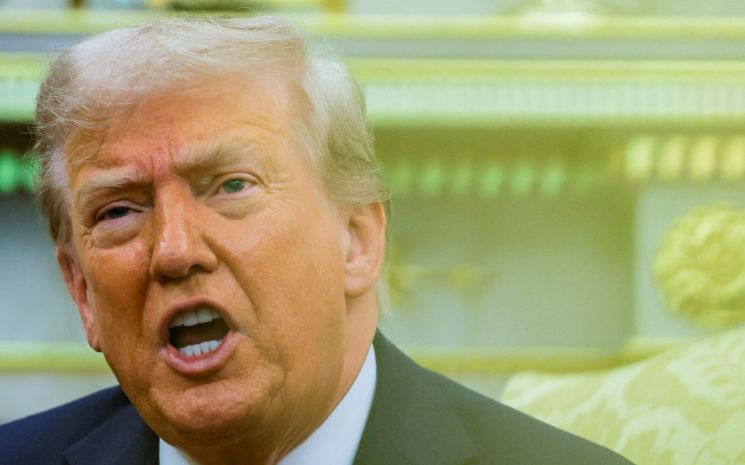
On the same day, Bloomberg, citing the White House, reported that the executive order stipulates a basic 15% tariff on most Japanese imports, including automobiles and auto parts. This measure is expected to take effect next week.
Previously, at the end of July, Japan pledged to invest 550 billion dollars in the United States and to open its automobile and rice markets, in exchange for a promise from the U.S. to lower reciprocal tariffs and automobile tariffs from the previous 25% to 15%. However, disagreements over the details of the agreement between the two countries delayed the signing of the executive order for the reduction of automobile tariffs. With this signing, the previously applied 27.5% (2.5% automobile tariff + 25% auto parts tariff) tariff on Japanese automobiles has been significantly eased.
In particular, the two countries clashed over whether to include the existing U.S. tariff rate on Japan within the 15% reciprocal tariff, as well as over the method of Japan's 550 billion dollar investment. Japan advocated for a fund centered on guarantees and loans, while the U.S. demanded a greater share of direct investment. Ultimately, under U.S. pressure, Japan agreed to document all agreed items, including not only investments but also expanded rice imports and purchases of U.S. aircraft, which led to the confirmation of the automobile tariff implementation. In relation to this, Japanese Economic Revitalization Minister Ryosei Akazawa departed for the United States on this day for ministerial-level talks.
The issue now lies with South Korea. The United States has also agreed with South Korea to lower reciprocal tariffs and tariffs on automobiles and auto parts from 25% to 15%, but the reduction on automobiles has yet to take effect. The U.S. is demanding, as it did with Japan, an increase in direct investment from the 350 billion dollar investment pledged by South Korea, which is causing delays in the implementation of the agreement. With President Trump signing the executive order to lower tariffs on Japanese automobiles to 15% first, it is now highly likely that South Korea will face higher automobile tariffs than Japan in the U.S. market for the time being. Accordingly, the South Korean government is expected to face increased pressure to expedite the implementation of the agreed 15% automobile tariff with the United States.
Additionally, President Trump delegated authority to the Secretary of Commerce to adjust reciprocal tariffs to 0% for natural resources, generic pharmaceuticals and ingredients, and precursor chemicals that cannot be produced in the United States. However, the specific items and timing of application will be determined by the Department of Commerce through notices in the Federal Register.
The executive order also specifies conditions that Japan must fulfill. Japan agreed to further open its markets to U.S. manufacturing, aerospace, agriculture, food, energy, automobiles, and industrial products, with particular provisions for expanding imports of U.S. rice. Japan is already required to import 770,000 tons of rice annually tariff-free under the Minimum Access (MA) system, and within this framework, it has agreed to increase imports of U.S. rice by 75%.
Currently, Japan's total MA rice quota is 770,000 tons, of which about 350,000 tons are from the United States. If this is expanded by 75%, the annual import volume is expected to reach about 600,000 tons. Nihon Keizai Shimbun (Nikkei) reported on September 5 that in this process, imports from other countries such as Thailand will need to be reduced and adjusted, and that a significant portion of the increased volume is likely to be converted for feed use.
Furthermore, Japan has pledged to import 8 billion dollars' worth of U.S. agricultural products annually, including corn, soybeans, fertilizer, and bioethanol. Additionally, automobiles that have received manufacturing and safety certification in the United States can be imported and sold in Japan without additional procedures, and Japan also plans to introduce U.S.-made civilian aircraft and military equipment.
Regarding the "550 billion dollar Japanese investment in the U.S.," which had been a point of contention between Japan and the United States, the agreement specifies that "the United States will determine the investment destinations." While Japan had initially agreed to the 550 billion dollar investment, it had been cautious about the nature and execution method. There were concerns that if funds were allocated solely to fields designated unilaterally by the U.S. government, Japan could be seen as being led by the United States. However, with the final inclusion of the phrase "the United States will determine the investment destinations" in the agreement, the U.S. has effectively secured the upper hand.
Regarding this tariff negotiation, both the Japanese and U.S. governments are expected to release a joint document containing the full details of the agreement, according to Nikkei. The Japanese government had previously stated several times that a document was unnecessary for details such as U.S.-bound investments, but has accepted this at the request of the U.S. Japanese broadcaster TBS reported that "the joint document is being coordinated to take the form of a 'memorial' rather than an official agreement."
© The Asia Business Daily(www.asiae.co.kr). All rights reserved.

















