Appropriateness Granted for 11 Indications Including Gastric Adenocarcinoma and Esophageal Cancer
Final Coverage Decision to Be Made After NHIS Price Negotiations and Policy Committee Review
The leading immuno-oncology drug "Keytruda" has moved a step closer to expanded health insurance coverage after passing the review of the Drug Reimbursement Evaluation Committee (DREC).
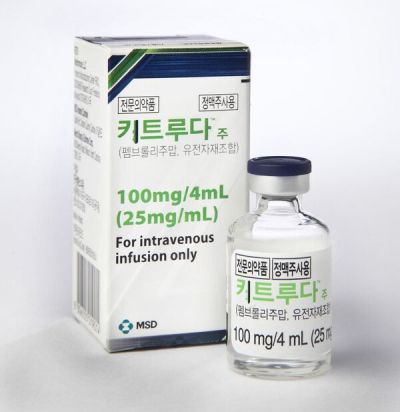
The Health Insurance Review and Assessment Service held a DREC meeting on the 4th and recognized the appropriateness of expanding the reimbursement scope for Keytruda, developed by MSD Korea. The indications reviewed for expanded coverage on this day included gastric or gastroesophageal junction adenocarcinoma, esophageal cancer, endometrial cancer, colorectal cancer, head and neck squamous cell carcinoma, cervical cancer, triple-negative breast cancer, small intestine cancer, and biliary tract cancer.
Accordingly, Keytruda will now undergo drug price negotiations with the National Health Insurance Service and a review by the Health Insurance Policy Deliberation Committee of the Ministry of Health and Welfare, after which a final decision will be made on whether to expand its coverage.
Keytruda is an immuno-oncology drug developed by the American pharmaceutical company MSD (Merck), and it was the world's top-selling pharmaceutical product in 2023, earning its status as a "blockbuster drug." It received approval from the U.S. Food and Drug Administration (FDA) in 2014, followed by approval from the Ministry of Food and Drug Safety in Korea in 2015.
Unlike conventional anticancer drugs that directly attack cancer cells, immuno-oncology drugs work by helping immune cells attack cancer cells. The first approved indication in Korea was for unresectable or metastatic melanoma. Since then, the indications have expanded, with a total of 34 indications approved for 16 types of cancer. However, until now, health insurance coverage has only been applied to seven indications across four cancer types: non-small cell lung cancer, Hodgkin lymphoma, melanoma, and urothelial carcinoma. With the latest DREC decision, the scope of coverage is likely to be further expanded.
Meanwhile, on the same day, the DREC also recognized the appropriateness of expanding the reimbursement scope of "Dupixent," an atopic dermatitis treatment from Sanofi-Aventis Korea, to include severe type 2 inflammatory asthma.
© The Asia Business Daily(www.asiae.co.kr). All rights reserved.

















