46% Higher Risk of Hemorrhoids from Smartphone Use on the Toilet
"Longer Bathroom Stays Increase Pressure on Anal Tissues"
A study has found that people who use smartphones in the bathroom have a higher risk of developing hemorrhoids compared to those who do not.
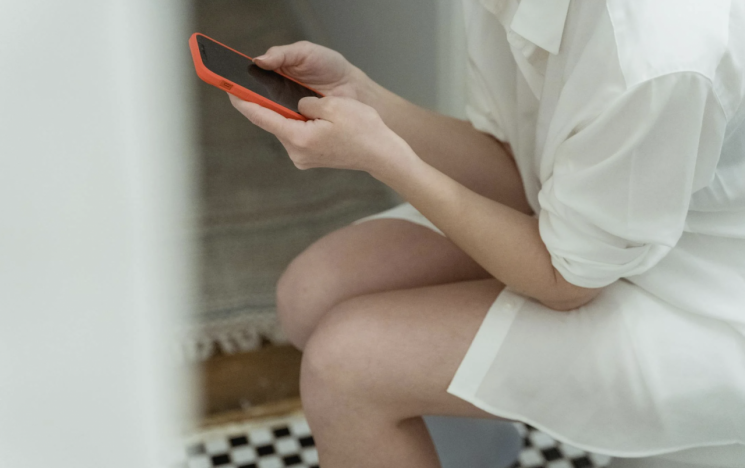
According to science news outlet EurekAlert on September 3 (local time), researchers at Beth Israel Deaconess Medical Center in the United States reported in a paper published in the international journal PLOS One that people who use smartphones on the toilet have a 46% higher risk of hemorrhoids compared to non-users.
Hemorrhoids are a condition in which blood vessels in the anus or rectal area become swollen, potentially causing pain and bleeding. While there have been claims that using smartphones in the bathroom is linked to an increased risk of hemorrhoids, there has been little actual research on the topic.
The research team conducted a study involving 125 adults undergoing colonoscopy. Participants responded to an online survey about their lifestyle and bathroom habits, and endoscopy specialists evaluated them for hemorrhoids.
The results showed that 66% of participants reported using smartphones in the bathroom. Smartphone users tended to be relatively younger than non-users. After statistically adjusting for factors that could be associated with hemorrhoids, such as exercise habits, age, and fiber intake, the study found that participants who used smartphones in the bathroom had a 46% higher risk of hemorrhoids compared to those who did not.
Smartphone users also spent significantly more time in the bathroom than non-users. Among users, 37% reported staying for more than five minutes at a time, while only 7.1% of non-users did so.
Reading news and using social networking services (SNS) were the most common activities on smartphones in the bathroom. Unlike previous studies, straining during bowel movements was not found to be associated with an increased risk of hemorrhoids.
The researchers explained that smartphone use may unintentionally extend the time spent in the bathroom, putting pressure on anal tissues and potentially leading to hemorrhoids. Dr. Trisha Pasricha, who led the study, stated, "We are still uncovering the effects of smartphones and modern life on health, and the location and manner of use-such as in the bathroom-can have unintended consequences."
She added, "In general, it is best to leave your smartphone outside the bathroom and keep bowel movements to just a few minutes. If it is taking longer, you should check whether it is due to actual difficulty with bowel movements or simply because your attention is elsewhere."
© The Asia Business Daily(www.asiae.co.kr). All rights reserved.

















