On September 4, Sangsangin Securities maintained its 'Overweight' rating on the banking sector, stating that even if concerns over heightened regulations and fines materialize, the short-term impact on stock prices will be limited. However, it also raised concerns that the sector's capacity for shareholder returns could be constrained in the long term. The report further noted that regional banks, which are relatively less exposed to the burden of fines and regulatory risks, may become more attractive investment options.
Hyunsoo Kim, a researcher at Sangsangin Securities, stated in the report titled "Banking Sector Policy, Regulation, and Key Issues Review" released on this day, "Currently, bank stock prices are driven more by shareholder return momentum than by earnings, so as long as the scale of shareholder returns is maintained, profitability constraints such as regulations and fines are unlikely to have a significant short-term impact on share prices."
Kim added, "Aside from Hana Financial Group and JB Financial Group, which have announced additional share buybacks within the year following their second-quarter earnings releases, there are no substantial additional momentum factors within the sector. However, since the main driver of shareholder return expansion remains solid, the positive trend is likely to continue in the long term."
However, he cautioned, "The key issue is that such profitability constraints could weaken the sector's capacity for shareholder returns in the long run," and stated, "Since fines can entail operational risks as high as six times the amount imposed, risk-weighted assets (RWA) will continue to increase. This could become a burden for future shareholder return policies."
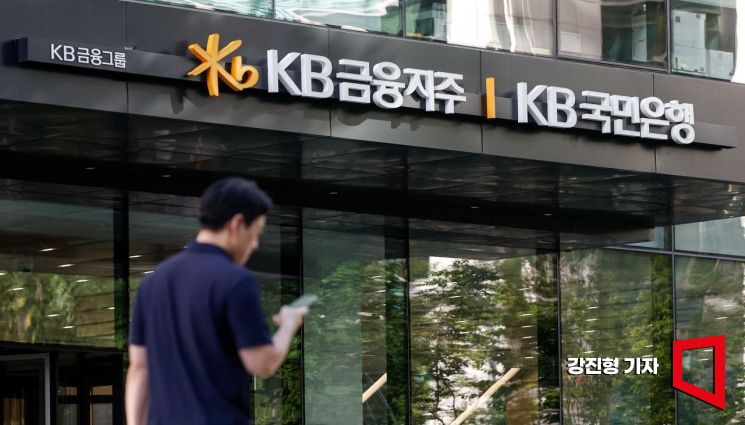
According to the report, there are five major issues currently affecting the banking sector: ▲ Adjustment of the effective corporate tax rate and an increase in the education tax, ▲ Contributions to a bad bank, ▲ Higher risk weights for mortgage loans, ▲ Contributions to the National Growth Fund, and ▲ The possibility of fines imposed by the Financial Services Commission and the Fair Trade Commission.
First, Kim projected, "If the effective tax rate is raised, net profit will decrease by about 1% based on pre-tax earnings." He also predicted that the increase in the education tax rate would reduce profits by over 100 billion won for major commercial banks and by several tens of billions of won for regional banks. "The burden of contributing to a bad bank is also estimated at several tens to 100 billion won per bank, and while the details are not finalized, contributions to the National Growth Fund could potentially reach the trillion-won level," he analyzed.
He further noted, "While it is fortunate that the higher risk weights for mortgage loans are being reviewed under new standards, the improvement in the Common Equity Tier 1 (CET1) ratio, which demonstrates banks' capital strength, will be slightly reduced." He expressed concern that, while the impact of each item may be limited, the cumulative effect could lead to a decline of several basis points in the CET1 ratio. He added, "Although there is still room for administrative litigation regarding the loan-to-value (LTV) ratio and government bond collusion issues, banks will need to recognize provisions, making a short-term decrease in net profit inevitable."
Kim also commented that it is necessary to closely monitor the implementation guidelines for the Win-Win Finance Index and the voice phishing compensation system, both of which are included in the new government's economic growth strategy. He pointed out that while the Win-Win Finance Index is designed to encourage increased lending to small and medium-sized enterprises and the supply of venture capital based on technology assessment, if RWA adjustments are not made, "expanding SME loans could actually worsen the CET1 ratio." He emphasized, "What incentives the authorities will offer is the key issue." He further stated, "The no-fault compensation system for voice phishing could create new costs for banks," and that detailed standards should be examined.
Finally, among the issues related to fines, Kim highlighted the scale of fines for the misselling of Hong Kong equity-linked securities (ELS) as the most important. The Financial Services Commission plans to calculate fines based on the amount sold. Kim stated, "In the case of KB Financial Group, with sales reaching 8.2 trillion won, a maximum fine of 4.1 trillion won could be imposed if the maximum 50% rate is applied. This would amount to about 80% of last year's net profit," adding, "If this materializes, plans to expand shareholder returns next year would likely be effectively scrapped."If the LTV and government bond collusion cases are also subject to fines based on sales, the resulting fines could reach the trillion-won level.
Kim concluded, "Excluding the Hong Kong ELS fine issue, there are no major factors that would fundamentally undermine the scale of shareholder returns," and diagnosed that "regional banks, which are relatively free from the burden of fines and contributions, may become increasingly attractive investment options." He added that, compared to commercial bank holding companies, regional banks face less uncertainty and fewer policy burdens, making them likely to offer differentiated investment opportunities going forward.
© The Asia Business Daily(www.asiae.co.kr). All rights reserved.

















